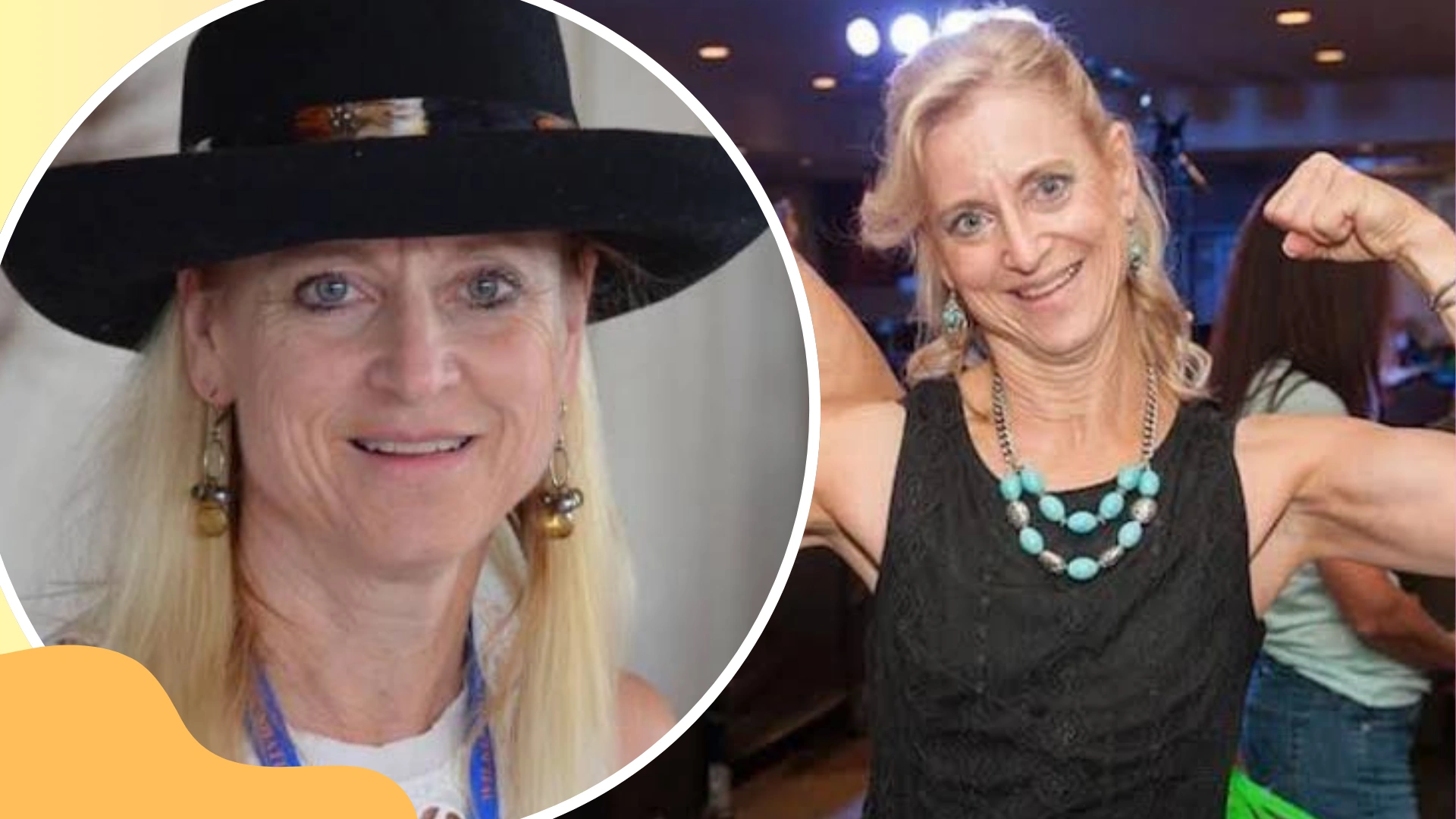
Tamra Cantore is widely recognized as the former wife of Weather Channel meteorologist Jim Cantore, but her own story stands apart from that connection. Married in 1990 and divorced roughly two decades later, she raised two children who both have Fragile X syndrome while managing her own young-onset Parkinson’s disease diagnosis. Rather than stepping back from public life, she channeled her experience into advocacy through Team Cantore, supporting Parkinson’s awareness and research. This piece looks at her marriage, family life, health journey, and the advocacy work that has defined her identity beyond a famous last name, while noting where online accounts of her life remain inconsistent or unverified.
Tamra Cantore’s Early Life
Tamra Cantore was born Tamra Zinn, reportedly on July 4, 1965, in the United States. Beyond that, solid biographical detail is thin on the ground. Various profiles describe her as having been raised in a middle-class family, but they disagree on basic facts like her home state, and none of them cite a primary source. Given how private she has kept her personal history, it seems fair to treat most claims about her childhood and upbringing with some skepticism rather than presenting them as settled fact.
Why Tamra Cantore’s Story Is Worth Telling
It would be easy to dismiss Tamra Cantore’s story as a minor footnote, the kind of whatever-happened-to piece that exists only because someone else in her orbit became famous. But there’s a reason her story keeps drawing interest years after her divorce, and it isn’t really about Jim Cantore at all. It’s about the particular, largely invisible experience of building a private life around chronic illness and a child’s disability, while the rest of the world only pays attention because of a connection to someone on television.
That combination, visibility by association, invisibility by choice, is worth examining on its own terms. It says something about how the public consumes stories connected to celebrity: the appetite exists for details about the ex-wife of, but rarely for the substance of what that person has actually built since. This piece tries to do a little of both: acknowledge the connection that brought her into public conversation, while giving weight to the parts of her life she chose to build deliberately.
How Tamra Cantore Met Jim Cantore
What’s clear is that Tamra Cantore crossed paths with Jim Cantore through their professional lives, likely connected to his rising career at The Weather Channel during the network’s early years. The two married on October 6, 1990, in a private ceremony attended by close family and friends rather than the kind of splashy event you might expect from a couple with a television personality at its center.
By the time they married, Jim Cantore was well on his way to becoming one of the most recognizable faces in American weather broadcasting. He joined The Weather Channel straight out of college in the mid-1980s and built a career on live, in-the-field storm coverage, the meteorologist networks send directly into the eye of a storm, known for his enthusiasm in the middle of blizzards, hurricanes, and, in one now-famous 2015 clip, a rare burst of thundersnow that went viral online. Over the following decades, he’d go on to cover some of the most destructive storms in modern American history, occasionally getting hit by debris or knocked around on camera in ways that only added to his reputation as the network’s most fearless reporter.
Tamra Cantore, by contrast, kept a much lower profile, and accounts of her own career at or around The Weather Channel vary considerably depending on which source you read. Some describe her in an on-air or reporting capacity, appearing in evening broadcasts or hosting weekend programming. Others describe a longer, less camera-facing run in sales, affiliate relations, or business strategy roles at the network, the kind of behind-the-scenes work that keeps a cable channel running and growing but rarely gets a byline. A few accounts even suggest she worked in a public-relations capacity connected specifically to building Jim’s on-air profile early in his career, which, if accurate, would mean the two were, in a sense, professionally intertwined well before they were romantically involved. Without a reliable primary source to settle the question definitively, it’s more honest to say her professional role there is not well-documented publicly than to assert a specific job title with confidence.
What does seem consistent across accounts is that she was with the network for a long stretch, some sources suggest as long as two decades, which would place her among the employees who watched The Weather Channel grow from a niche cable offering into a household name during the 1990s and early 2000s, the same period when Jim’s own career was ascending.
Tamra Cantore’s Family Life
Tamra Cantore and Jim had two children together during their marriage: a daughter and a son. Both children were later found to have Fragile X syndrome, a genetic condition that affects learning, development, and communication, and which can require significant lifelong support. That diagnosis reshaped the family’s daily life considerably, and by multiple accounts, Tamra took on much of the hands-on responsibility for her children’s care, the routines, appointments, and adaptations that come with raising kids who need consistent, specialized support.
Jim Cantore has spoken publicly, in various interviews over the years, about his commitment to organizations like FRAXA, the Fragile X Research Foundation, and has used elements of his public platform to support awareness efforts tied to the condition. That the family made this a shared cause even after the marriage ended says something about how central it became to their lives.
Understanding Fragile X Syndrome
Because Fragile X syndrome plays such a central role in the Cantore family’s story, it’s worth taking a moment to explain what it actually is, since it’s less widely understood than conditions like autism or Down syndrome, even though it’s one of the most common inherited causes of intellectual disability.
Fragile X syndrome is caused by a mutation on the X chromosome that affects the production of a protein needed for normal brain development. It can cause a range of intellectual and developmental disabilities, along with behavioral and emotional challenges, and it affects boys more severely than girls on average, since boys have only one X chromosome and no second, unaffected copy to partially compensate. Common features can include delayed speech and language development, anxiety, sensory sensitivities, and, in some cases, features that overlap with autism spectrum disorder. Because it’s a genetic condition, it can also carry implications for extended family members, since a parent, often the mother, may be a carrier without having symptoms themselves.
Raising a child with Fragile X typically involves a combination of early intervention therapies, specialized educational plans, and ongoing medical and behavioral support that can stretch across a lifetime rather than resolving in childhood. Families managing this kind of care often describe it as a second, unpaid full-time job layered on top of everything else in life, work schedules, other children, and, in Tamra’s case, a chronic illness of her own. That combination of circumstances, layered together, gives some sense of just how demanding her day-to-day life may have looked during and after her marriage, even though she’s rarely spoken about the specifics publicly.
Jim Cantore’s continued public support for FRAXA, the Fragile X Research Foundation, after the couple’s divorce suggests that whatever else changed between them, their shared commitment to their children’s needs did not.
Tamra Cantore and Jim Cantore’s Divorce
Tamra Cantore and Jim’s marriage ended in divorce, with most sources placing the split somewhere between 2007 and 2009; the exact date isn’t consistently reported, and Wikipedia’s entry on Jim Cantore lists 2009 as the year the marriage concluded, after nearly two decades together. Neither Tamra nor Jim has spoken in detail publicly about why the marriage ended, and that silence appears to have been intentional. Divorces involving children with significant care needs are complicated under the best of circumstances, and by most accounts, the two have maintained a working, respectful relationship since, particularly where their children’s needs are concerned.
After the divorce, Jim Cantore’s personal life has occasionally made entertainment-press headlines; he has been linked to a handful of relationships over the years, including, more recently, another meteorologist. Tamra Cantore, meanwhile, has stayed almost entirely out of that kind of coverage, which appears to reflect a deliberate choice about how she wants to live her life post-divorce: privately, and centered on her children and her health advocacy rather than on any public narrative about her personal relationships.
Tamra Cantore’s Parkinson’s Diagnosis
At some point in her forties, Tamra Cantore was diagnosed with Parkinson’s disease, specifically what’s often referred to as young-onset Parkinson’s, meaning a diagnosis that arrives well before the more typical age range associated with the condition. Parkinson’s is a progressive neurological disorder that affects movement, and a young-onset diagnosis can be especially disorienting, arriving at a stage of life when someone is still raising children, building a career, or simply not expecting to confront a degenerative illness.
It’s not entirely clear from public reporting whether the diagnosis came before or after her divorce, and different sources place it at different points in her timeline. What is consistent across accounts is that the diagnosis became a turning point, the moment her public identity started to shift from Jim Cantore’s wife to something she built more deliberately on her own terms.
Understanding Young-Onset Parkinson’s Disease
Parkinson’s disease is most commonly associated with older adults, and the popular image of it , a slow, hand tremor, a shuffling gait, tends to be pictured as something that arrives in someone’s seventies or eighties. Young-onset Parkinson’s, generally defined as a diagnosis occurring before age 50, disrupts that picture entirely, and it brings its own distinct set of challenges.
For one, young-onset Parkinson’s is often harder to diagnose quickly, precisely because doctors and patients alike don’t expect it at that age; symptoms can be mistaken for stress, injury, or other conditions for months or years before a correct diagnosis is reached. For another, a diagnosis at a younger age means facing decades of progressive symptoms, tremor, rigidity, slowed movement, and eventually, for many, changes in speech, balance, and cognition, while still raising children, working, and managing a household, rather than during a more traditional retirement-age life stage.
People diagnosed young with Parkinson’s often describe an added layer of grief tied to timing: watching peers build careers and raise families at full physical capacity while managing a body that’s changing in ways that can feel isolating, especially before more visible symptoms appear. Advocacy communities built around young-onset Parkinson’s, including patient organizations, walks, and awareness campaigns, have grown significantly over the past two decades, in part because people diagnosed at a younger age tend to have many years ahead of them in which to become vocal advocates, unlike patients who receive the diagnosis much later in life. That’s very likely part of what shaped Tamra’s own path from a health diagnosis toward sustained public advocacy work rather than a single moment of disclosure.
Tamra Cantore’s Advocacy Work With Team Cantore
Rather than retreating from public life after her diagnosis, Tamra Cantore channeled her energy into advocacy. She’s associated with an organization sometimes referred to as Team Cantore, aimed at raising awareness and funds connected to Parkinson’s disease research and support. The organization’s work centers less on Tamra’s own visibility and more on the cause itself, walks, fundraisers, and community events designed to support research and to help people newly facing a Parkinson’s diagnosis feel less alone in it.
This kind of advocacy work tends to be quieter and less glamorous than the celebrity-adjacent life Tamra might have leaned into given her connection to a well-known TV personality. Friends and community members who have worked alongside her at fundraising events describe someone who shows up consistently, over years and even decades, for a cause that affects her personally, which is, in its own way, a more durable form of public contribution than the kind that comes with a camera crew attached.
It’s worth noting that patient-led advocacy organizations like this tend to follow a fairly recognizable pattern: they usually start small, often centered on one family’s direct experience, and grow organically as word spreads within a community of people facing similar circumstances. Fundraising walks, awareness days, small-dollar donation drives, and local events tend to be the backbone of this kind of work, rather than large media campaigns. It’s slow, cumulative work, the kind that builds relationships and trust over years rather than generating headlines. That seems to match the picture that emerges of Tamra Cantore’s involvement: sustained, personal, and largely happening outside of any spotlight, even though the organization she’s connected to does carry her name and, by extension, some borrowed visibility from her connection to Jim.
There’s also a broader value to this kind of advocacy that goes beyond any one family. Public figures and their family members disclosing a Parkinson’s diagnosis, figures like Michael J. Fox being the most widely known example, have historically played an outsized role in driving both public awareness and research funding for the disease. Every additional person willing to speak publicly about a diagnosis, even without Fox’s level of fame, adds to a broader cultural shift away from treating Parkinson’s as something to hide and toward treating it as something that can be discussed, researched, and organized around collectively.
Tamra Cantore’s Life Today
By most accounts, Tamra Cantore lives a relatively private life now, splitting her time between family responsibilities, her health, and her advocacy commitments. She isn’t especially active on social media, and she has generally avoided the kind of tabloid-adjacent coverage that sometimes follows people connected to television personalities. What public information does exist about her day-to-day life is limited, and that appears to be by design rather than circumstance.
A Note on the Reliability of Information About Tamra Cantore
It’s worth being upfront about something: search results and articles about Tamra Cantore are unusually inconsistent for a person who has been discussed online for years. Different pieces disagree about her state of birth, her exact job title at The Weather Channel, the precise year of her divorce, and even basic personality descriptions that read more like filler than fact. Some of this content has the hallmarks of low-effort, possibly AI-generated celebrity spouse articles built to attract search traffic rather than to inform, a genre that has proliferated around people who are primarily known through a famous partner rather than through their own public record.
That’s a useful reminder for anyone reading about people in Tamra’s position: being connected to a public figure doesn’t mean every claim about you online is accurate, sourced, or even written by someone who has done real reporting. The most solid ground here is what’s independently corroborated: her marriage and divorce dates, her children’s Fragile X diagnoses, her own Parkinson’s diagnosis, and her ongoing advocacy work. Everything else deserves a grain of salt.
What Tamra Cantore’s Story Says About Privacy in the Public Eye
There’s something worth sitting with in the contrast between Jim Cantore’s career and Tamra Cantore’s. His entire professional identity is built on visibility, being seen in the worst weather conditions imaginable, reacting in real time, and becoming a recognizable face precisely because he puts himself in front of a camera during moments most people would run from. Tamra’s path has run almost entirely in the opposite direction: away from cameras, away from public disclosure, toward a life defined by decisions made largely out of view.
That doesn’t mean her life has been less consequential. If anything, the quieter work, raising children with significant support needs, managing a progressive illness, and building a charitable organization that persists years after any tabloid interest in her marriage has faded, arguably requires a different, less celebrated kind of endurance than the one that gets applause on live television. It’s a reminder that public visibility and personal significance aren’t the same thing, and that some of the most demanding, meaningful work in a person’s life can happen with no audience at all.
Conclusion
Tamra Cantore’s public story could easily have stayed frozen at the wife of a famous meteorologist, a footnote in someone else’s career. Instead, shaped by circumstances she didn’t choose (a genetic condition affecting her children, a Parkinson’s diagnosis affecting her own body), she’s built a quieter but no less meaningful public identity around advocacy and care. It’s not the kind of story that trends on social media or generates viral hurricane-reporting clips, but it’s a story about resilience, privacy, and choosing what to do with a platform that was, at first, entirely someone else’s.
What’s clear, even through the fog of inconsistent online reporting, is that Tamra Cantore didn’t disappear after her divorce; she redirected. The public attention that came from being married to a well-known television personality could easily have faded into irrelevance once the marriage ended, as it does for many people in similar positions. Instead, it seems she used whatever residual visibility remained to point people toward causes that mattered far more to her than her own profile: her children’s wellbeing, and a disease that reshaped her own life in her forties. That’s a modest, unglamorous kind of legacy-building, but it may be the more durable kind.
Frequently Asked Questions
Who is Tamra Cantore?
Tamra Cantore is best known as the former wife of Jim Cantore, the longtime Weather Channel meteorologist. Beyond that connection, she’s known in her own right for raising two children with Fragile X syndrome, managing her own young-onset Parkinson’s diagnosis, and her ongoing involvement in Parkinson’s advocacy work.
Are Tamra Cantore and Jim Cantore still married?
No. Tamra Cantore and Jim Cantore married in 1990 and divorced roughly two decades later, with most sources placing the split between 2007 and 2009. Neither has publicly detailed the reasons behind the divorce.
Does Tamra Cantore have Parkinson’s disease?
Yes, by most public accounts, Tamra Cantore was diagnosed with young-onset Parkinson’s disease in her forties. The exact date of diagnosis relative to her divorce isn’t consistently reported across sources.
What is Team Cantore?
Team Cantore is an advocacy effort associated with Tamra Cantore that focuses on raising awareness and funds connected to Parkinson’s disease. It reflects her shift from a private health diagnosis toward sustained public advocacy work.
Does Tamra Cantore have children?
Yes. Tamra Cantore and Jim Cantore have two children together, both of whom have Fragile X syndrome, a genetic condition affecting learning and development. Tamra has reportedly taken on much of the day-to-day responsibility for their care.
Leave a Reply