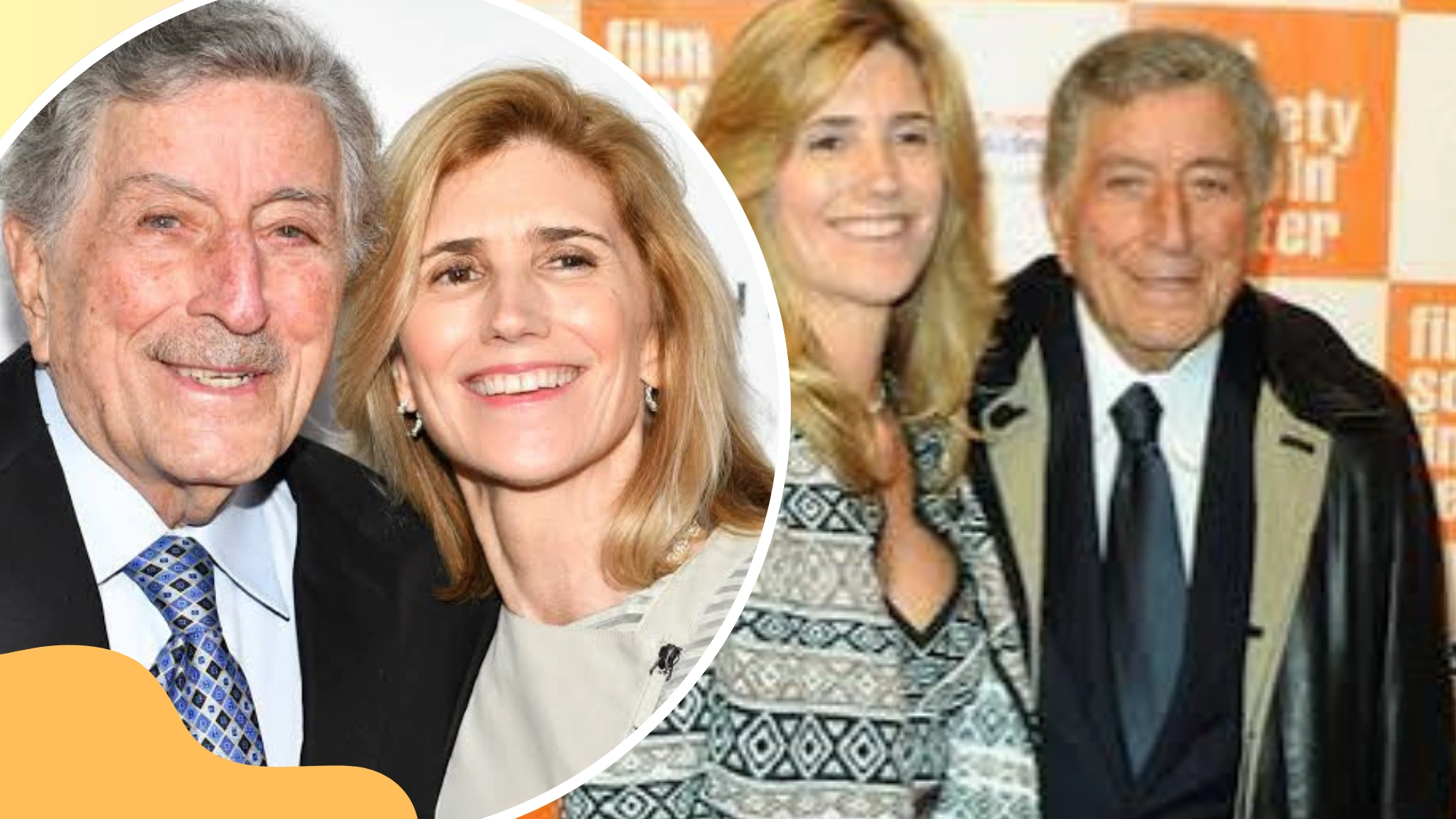
Some names become permanently linked to history not through their own public achievements, but through a chapter of someone else’s story. Patricia Beech is one of those names. For nearly two decades, she was married to Tony Bennett, one of the most celebrated voices in American popular music, during the very years his career was taking shape. Yet unlike her famous husband, Patricia Beech never sought the spotlight, rarely gave interviews, and has spent most of her life deliberately out of public view.
This quiet approach to life has, ironically, made her something of a mystery to music fans and pop-culture researchers alike. People searching her name today are usually trying to answer a handful of recurring questions: Who was she before she met Tony Bennett? How did the two of them meet? What was their marriage actually like? And what happened to her after the divorce?
This post pulls together what is publicly known about Patricia Beech, sets it in the context of Tony Bennett’s own biography, and is upfront about the parts of her story that remain uncertain or inconsistently reported. As with many private individuals connected to famous partners, the historical record is thin, and different secondary sources don’t always agree on exact dates. Where that’s the case, this piece flags it rather than presenting a single version as definitive fact.
Who Was Patricia Beech?
Patricia Beech is most widely identified as the first wife of Tony Bennett, the American singer known for standards like “I Left My Heart in San Francisco.” Various accounts describe her as having grown up in Cleveland, Ohio, and as having studied art before her life took a very different turn.
Before meeting Bennett, Patricia Beech doesn’t appear to have had any connection to the entertainment industry. Some accounts note that after she relocated to New York to be closer to Bennett, she took work as a broker, a detail that stands out precisely because it has nothing to do with show business. In other words, everything available about Patricia Beech’s pre-marriage life points to an ordinary young woman living a conventional life in the early 1950s, not someone angling for fame.
That contrast is part of what makes her story interesting to people revisiting Tony Bennett’s biography today. Bennett was a rising nightclub and recording artist chasing stardom, while Beech, by most descriptions, was someone with little interest in the trappings of celebrity. Their marriage placed those two very different orientations toward public life side by side for the better part of two decades.
How Patricia Beech Met Tony Bennett
The story of how Patricia Beech and Tony Bennett met has been repeated in various forms over the years, most notably by Bennett himself in his memoir, “The Good Life.” According to that account, the two crossed paths in 1951 at a nightclub called Moe’s Main Street in Cleveland, where Bennett was performing. Patricia was in the audience that night with a date, seated near the stage.
Bennett has described noticing Patricia Beech from the stage and being drawn in by her presence before the two had even spoken. After his set, accounts suggest that Patricia’s date invited Bennett to join their table, which gave the two a chance to talk directly. During that conversation, Bennett reportedly discovered that Patricia had a genuine interest in jazz music, including an appreciation for the New York radio disc jockey known as Symphony Sid, a detail that suggested she and Bennett had more common ground than a passing nightclub encounter might imply.
The pair are said to have gone on their first date the very next day, and from there their relationship developed quickly. Not long after, Patricia Beech relocated to New York City, a move that put her closer to Bennett as his career and touring schedule intensified.
Bennett’s proposal, according to his own retelling, came in a fairly public and theatrical way: during a run of shows at the Paramount Theatre around the Christmas holidays, he used a performance to announce his intention to marry her. It’s a story that fits neatly with the image of a young performer both charmed by a woman and comfortable using the stage to make grand personal statements, but it’s also worth noting that this version of events comes primarily from Bennett’s own recollections rather than independent contemporary reporting.
Patricia Beech’s Wedding and Early Marriage
Patricia Beech and Tony Bennett were married on February 12, 1952, in a ceremony held at St. Patrick’s Cathedral in New York City, a striking, high-profile venue for a wedding involving a singer who was, at that point, still relatively early in his rise to national fame. Some retellings mention a large crowd of Bennett’s female fans gathering outside the cathedral, reportedly dressed in black in a symbolic show of mourning at the news that their favorite performer was now off the market. Whether that detail is precisely accurate or has been embellished over decades of retelling is hard to verify, but it captures the intensity of fan devotion Bennett was already generating at the time.
Following the wedding, reports suggest Patricia Beech and Tony Bennett honeymooned in the Bahamas before returning to build a life together in New York City, where Bennett’s recording and performing career was based.
The early years of the marriage coincided with a period of real momentum for Bennett professionally. He was moving from nightclub gigs toward chart success and national recognition, and having a wife and, soon, a young family at home was part of the backdrop against which that career took off.
Patricia Beech’s Family Life and Children
Patricia Beech and Tony Bennett had two sons together. Their first, D’Andrea Bennett, known to most as Danny, was born on February 3, 1954. Their second son, Daegal Bennett, known as Dae, followed on October 15, 1955.
Both sons would go on to build their own careers within the music industry, staying closely connected to their father’s professional world well into adulthood. Danny Bennett eventually became his father’s manager, playing a significant behind-the-scenes role in shaping and sustaining Tony Bennett’s career, particularly during the years when Bennett experienced a well-documented career resurgence later in life. Dae Bennett pursued a path as a music producer and audio engineer, and over the course of his career has been credited with contributions to numerous Grammy Award-winning recordings.
It’s worth pausing on this point, because it’s one of the more concrete and verifiable parts of Patricia Beech’s legacy: whatever else remains uncertain about Patricia Beech’s personal life, her role as the mother of two sons who went on to have substantial, respected careers in music is well documented and widely acknowledged, including by Tony Bennett himself in public reflections on his family.
Accounts of the marriage describe a household increasingly shaped by the demands of Bennett’s touring and recording schedule. As his fame grew through the 1950s and into the 1960s, the time he spent away from home reportedly grew as well, a familiar dynamic in many marriages involving performers whose livelihoods depend on constant travel and public appearances.
The Breakdown of Patricia Beech and Tony Bennett’s Marriage
By most accounts, the marriage between Patricia Beech and Tony Bennett began to unravel over the course of the 1960s, ultimately ending in divorce that was finalized in 1971. There is some inconsistency across secondary sources about the exact timeline of the separation and the specific year the divorce filing occurred, with some accounts referencing the late 1950s and others the late 1960s. Given how widely these secondary retellings vary, and how few primary, contemporaneous sources are easily accessible, readers should treat the precise year of the filing as unsettled, while treating 1971 as the more consistently cited year the divorce was finalized.
Several accounts describe Patricia Beech herself filing for divorce on grounds of infidelity. If accurate, that would place the reported cause of the split in fairly conventional territory for celebrity marriages of that era, where the demands of fame, prolonged separation due to touring, and opportunities for infidelity on the road were often cited factors in the breakdown of relationships between performers and their spouses.
What’s notable is how little Patricia Beech herself is quoted or referenced directly in any of this. Nearly everything available about the divorce comes filtered through Bennett’s own retrospective accounts or through secondary reporting that draws on those same sources. This is a recurring theme throughout her story: because she chose not to engage publicly, the narrative of her own marriage and its end has largely been told by others, primarily her former husband.
Following the divorce, Bennett went on to marry Sandra Grant later that same year. That marriage produced two daughters and lasted for a number of years before it, too, ended in divorce. Bennett later married a third time, to Susan Crow, who remained his wife for the remainder of his life.
Patricia Beech’s Life After the Divorce
Unlike many former spouses of famous performers who go on to write memoirs, give interviews, or otherwise capitalize on their connection to a well-known figure, Patricia Beech appears to have taken the opposite path. Available information suggests she withdrew almost entirely from public attention following the end of her marriage, focusing her energy on raising her two sons and maintaining a private life.
There is no widely available public record indicating that she remarried after her divorce from Bennett. Nor is there significant documented information about her later career, if any, her place of residence in later decades, or her current status. Some sources speculate she may still be living, while others simply note the absence of any confirmed public record of her death. Given how limited and unverified this information is, it should be treated with real caution rather than presented as settled fact, this is a case where the honest answer to “what happened to her” is, in large part, “not much is publicly known, because she chose it that way.”
This pattern of near-total privacy after a high-profile marriage is not unique to Patricia Beech, but it is fairly distinctive given how well-documented Tony Bennett’s own life and career became. Bennett wrote a memoir, gave decades of interviews, and remained a highly visible public figure well into his nineties. Beech, by contrast, seems to have deliberately chosen a different path, one defined by anonymity rather than continued visibility.
Her Place in Tony Bennett’s Legacy
It would be easy to treat Patricia Beech as a minor footnote in a much larger and more famous story, and in terms of public documentation, that’s largely how she has been treated. But her actual role in Tony Bennett’s life carries more weight than a footnote might suggest.
She was present for, and by some accounts, a source of stability and grounding during, the years when Bennett transformed from a promising club singer into a genuine recording star. The couple’s marriage spanned nearly the entirety of the 1950s and into the early 1970s, a period that included some of the most important commercial and artistic developments of Bennett’s career, including the release of his signature song, “I Left My Heart in San Francisco,” in 1962.
Perhaps her most enduring and unambiguous legacy, though, is her sons. Danny Bennett’s role as his father’s manager is widely credited with helping engineer Tony Bennett’s remarkable career revival starting in the late 1980s and continuing through the 1990s and beyond, a resurgence that introduced Bennett to entirely new, younger generations of fans and cemented his status as one of the defining vocalists of the twentieth century. Dae Bennett’s work as a producer and engineer has similarly left a mark on the technical and creative side of the music industry, independent of his father’s own recording career.
In that sense, Patricia Beech’s influence didn’t end with her divorce. It continued, indirectly but meaningfully, through the professional lives of the two sons she raised.
A Note on Reliability of Sources
It’s worth being transparent about something readers researching Patricia Beech will likely notice on their own: much of what circulates online about her life consists of short biographical articles that repeat the same handful of details, sometimes word-for-word, often without citing a clear primary source. Some of these pieces contain small inconsistencies, differing on how long the marriage lasted, exactly when divorce proceedings began, or precise biographical specifics about her early life.
This isn’t unusual for a private individual whose public profile exists only because of a connection to a famous partner. Absent interviews or documented statements directly from Patricia Beech herself, most of what’s known has been filtered through Tony Bennett’s own retrospective storytelling, particularly in his memoir, along with secondary journalism built on top of it. Readers interested in a rigorous account should treat single-source biographical detail sites with some skepticism and look for corroboration from more established outlets or primary materials, such as Bennett’s own memoir, where available.
Conclusion
Patricia Beech occupies an unusual place in music history: central to one of the twentieth century’s most recognizable voices during his formative years, yet almost absent from the historical record in her own words. She met Tony Bennett as a young art student in Cleveland, married him in a widely noticed ceremony at St. Patrick’s Cathedral, raised two sons who would go on to shape his career and the broader music industry, and then, when the marriage ended, chose to step away from public life rather than remain a visible figure connected to fame.
That choice has made her difficult to research in any depth, but it also says something about her, even in the absence of direct testimony: a preference for privacy over publicity, and for a quiet life over a famous one, even when circumstance had placed her, for a time, close to the center of American popular culture. Whatever else remains uncertain about her story, that much seems clear.
Frequently Asked Questions
Who is Patricia Beech?
Patricia Beech is best known as the first wife of singer Tony Bennett. She married him in 1952, and the two remained together until their divorce was finalized in 1971. Outside of that marriage, she has lived a largely private life with almost no public profile of her own.
How did Patricia Beech and Tony Bennett meet?
By most accounts, they met in 1951 at a nightclub called Moe’s Main Street in Cleveland, Ohio, where Bennett was performing. He noticed her from the stage; they spoke afterward, and the two went on a first date the following day.
Did Patricia Beech and Tony Bennett have children?
Yes. The couple had two sons: Danny Bennett, born in 1954, and Dae Bennett, born in 1955. Danny went on to manage his father’s career, while Dae became a Grammy-winning music producer and engineer.
Why did Patricia Beech and Tony Bennett divorce?
Several sources indicate Patricia Beech filed for divorce on grounds of infidelity. Reports differ slightly on the exact timeline, but the divorce was finalized in 1971 after years of strain tied to Bennett’s touring schedule and career demands.
What happened to Patricia Beech after the divorce?
She stepped away from public life almost entirely, focusing on raising her sons. There’s no confirmed public record of her remarrying, and details about her later years remain largely unknown, by her own apparent choice.
Leave a Reply