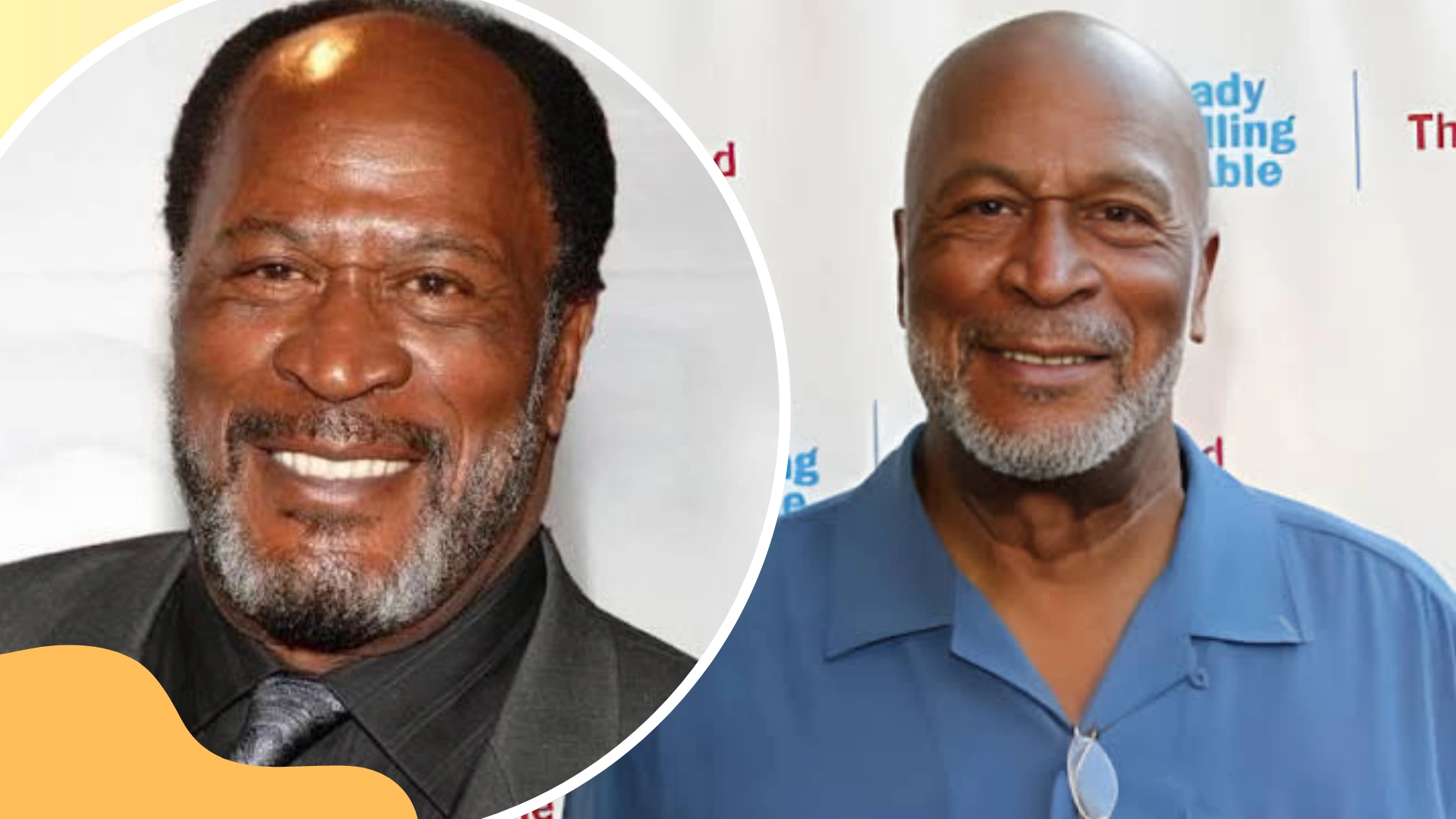
Look into the name Noel J Mickelson, and you’ll find a curious pattern. There’s no Wikipedia page, no red-carpet photos, no interview archive. Instead, there’s a scattering of genealogy records, a handful of newspaper clippings from the 1960s, and a wave of more recent articles trying to piece together who she was. That’s because Noel J Mickelson wasn’t a celebrity by trade. She became a subject of public curiosity almost entirely because of who she married, actor John Amos, best known for Good Times, Roots, and Coming to America, and because of when she married him.
Noel Jean Mickelson was John Amos’s first wife, the mother of his two children, and, by most accounts, a woman who spent her life deliberately outside the spotlight her marriage briefly placed her in. Her story sits at an interesting intersection: a private individual whose one very public decision, marrying across the color line in the mid-1960s, happened to collide with one of the most significant civil rights moments in American legal history.
This post pulls together what’s known, what’s widely reported but harder to verify, and what her life says about the people who exist at the edges of celebrity biographies, visible enough to draw curiosity, private enough that most of the record is guesswork built from thin evidence.
Early Life in Minnesota
According to Minnesota birth records, Noel Jean Mickelson was born on August 22, 1943, in Jackson County, Minnesota, the daughter of Wilbur B. Mickelson and Dorothy J. Tims. Jackson County sits in the far southern part of the state, near the Iowa border, farm country, small towns, a landscape defined by open fields rather than city skylines.
Several secondary profiles published in the past couple of years describe her as coming from a background with Ashkenazi Jewish and Danish heritage, and depict a childhood shaped by rural life, animals, and an early pull toward creative pursuits. It’s worth being honest about the sourcing here: these details appear consistently across a cluster of more recent celebrity-biography sites, but none of them cite primary documentation, no family interviews, no verified archival record. They may well be accurate, passed down through family lore or earlier reporting that’s since faded from view, but readers should treat them as widely repeated rather than firmly established.
What is documented, through newspaper archives, is that by the mid-1960s Noel Mickelson had left Minnesota for college, eventually crossing paths with a football player and sociology student at Colorado State University named John Amos.
Meeting John Amos at Colorado State
The relationship between Noel Mickelson and John Amos began in the early 1960s at Colorado State University in Fort Collins. Amos, who would go on to have a decades-long acting career, was on the football team and studying sociology at the time. Mickelson, according to multiple accounts, was pursuing studies in the arts.
It’s easy to read this meeting through the lens of what came later, a famous actor’s origin story, but it’s more accurate to see it as it likely was in the moment: two college students, from very different backgrounds, forming a connection on a campus in the early 1960s, a period when interracial dating carried real social risk in much of the country. Colorado wasn’t the Deep South, but the broader climate of the era meant a relationship like theirs was still unusual enough to draw attention, and in some circles, hostility.
They didn’t rush into public documentation of their relationship. What is on the record is their wedding.
A Wedding Before the Law Caught Up
Noel Mickelson and John Amos married on December 27, 1965, in a ceremony at the chapel of Colorado State University. This detail is corroborated by a wedding announcement published in the Estherville Daily News in Iowa in January 1966, a small but real piece of primary documentation that anchors the date and location.
Here’s what makes that wedding historically notable: in December 1965, interracial marriage was still illegal in a substantial number of U.S. states. It wasn’t until June 1967, a year and a half later, that the U.S. Supreme Court issued its landmark ruling in Loving v. Virginia, striking down state bans on interracial marriage nationwide. Amos and Mickelson married before that legal protection existed everywhere in the country. Their marriage wasn’t a defiant political statement in the way a protest or a lawsuit is; it was simply two people building a life together in a country that, in many places, would not have legally recognized that life as valid.
That context matters for understanding the marriage, even though neither Amos nor Mickelson appears to have framed their relationship publicly in overtly political terms at the time. Living an interracial marriage in that era was, in itself, a kind of quiet stand, not because they intended it as activism, but because the ordinary act of being married and raising children together required navigating a legal and social landscape that hadn’t caught up with them yet.
Family Life and Children
The couple’s family grew during the marriage. Multiple sources report that Amos and Mickelson had a daughter, Shannon, born around 1966, and a son, Kelly Christopher, known as K.C., born in 1970.
Both children went on to build careers connected to media and entertainment, following in a direction adjacent to their father’s industry but largely behind the camera rather than in front of it. Shannon Amos has worked as a writer and producer, with credits associated with outlets including BET and MTV. K.C. Amos has worked as a director, producer, and video editor, with credits on independent film projects.
It’s worth noting that raising two mixed-race children in the late 1960s and early 1970s came with its own set of challenges that had nothing to do with fame. This was a period when interracial families still faced open discrimination, awkward and sometimes hostile public reactions, and a lack of the broader social normalization that would come in later decades. Whatever specifics of their day-to-day life remain undocumented, the basic fact of raising a family under those conditions says something about the resilience required, independent of anything related to John Amos’s growing acting career.
Amos’s career did grow substantially during this period, and after, he would go on to appear in Good Times starting in 1974, win acclaim for his role in the landmark 1977 miniseries Roots, and build a body of work that stretched across five decades. Mickelson, by most accounts, was not part of that public professional life; she raised the children and pursued her own interests separately from the entertainment industry.
Divorce
The marriage ended after roughly a decade. Records from the California Divorce Index show that a divorce between John Amos and Noel J Mickelson was finalized in August 1975 in Los Angeles. Ten years is a meaningful span, long enough to build a shared life and family, and the split doesn’t appear to have been a fleeting or early separation.
After the divorce, John Amos would go on to remarry. Noel Mickelson, according to several accounts, did not remarry, and she generally stayed away from public commentary about the marriage or the divorce in the years that followed. This fits the broader pattern of her life as it’s been described: someone who preferred to keep her personal history private rather than use a connection to a famous ex-husband as a platform.
A Life of Her Own: Art, Carpentry, and Horses
Perhaps the most consistent thread running through descriptions of Noel Mickelson’s adult life, one echoed across many independently written profiles, is that she was creatively and physically active in ways that had nothing to do with her marriage. She is repeatedly described as an artist, a carpenter, and an equestrian.
The carpentry detail is a particularly interesting one. Woodworking and building were not common pursuits for women of her generation to be publicly associated with, and several accounts frame her interest in it as evidence of an independent, hands-on temperament, someone drawn to building things herself rather than simply appreciating finished work. Her interest in horses is described similarly: not a passive hobby, but something she pursued seriously, with some accounts suggesting she competed in equestrian events, though the level and frequency of that competition isn’t independently documented in any verifiable record.
Some of the more recent profiles go further, describing her as an architect or an environmentalist, or attaching more elaborate narrative flourishes, quotes attributed to her daughter calling her a renaissance woman, for instance. These characterizations may capture something true about her, but they appear only in secondary, largely undated write-ups without clear sourcing, and readers should hold them more loosely than the documented facts above. Similarly, claims about her net worth, often cited in the range of a few hundred thousand dollars, come with no verifiable basis and should be treated as speculation rather than fact.
What can be said with more confidence, based on the consistency of independent accounts and the trajectory of her life, is this: Noel Mickelson built an identity for herself that existed apart from her marriage, rooted in tangible, hands-on work and a connection to animals and the outdoors. She doesn’t appear to have sought public recognition for any of it, which is likely part of why so little detailed documentation of her artistic or equestrian work survives.
Later Years and Passing
Noel Jean Noni Mickelson, later recorded under the surname Wagner in some memorial records, died in December 2016 at the age of 73. A Find a Grave memorial lists her death under the name Noel Jean Mickelson Wagner, suggesting she may have taken a different surname at some later point in her life, possibly through a relationship not otherwise documented in available public records. Details of her burial are listed as unknown in that same memorial record.
Beyond the bare facts of her death, there isn’t a substantial public record of her final years: no interviews, no widely available obituary, no detailed account of her later life. This absence is, in its own way, consistent with everything else known about her: a woman who lived largely on her own terms, out of public view, right up through the end of her life.
The Broader Pattern: Private Lives Attached to Public Ones
Noel Mickelson’s situation isn’t unique. History is full of people who become subjects of public curiosity not because of anything they did themselves, but because of who they were connected to. Spouses, siblings, and children of famous people often find themselves fielding questions about a life they never chose to make public, simply because the person they loved happened to become well known.
What makes cases like Mickelson’s particularly tricky, from a journalism standpoint, is the gap between how much people want to know and how much is actually knowable. She never gave an interview about her marriage, as far as any available record shows. She never wrote a memoir. She wasn’t photographed at industry events the way a modern celebrity spouse might be. That absence of a documented public voice means that when interest in her does surface, often prompted by renewed interest in John Amos’s career, or by conversations about the history of interracial marriage in America, writers are left working from a very thin set of primary sources.
This is part of why so many recent articles about her contain overlapping but not identical claims: one calls her an architect, another an environmentalist, another simply an artist and carpenter. These aren’t necessarily contradictions so much as accumulated guesses, each building slightly on the last, until a fuller picture emerges that may or may not accurately reflect the woman herself. It’s a useful reminder, when reading biographical content about relatively private figures, to notice which details trace back to a verifiable record and which have simply been repeated often enough to start sounding certain.
Why Her Story Gets Told At All
It’s worth sitting with the strange mechanics of how a person like Noel Mickelson ends up being written about decades after the fact. She wasn’t a public figure by choice or profession. The interest in her comes entirely from her connection to John Amos, and specifically from the historical weight of when and how they married.
There’s something worth examining in that dynamic. Ongoing appetite for biographical content means that even private individuals connected to celebrities eventually accumulate a body of coverage, except that coverage, in cases like this, is often built less on original reporting and more on repetition and embellishment of a small set of verified facts. A handful of solid data points- a birth record, a wedding announcement, a divorce filing, a death record- get padded out repeatedly into fuller life stories, sometimes with details that can’t be traced back to any source. That’s not necessarily malicious; it’s simply what happens when public curiosity outpaces available documentation.
For Noel Mickelson specifically, the honest version of her story is this: she was a Minnesota-born woman who met a football player and sociology student at Colorado State University in the early 1960s, married him in December 1965, before interracial marriage was legal nationwide, had two children with him, divorced him a decade later, and appears to have spent much of the rest of her life pursuing creative and physical interests, including art, carpentry, and horses, away from public attention. She died in December 2016.
A Different Kind of Legacy
It would be easy to reduce Noel Mickelson’s story to a footnote in John Amos’s biography, his first wife, and leave it there. But the more interesting version of her story is the one where she’s the subject rather than the supporting character: someone who made a personal choice, in a moment when that choice carried real legal and social risk, and then spent the rest of her life quietly building an identity that had nothing to do with the fame that choice was later associated with.
Her children, Shannon and K.C. Amos, carry forward a version of that legacy in their own careers behind the camera, work that, like their mother’s, doesn’t always put them in the spotlight but contributes meaningfully to the stories that do reach audiences.
In an era obsessed with visibility, there’s something worth noting in a life deliberately lived otherwise. Noel J Mickelson isn’t remembered because she sought to be. She’s remembered because a marriage she entered into in 1965 turned out to sit on the right side of a legal and moral line the country wouldn’t fully draw for another year and a half, and because, after that marriage ended, she simply kept living, on her own terms, largely unbothered by anyone’s need to know more.
Conclusion
Noel J Mickelson’s life resists the neat packaging that biography pieces often aim for. There’s no tidy career arc, no long list of achievements to catalog, no personal essay explaining how she saw her own life. What exists instead is a small set of hard facts, a birth record, a wedding announcement, a divorce filing, a death record, surrounded by a much larger cloud of secondhand description, some of it likely accurate, some of it probably embellished past recognition.
That’s not a shortcoming of her story; it’s the story itself. Mickelson chose privacy at a time when her marriage alone could have made her a public figure had she wanted that. She married John Amos before the law fully recognized their right to do so, raised two children who went on to build their own creative careers, and then spent decades pursuing art, carpentry, and horses largely away from anyone’s attention. Whatever else is uncertain about her life, that pattern is consistent and, in its own quiet way, remarkable. She’s a reminder that not every life adjacent to fame needs to be fully excavated to be worth respecting; sometimes the most honest thing to do with a private life is to leave the gaps where they are.
Frequently Asked Questions
Who was Noel J Mickelson?
Noel J Mickelson was an American woman born in Jackson County, Minnesota, in 1943. She is best known as the first wife of actor John Amos, whom she married in December 1965. Beyond that marriage, she was described by those who knew her as an artist, carpenter, and equestrian who lived much of her life away from public attention.
Was Noel J Mickelson married to John Amos?
Yes. She married John Amos on December 27, 1965, at the chapel of Colorado State University, where the two had met as students. Their marriage predated the U.S. Supreme Court’s 1967 Loving v. Virginia ruling, which struck down state bans on interracial marriage nationwide. They divorced in August 1975 after roughly ten years of marriage.
Did Noel J Mickelson and John Amos have children?
Yes, they had two children: a daughter, Shannon Amos, born around 1966, and a son, Kelly Christopher K.C. Amos, born in 1970. Both went on to work behind the camera in media and entertainment, Shannon as a writer and producer, and K.C. as a director, producer, and video editor.
What did Noel J Mickelson do for a living?
Detailed employment records aren’t publicly available, but multiple accounts consistently describe her as an artist, a skilled carpenter, and an active equestrian. Some sources add labels like architect or environmentalist, though those specific claims are harder to independently verify and should be treated with some caution.
When did Noel J Mickelson die?
Available records indicate she died in December 2016 at age 73. A Find a Grave memorial lists her under the name Noel Jean Mickelson Wagner, suggesting a later surname change, though details of her final years and burial remain largely undocumented publicly.
Leave a Reply