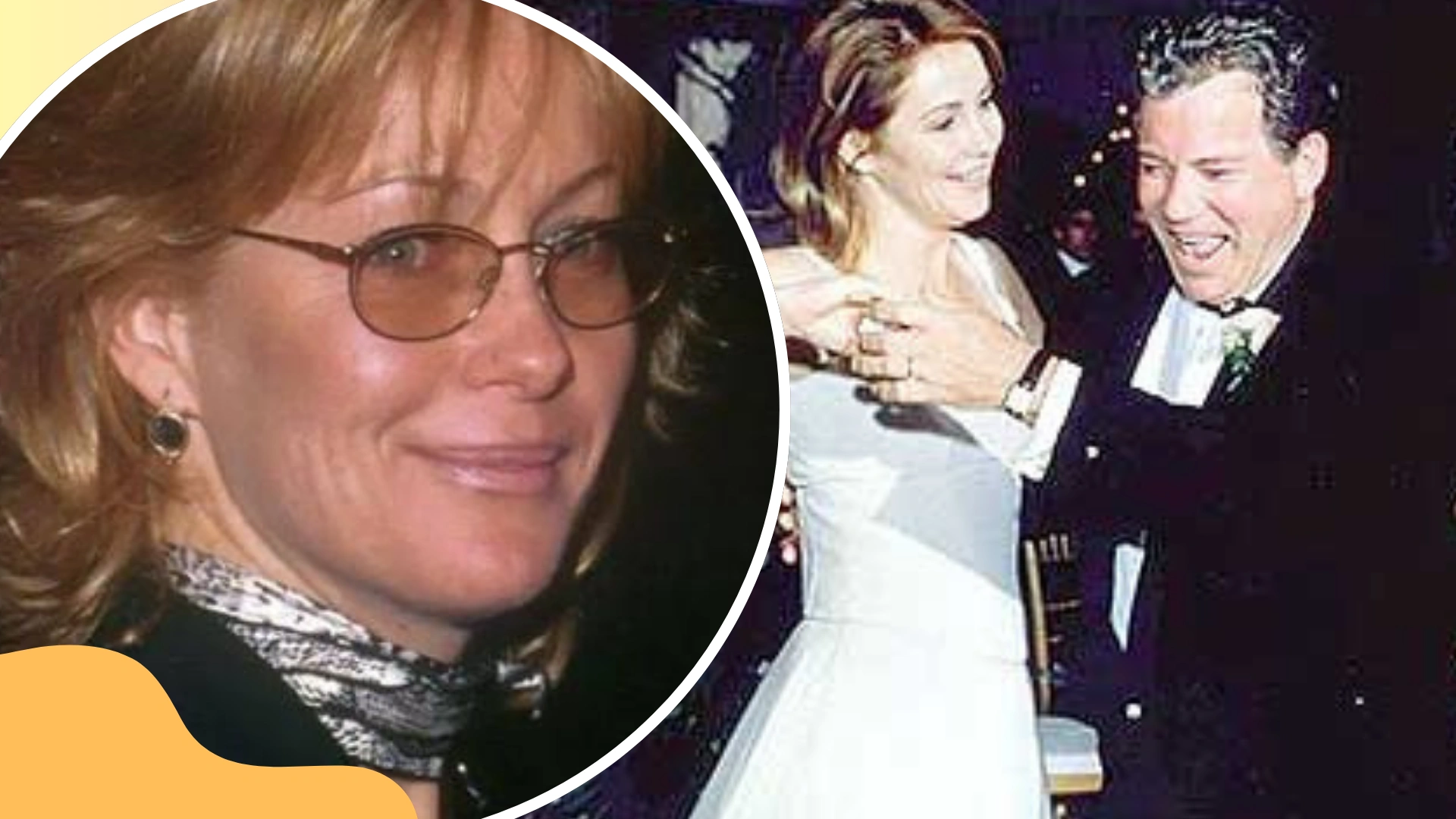
For most of the public, the name Nerine Kidd is inseparable from a single, sorrowful headline: the model and actress who drowned in the backyard swimming pool of her husband, Star Trek icon William Shatner, in the summer of 1999. But reducing her to that final moment does a disservice to a woman who lived a full, complicated, and at times glamorous life long before she ever crossed paths with the actor who played Captain Kirk. This post looks at who Nerine Kidd was, how she came to marry one of Hollywood’s most recognizable stars, the addiction that quietly shaped her final years, and the circumstances of her death, a story that remains one of the more heartbreaking footnotes in celebrity history.
Nerine Kidd: Early Life and a Career in Modeling
Nerine Elizabeth Kidd was born on July 13, 1959, in Lake Worth, Florida. Long before she settled in California or appeared in front of a camera for television and film work, she built a career as a fashion model, a path that took her across Europe during the modeling boom of the 1980s. Accounts of her early years describe a woman who was striking, magnetic, and determined, someone whose charisma carried her from small-town Florida to international runways and, eventually, to Los Angeles.
It was during this modeling era that she is said to have formed lasting friendships within the industry, the kind that only develop when young people are thrown together in foreign cities, chasing bookings and building portfolios. By the time she transitioned toward acting in the late 1980s and 1990s, she had already lived several lives: model, world traveler, and a fixture of a competitive, glamorous, and often unforgiving industry.
Her on-screen credits were modest by Hollywood standards. She is best remembered in acting circles for a supporting role in the 1990 production Umetni raj and for an appearance in the 1999 television film A Twist in the Tale. These were not the star-making roles that define a career, but they were part of a broader effort to build a life in front of the camera after modeling, a common trajectory for models of her generation who wanted more creative control and longevity than the fashion industry typically allowed.
How Nerine Kidd Met William Shatner
Nerine Kidd’s life took a dramatic turn in 1994, when she met William Shatner while he was directing a television project in Toronto. Shatner, by then a global icon thanks to his role as Captain James T. Kirk in Star Trek, was 28 years her senior. Despite the age gap, the two reportedly connected immediately. Shatner would later describe the attraction as instantaneous, recalling being captivated by her energy, her looks, and her sharp sense of humor.
The relationship between Nerine Kidd and Shatner developed over the following years, eventually leading to marriage in November 1997 in a lavish, star-studded ceremony in Pasadena, California. The wedding drew attention not just because of Shatner’s fame, but because of who stood beside him: his close friend and longtime Star Trek co-star Leonard Nimoy served as best man. At the reception, Shatner reportedly referred to Nerine as my queen and spoke warmly of how she had won him over. For a moment, at least publicly, it looked like a storybook second act for a man who had already been married twice before.
Nerine Kidd also became a stepmother during this period, joining a blended family that included Shatner’s three daughters from his earlier marriage, Leslie, Lisabeth, and Melanie. Photographs from the era, including images from Star Trek anniversary events and charity functions the couple attended together, show two people who, at least in public, appeared to be genuinely happy.
Nerine Kidd’s Marriage, Shadowed by Addiction
Behind the polished exterior of red-carpet appearances and charity galas, the marriage of Nerine Kidd and William Shatner was reportedly far more fragile than it appeared. Nerine Kidd had struggled with alcoholism, a battle that intensified rather than eased after her marriage to Shatner. Friends and biographers who have discussed her later years describe a woman fighting an addiction that had taken hold long before she became a public figure through her marriage, one that proved difficult to manage even with the resources and support that came with her new life.
The strain on the marriage became significant enough that, only about ten months after their wedding, Shatner filed for divorce. According to accounts of the period, this was not simply a rejection but, in his telling, an attempt at an intervention of sorts, a hope that the shock of a divorce filing might serve as a wake-up call that would push Nerine Kidd toward getting help. Whether or not that strategy might have worked given more time is something no one will ever know, because the couple never resolved. They remained legally married, and by most accounts still emotionally entangled and hopeful for reconciliation, when tragedy struck the following year.
This chapter of their story reflects a pattern seen too often in high-profile relationships: a public image of stability and glamour existing alongside a private, painful struggle with addiction that outsiders rarely see until it is too late. It’s a reminder that fame and wealth do not insulate anyone from the realities of substance use disorders, nor do they make those disorders easier to treat.
The Night Nerine Kidd Died: August 9, 1999
On August 9, 1999, William Shatner returned home to the couple’s Studio City residence and made a devastating discovery: the body of Nerine Kidd at the bottom of their backyard swimming pool. She was 40 years old.
The initial shock of the discovery gave way, in the following weeks, to a formal investigation and autopsy. According to reporting from the Los Angeles Times published that October, the final autopsy results indicated that Nerine Kidd had been drinking heavily and had also taken sleeping pills on the night she died. Investigators determined that she had likely misjudged the depth or edge of the pool while intoxicated, sustaining a neck injury that contributed to her drowning. Her blood-alcohol level at the time was reported to be roughly three times the legal limit for driving, underscoring just how significantly alcohol was a factor in the events of that night.
The death was officially ruled accidental, not a suicide, not foul play, but a tragic convergence of impaired judgment, physical injury, and water. It was the kind of death that, sadly, is not unique to the famous or the wealthy; drowning deaths involving alcohol and sedative use happen every year to people whose names never make headlines. What made the death of Nerine Kidd a matter of public record and lasting public interest was simply the fact that she was married to one of the most recognizable actors of the 20th century.
Aftermath: How the Nerine Kidd Story Has Been Told
In the years since her death, Nerine Kidd’s story has been revisited periodically, in biographical retrospectives about William Shatner, in true crime and tabloid-style features revisiting Hollywood tragedies, and in fan communities that continue to discuss the Star Trek universe and the personal lives of its stars. Some retellings focus heavily on the more sensational aspects of her death, while others attempt a more measured, sympathetic look at a man whose life was cut short by an illness that remains widely misunderstood.
It’s worth noting that accounts of this period vary in tone and detail, and some retrospective pieces lean into dramatic framing that may not be entirely verifiable. Shatner himself has spoken and written about Nerine Kidd’s death over the years, including reflections included in his memoirs, but as with any public figure recounting a painful chapter of his own life, his perspective is naturally shaped by his own experience and grief. What is consistently reported, however, is the basic timeline: their meeting in 1994, their marriage in 1997, the divorce filing roughly ten months later, and her death in August 1999, all corroborated by contemporary news coverage and public records, including her Find a Grave memorial, which notes she is buried at Forest Lawn Memorial Park in the Hollywood Hills.
Nimoy’s involvement in the story extends beyond serving as best man; some accounts suggest he had reservations about the marriage from the start, reportedly having tried to caution Shatner given Nerine Kidd’s struggles with alcohol, a caution that some biographers note came from a place of personal understanding, as Nimoy had his own history with alcohol dependency earlier in his life. Whether or not those warnings played out exactly as later described, the broader picture is one of friends and family aware of a serious problem, even as the couple moved forward with their relationship.
Why Her Story Still Resonates
More than two decades later, Nerine Kidd’s story continues to surface in articles, forums, and retrospectives, and it’s worth asking why. Part of the answer is simple celebrity gossip; any story connected to a figure as enduring as William Shatner draws attention by association. But there’s a more substantive reason her story lingers: it’s a stark illustration of how addiction operates in the shadows of even the most photographed, seemingly charmed lives.
Alcoholism doesn’t discriminate based on fame, beauty, or access to resources. Nerine Kidd had all three, and it wasn’t enough to protect her from a disease that ultimately took her life at 40. Her story is a sobering reminder, pun not intended, that public appearances rarely tell the full story of what’s happening behind closed doors, and that struggles with substance use often remain hidden until a crisis forces them into view.
For those interested in the human side of Hollywood history, beyond the red carpets and TV credits, Nerine Kidd’s life offers a case study in the gap between public image and private pain. She was a model who traveled the world, an actress building a second career, a stepmother to three young women, and a wife whose marriage was, by most accounts, marked by real affection alongside real crisis. Her death was a tragedy in the truest sense: preventable in hindsight, but tangled in the difficult, often invisible realities of addiction.
Conclusion
Nerine Kidd deserves to be remembered as more than a cautionary headline. She was a woman with a career, a personality vivid enough to be described as magnetic by nearly everyone who wrote about her, and a life that spanned continents before it ended far too soon in a backyard pool in Studio City. Her story, viewed with empathy rather than sensationalism, is ultimately a human one, about love, illness, and the limits of even the most well-intentioned attempts to help someone we care about.
FAQs
Who was Nerine Kidd?
Nerine Kidd (July 13, 1959 – August 9, 1999) was an American model and actress, best known as the third wife of Star Trek star William Shatner.
How did Nerine Kidd die?
She drowned in the backyard swimming pool of the home she shared with William Shatner. An autopsy found she had been drinking heavily and had taken sleeping pills, and that she sustained a neck injury after likely misjudging the pool’s edge while intoxicated. Her death was ruled accidental.
When did Nerine Kidd marry William Shatner?
They married in November 1997 in Pasadena, California, with Leonard Nimoy serving as best man. They had met three years earlier, in 1994, while Shatner was directing a project in Toronto.
Did William Shatner and Nerine Kidd divorce before her death?
Shatner filed for divorce about ten months into the marriage, reportedly hoping it would push Nerine Kidd to seek help for alcoholism. The divorce was never finalized, and they were still legally married when she died in 1999.
Where is Nerine Kidd buried?
She is buried at Forest Lawn Memorial Park in the Hollywood Hills, Los Angeles.
Leave a Reply