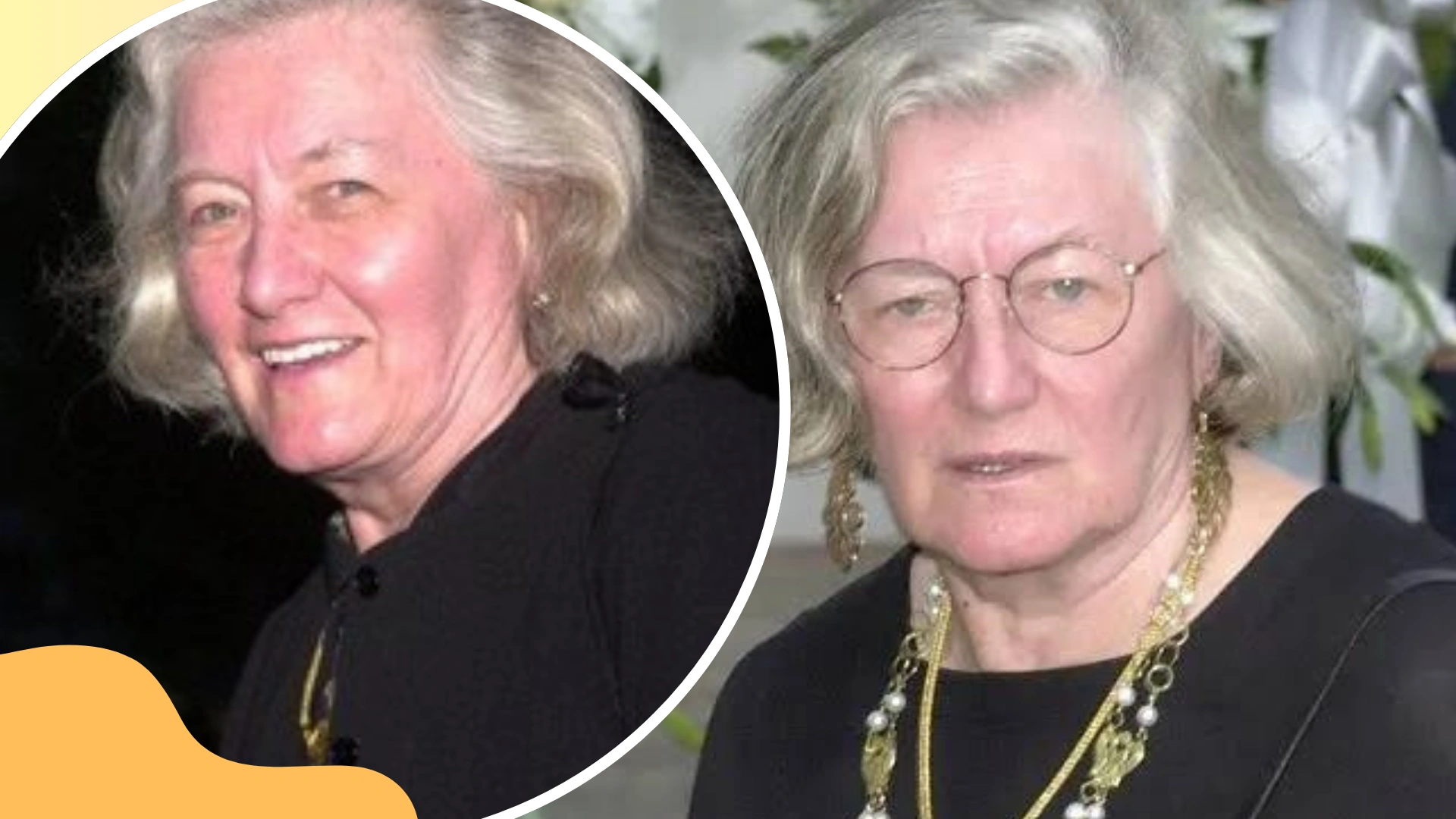
Nancy Fields O’Connor spent more than five decades in the orbit of one of American television’s most recognizable names, yet her own life reads less like a footnote to fame and more like a full career of its own. She was a philanthropist, an author, an occasional actress, a documentary producer, and a preservationist of Native American history, all while raising a family alongside her husband, actor Carroll O’Connor. To understand Nancy Fields O’Connor is to look past the actor’s wife label and into a life shaped by Montana roots, personal loss, and a genuine commitment to causes that outlasted any single role she played.
Who Was Nancy Fields O’Connor?
Nancy Fields O’Connor was best known publicly as the wife of Carroll O’Connor, the actor who played Archie Bunker on All in the Family and later starred as Sheriff Bill Gillespie on In the Heat of the Night. But reducing her to that connection undersells what she built independently. She was a founding member of the John Wayne Cancer Institute, a board member of the Smithsonian’s National Museum of the American Indian, an author who documented her grandfather’s historic photography of the Crow Tribe, and an executive producer of a jazz documentary. Friends and colleagues who worked alongside her described someone deeply engaged with causes tied to cancer research, Indigenous history, and the arts, not simply someone standing beside a famous husband at industry events.
Born Anne Kathleen Fields, she went by Nancy for her entire adult life, a preference reflected consistently in her obituary, her professional credits, and public records. That detail alone tells you something about her: she moved through the world on her own terms, choosing the name that felt like hers rather than the one on her birth certificate.
Early Life in Montana
Nancy Fields O’Connor’s roots trace back to the Pacific Northwest and the Mountain West rather than Hollywood. She and her brother, John, were born in Spokane, Washington, but the family’s real anchor was Montana. Her parents, Ralph and Hulda Miller Fields, worked for the U.S. Forest Service, which meant a childhood spent moving through Libby, Billings, and St. Maries, Idaho, before the family settled more permanently in Missoula. She lived on McLeod Avenue, Blaine Street, and South Sixth Street East at various points growing up, a detail that speaks to the itinerant nature of a Forest Service household in the mid-twentieth century.
Both of her parents were graduates of the University of Montana, and Nancy followed that same path, eventually earning her own degree there. That university connection would resurface decades later in one of the more lasting philanthropic contributions she and Carroll made together. Her grandfather, Fred E. Miller, also left a mark on the region that would shape her later work: he spent years photographing the Crow Indian Tribe in the late nineteenth and early twentieth centuries, a body of work Nancy would eventually help bring to public attention.
Meeting and Marrying Carroll O’Connor
Nancy Fields met Carroll O’Connor while both were students connected to the University of Montana theater scene, where his early interest in acting first took shape after he returned from serving in the Merchant Marines. The two married on July 28, 1951, beginning a partnership that would last exactly fifty years, until Carroll’s death in June 2001, just weeks before what would have been their golden anniversary.
Their marriage unfolded largely outside the spotlight even as Carroll’s career eventually made him one of the most famous faces on American television. Nancy Fields O’Connor was frequently described by those who knew the couple as the steadying presence in a household that had to absorb the strange pressures of sudden fame once All in the Family became a cultural phenomenon in the 1970s. She managed a domestic life that gave her husband room to take on a role as controversial and demanding as Archie Bunker, a bigoted, working-class antihero whose popularity forced the show’s cast into constant public scrutiny and debate.
Family Life and the Adoption of Hugh O’Connor
In 1962, while Carroll was in Rome filming Cleopatra, he and Nancy adopted a newborn boy just six days old. They named him Hugh Edward Ralph O’Connor, after Carroll’s younger brother, who had died in a motorcycle accident the previous year. Hugh would go on to become an actor in his own right, most notably playing Officer Lonnie Jamison on In the Heat of the Night, a series that allowed father and son to work together on screen.
Hugh’s life took a difficult turn when he was diagnosed with Hodgkin’s lymphoma at sixteen. He survived the cancer through chemotherapy and surgery, but the prescription medication used to manage his pain during treatment led to a long struggle with drug addiction that persisted despite repeated stays in rehabilitation programs. On March 28, 1995, Hugh died by suicide after a prolonged battle with substance dependence, a loss that devastated both of his parents. Nancy Fields O’Connor, alongside Carroll, channeled that grief into public advocacy around addiction and, in Carroll’s case, a much-publicized legal case against the man he believed had supplied Hugh with drugs.
The loss of Hugh remained a defining, painful chapter in the family’s story, and it shaped much of the couple’s later philanthropic focus, pushing both of them toward causes connected to health, recovery, and legacy-building in their son’s memory.
Acting Career and Screen Appearances
While never a headline performer, Nancy Fields O’Connor did appear on screen at points throughout her life. Her credits include the 1976 television special A Whale of a Tale, an appearance on The Mike Douglas Show in 1961, and a role in the acclaimed 1995 documentary The Celluloid Closet, which examined the portrayal of gay and lesbian characters in Hollywood film history. These credits paint the picture of someone comfortable in front of a camera when the project called for it, even though acting was never the center of her professional identity the way it was for her husband.
Her more substantial creative contributions came later in life, when she moved from occasional performer to producer and author, applying her interests in history and storytelling to projects she could shape from the ground up rather than roles written for her.
Philanthropy and the John Wayne Cancer Institute
One of the most significant threads running through Nancy Fields O’Connor’s adult life was her commitment to cancer research, which took on added personal weight given her family’s experiences with the disease. She was a founding member of the John Wayne Cancer Institute, an organization dedicated to advancing treatment and research, particularly around melanoma. In 1990, she and Carroll received the Institute’s Duke Award, given in recognition of their sustained support for cancer research efforts.
This wasn’t a symbolic honorary title. Nancy Fields O’Connor was actively involved in building out the charitable infrastructure that supported melanoma research and treatment, work that continued for years and connected her to a broader community of philanthropists and medical professionals in Southern California.
Supporting Melanoma Research at UCLA
Beyond her work with the John Wayne Cancer Institute, Nancy Fields O’Connor helped develop a charitable support group tied to a melanoma cancer research and treatment center at UCLA. Melanoma research in particular remained a consistent focus of her philanthropic energy, and when she passed away, her family requested that tributes be directed toward melanoma research at the John Wayne Cancer Institute rather than traditional flowers, a final indication of how central that cause remained to her right up to the end of her life.
The University of Montana and the Rocky Mountain West Center
Nancy Fields O’Connor’s ties to the University of Montana never faded, even after decades in California. In 1997, she and Carroll donated one million dollars to the university’s Center for the Rocky Mountain West, an institute focused on regional studies and public policy across the Mountain West. The gift was significant enough that the university renamed the institute the Carroll and Nancy Fields O’Connor Center for the Rocky Mountain West, a designation that still marks the couple’s connection to the school where they first met decades earlier.
That gift reflected a pattern in how Nancy Fields O’Connor approached philanthropy throughout her life: she gravitated toward institutions and causes with genuine personal meaning, whether that meant a university that shaped her early adulthood, a medical center working on diseases that touched her own family, or a museum dedicated to preserving history connected to her own ancestry.
Preserving Her Grandfather’s Legacy: Fred E. Miller and the Crow Tribe
Perhaps the most distinctive contribution Nancy Fields O’Connor made outside the world of entertainment and cancer philanthropy involved her own family history. Her grandfather, Fred E. Miller, spent years between 1895 and 1920 photographing the Crow Indian Tribe, amassing a collection of more than six hundred images that documented Crow life during a period of enormous change for Native communities across the American West.
Nancy took on the work of researching, curating, and publicizing that collection, developing a celebrated exhibition built around her grandfather’s photographs. In 1985, she authored Fred E. Miller: Photographer of the Crows, published by Carnan Vidfilm, a book that gave broader public access to images that might otherwise have remained a private family archive. That project connected her ancestral history in Montana directly to a body of historical scholarship on Native American life in the region, and it established her as someone with genuine expertise in this area rather than a casual hobbyist working with old family photographs.
Board Service at the Smithsonian National Museum of the American Indian
Nancy Fields O’Connor’s interest in Native American history and preservation extended to a formal role on the board of the Smithsonian’s National Museum of the American Indian, where she contributed to the design process ahead of the museum’s opening in 2004. This role placed her work with her grandfather’s Crow Tribe photography inside a much larger national context, connecting a family archive from rural Montana to one of the country’s most prominent cultural institutions on the National Mall in Washington, D.C.
Her involvement in the museum’s development reflected years of accumulated credibility in the field of Native American historical preservation, credibility she built gradually through the Fred E. Miller project and her ongoing engagement with Crow Tribe history.
Documentary Producing: Anita O’Day
Later in her career, Nancy Fields O’Connor moved into documentary film production, serving as executive producer on the 2007 film Anita O’Day: The Life of a Jazz Singer. The documentary chronicled the career of jazz vocalist Anita O’Day, whose decades-long career and personal struggles made for a compelling subject. Nancy’s involvement in this project showed a continued interest in preserving and telling the stories of notable figures whose full histories risked being reduced to a handful of famous moments, an instinct that mirrors her own approach to her grandfather’s photography work.
Losing Hugh and Carroll
The years surrounding Hugh’s death in 1995 and Carroll’s death in June 2001 marked the most difficult stretch of Nancy Fields O’Connor’s life. Carroll passed away in Culver City, California, just over a month before the couple’s fiftieth wedding anniversary, closing out a marriage that had weathered enormous public scrutiny, professional pressure, and profound personal grief. Those who wrote about the couple in the years following consistently pointed to the strength of their partnership through these losses, describing a relationship built on mutual support that carried both of them through some of the hardest moments a family can face.
Following Carroll’s death, Nancy continued the philanthropic and cultural work the two of them had built together, maintaining her involvement with the causes tied to cancer research, Native American history preservation, and the arts that had defined much of their shared life.
Final Years and Death
Nancy Fields O’Connor spent her later years in Malibu, California, where she lived until her death on November 10, 2014, at the age of 84. She had been living with Alzheimer’s disease for roughly a decade before she passed away, according to her brother John Fields. Her funeral was held in Malibu later that month, and her family directed memorial tributes toward melanoma research at the John Wayne Cancer Institute, the organization she had helped establish decades earlier.
Her death drew coverage primarily framed around her marriage to Carroll O’Connor, but obituaries and tributes also made a point of noting that she was, in her own right, an artist, author, activist, and philanthropist whose contributions extended well beyond the entertainment industry that made her husband famous.
Legacy
Nancy Fields O’Connor’s legacy sits at an unusual intersection of Hollywood history, cancer research philanthropy, and Native American cultural preservation. Few people connected to the entertainment industry left behind a body of work quite like hers: a book documenting a grandfather’s historic photography of the Crow Tribe, a named research center at a Montana university, a founding role at a major cancer institute, and a seat on the board that helped shape one of the Smithsonian’s national museums.
The Carroll and Nancy Fields O’Connor Center for the Rocky Mountain West continues to operate at the University of Montana, carrying both of their names into ongoing academic work on the region that shaped Nancy’s early life. Her book on Fred E. Miller remains a reference point for those studying Crow Tribe history and early twentieth-century Indigenous photography in Montana. And the John Wayne Cancer Institute continues research efforts that trace back, in part, to the founding support she and Carroll provided in the institute’s early years.
For anyone approaching her story expecting only details about a famous actor’s marriage, Nancy Fields O’Connor’s actual record offers something more substantial: a life built around causes she chose deliberately and pursued consistently, long after the television cameras that made her husband famous had stopped rolling.
Conclusion
Nancy Fields O’Connor’s story resists the simple framing of the actor’s wife. Her marriage to Carroll O’Connor spanned fifty years and weathered profound loss, including the death of their son Hugh in 1995, yet her own record stands on its own terms: a founding role at the John Wayne Cancer Institute, a named research center at the University of Montana, a published account of her grandfather’s photography of the Crow Tribe, and a seat on the board that helped shape the Smithsonian’s National Museum of the American Indian. Taken together, these contributions describe a woman who used her position to support causes tied to her own history and values, leaving a legacy that extends well beyond the household of a famous television star.
Frequently Asked Questions
Who was Nancy Fields O’Connor?
Nancy Fields O’Connor was a philanthropist, author, occasional actress, and documentary producer best known as the wife of actor Carroll O’Connor, though she built an independent record of work in cancer research philanthropy and Native American history preservation.
What was Nancy Fields O’Connor’s connection to Carroll O’Connor?
She married Carroll O’Connor on July 28, 1951, and the two remained married until his death in June 2001, just weeks short of their fiftieth anniversary.
How did Nancy Fields O’Connor contribute to cancer research?
She was a founding member of the John Wayne Cancer Institute, helped develop a UCLA melanoma research support group, and received the Institute’s Duke Award with Carroll in 1990 for their support of cancer research.
Why is Nancy Fields O’Connor connected to the Crow Tribe?
Her grandfather, Fred E. Miller, photographed the Crow Indian Tribe between 1895 and 1920, and she later curated an exhibition and authored a 1985 book on his historic collection of over 600 photographs.
When did Nancy Fields O’Connor die?
She died on November 10, 2014, at her home in Malibu, California, at age 84, after living with Alzheimer’s disease for about a decade.
Leave a Reply