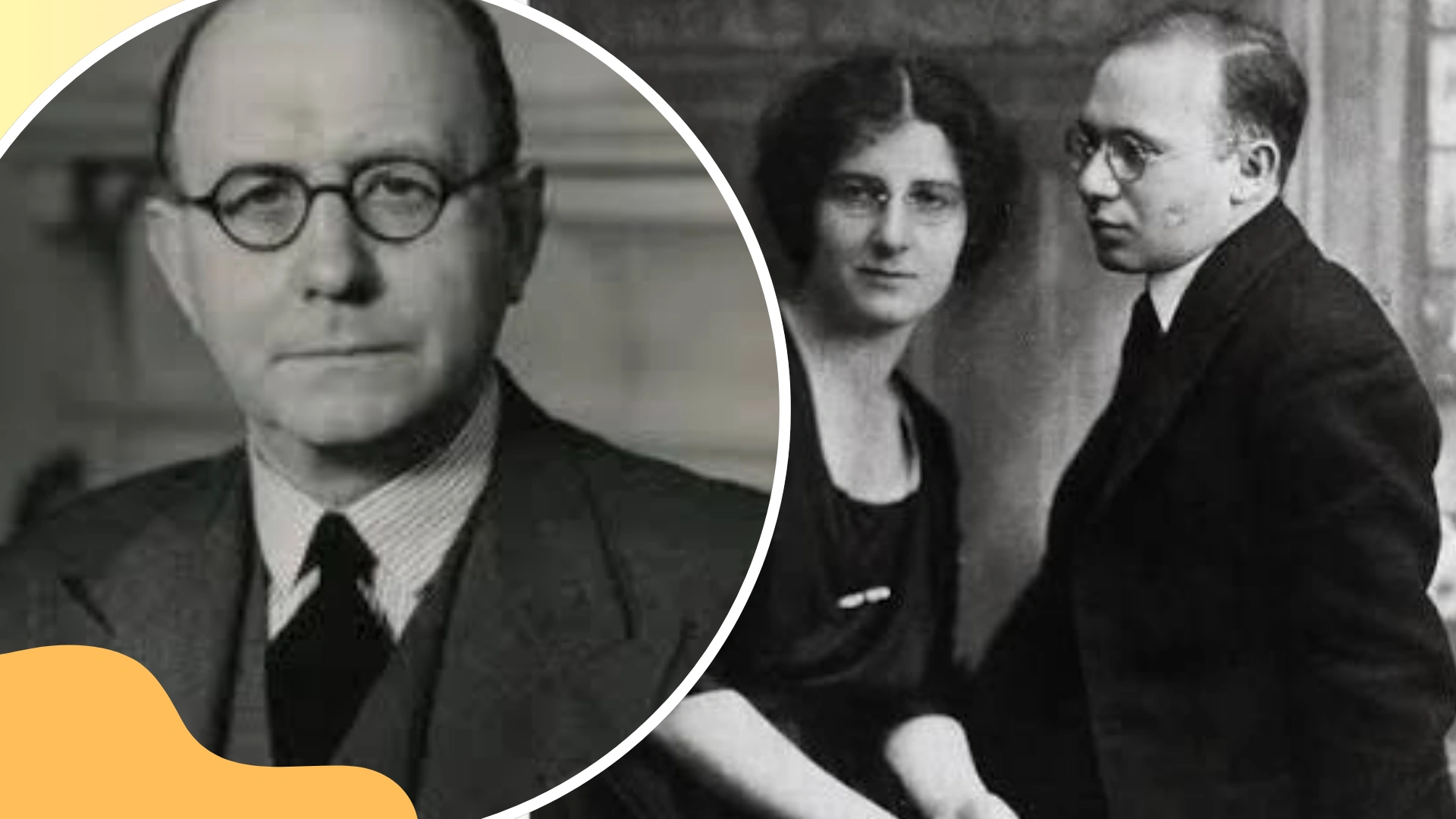
Morris Meyerson rarely appears at the center of the story he helped shape. Most people who come across his name are looking for context on his far more famous wife, Golda Meir, the woman who became Israel’s fourth prime minister and the first woman to hold that office anywhere in the Middle East. But Morris Meyerson was a person in his own right, with his own interests, his own convictions, and his own quiet role in one of the twentieth century’s most consequential political marriages. Understanding who he was adds depth to the well-known Golda Meir story and reveals a man whose life took a very different shape than the one he may have originally imagined for himself.
Who Was Morris Meyerson?
Morris Meyerson was born on December 17, 1893, in Chicago, Illinois, to Isaac Meyerson and Sarah Rivka Fleishman Meyerson. He grew up as one of several children in the household, with siblings named Grace, Gertrude, Sarah, Rose, and Rae. Unlike his future wife, whose family had emigrated from the Russian Empire amid the violence of the Kyiv pogroms, Morris Meyerson was American-born, raised in the Midwest during a period of rapid immigration, industrial growth, and political ferment among Jewish communities in cities like Chicago and Milwaukee.
By most accounts, Morris Meyerson was a thoughtful, artistically inclined young man. He worked as a sign painter, a trade that gave him a steady if modest income, and he nurtured a genuine passion for music, poetry, and literature. Friends and biographers of Golda Meir have often described him as gentle, intellectual, and somewhat introspective, a contrast to the more outwardly driven and politically ambitious woman he would eventually marry. He was also drawn early on to socialist ideas, aligning himself with young Jewish socialist circles that were common in American cities at the time.
How Morris Meyerson Met Golda Meir
The two met in Denver, Colorado, of all places. Golda Meir, born Goldie Mabovitch, had run away from her family’s home in Milwaukee as a teenager to escape her parents’ insistence that she abandon her education and marry young. She went to live with her older sister, Sheyna, in Denver. It was there, in the household gatherings and late-night political discussions that filled her sister’s apartment, that she encountered Morris Meyerson.
Those Denver evenings were formative for both of them. The apartment became something of a salon for young immigrants and radicals debating socialism, Zionism, and the future of Jewish life. Morris Meyerson, drawn into this circle, found in the young Goldie Mabovitch someone whose intensity and conviction matched, and perhaps exceeded, his own. Their courtship developed against this backdrop of ideological debate, and it set the tone for what their relationship would eventually become: a partnership shaped as much by political commitment as by personal affection.
The Marriage of Morris Meyerson and Golda Meir
Morris Meyerson and Golda Meir married on December 24, 1917, in a ceremony held at her parents’ home in Milwaukee. Golda reportedly would have preferred a simple civil marriage, reflecting her socialist leanings and her ambivalence toward religious tradition, but she ultimately agreed to a traditional Jewish wedding at her mother’s urging. The compromise was, in some ways, an early sign of the negotiations that would characterize their marriage: two people with strong individual convictions trying to find common ground.
What made the union significant beyond the personal was a shared ideological commitment. Morris Meyerson supported his wife’s growing dedication to the Zionist cause, and it was largely because of her determination, fueled in part by encounters with Zionist leaders such as David Ben-Gurion and Yitzhak Ben-Zvi during their visits to Milwaukee, that the couple made the life-altering decision to immigrate to Palestine. Morris agreed to make the journey, even though his own enthusiasm for pioneer life in a harsh, undeveloped land was reportedly more measured than his wife’s.
Life on Kibbutz Merhavia
In 1921, Morris Meyerson and Golda Meir left the United States and immigrated to Mandatory Palestine, settling at Kibbutz Merhavia in the Jezreel Valley. Life on the kibbutz was physically demanding and ideologically intense, built around collective labor, shared resources, and a communal ethos that left little room for private comfort or individual pursuits. For Golda, this environment proved energizing. She threw herself into kibbutz life, working in the fields, joining committees, and quickly becoming known for her organizational skill and political engagement.
For Morris, the adjustment was harder. Accounts from those who knew the couple suggest he struggled with the communal lifestyle and missed the intellectual and artistic pursuits that had defined his life in America. The rigid schedules, the physical labor of clearing land and tending crops, and the near-total absence of privacy stood in sharp contrast to the quieter, more contemplative existence he had known as a sign painter in the Midwest. Where Golda seemed to draw strength from the collective spirit of the kibbutz, Morris often felt as though a part of himself, the part drawn to books, music, and solitary reflection, had no place in that world.
The tension between his temperament and the demands of kibbutz existence would become a recurring theme in the marriage. Some biographers have pointed to this early friction as a preview of the larger imbalance that would eventually define their relationship: Golda thrived amid ideological intensity and constant activity, while Morris longed for a more settled, private life centered on family rather than collective enterprise. Even so, the couple persisted at Merhavia for a few years before deciding to leave the kibbutz altogether, a decision driven in large part by Morris’s health and his difficulty adapting to the physical demands of agricultural labor.
Moving to Jerusalem and Starting a Family
By the mid-1920s, Morris Meyerson and Golda Meir had relocated to Jerusalem, a move that reflected both practical necessity and the widening gap between their respective priorities. In Jerusalem, the family grew. Their son, Menachem, was born in November 1924, and their daughter, Sarah, followed in May 1926. For a time, family life took center stage, and Morris worked to support the household while Golda balanced motherhood with an increasingly active role in Jewish political and labor organizations.
Menachem Meyerson would go on to become an accomplished cellist, studying at the Manhattan School of Music and later earning a graduate degree from the University of Connecticut. He trained under respected musicians and performed widely across Israel, Europe, and the Americas over the course of his career, a career path that echoed his father’s own artistic sensibilities more than his mother’s political ones. Sarah Meyerson, meanwhile, remained closely tied to the kibbutz movement in Israel throughout much of her adult life, choosing a path grounded in the same communal ideals that had originally drawn her parents to Palestine. Both children carried forward different threads of their parents’ contrasting personalities: one leaning toward art and individual expression, the other toward collective purpose and rootedness in the land.
This split in temperament between Menachem and Sarah is often noted by those who study the Meyerson family closely, since it mirrors so clearly the divide that existed between their parents. Morris’s love of music found its clearest continuation in his son, while Golda’s devotion to the collective Zionist project lived on most visibly in her daughter’s choices. In this way, the Jerusalem household of the 1920s, however strained by competing demands, produced two children whose lives can be read almost as a dialogue between their mother’s and father’s differing worldviews.
The Growing Distance Between Morris and Golda
As Golda Meir’s involvement in the Histadrut, the General Federation of Labour, deepened through the late 1920s and into the 1930s, she took on more responsibilities that pulled her away from home for extended periods. She was appointed secretary of the Women’s Labour Council in 1928 and later served in various capacities that placed her at the center of the emerging institutions that would eventually form the backbone of the State of Israel.
This professional ascent placed real strain on the marriage. Morris Meyerson, by nature more private and less driven by public ambition, found himself increasingly on the periphery of his wife’s rapidly expanding political life. The couple eventually separated, though they never formally divorced. Golda Meir would later write and speak about the difficulty of balancing her marriage with her political calling, acknowledging that her commitment to public life came at a cost to her personal relationships, including her marriage to Morris.
Despite the separation, the two maintained a connection rooted in shared history, mutual respect, and their children. Golda continued to use the surname Meyerson professionally for years, only Hebraizing it to “Meir” in 1956 at the suggestion of Prime Minister David Ben-Gurion, who encouraged senior officials to adopt Hebrew names as a matter of national identity.
Morris Meyerson’s Later Years
Details about Morris Meyerson’s life during his later years are relatively sparse compared to the extensive documentation of his wife’s political career, a common asymmetry when one partner in a marriage becomes a major historical figure and the other does not. What is known is that he remained in Israel, having built a life there over decades despite the personal difficulties that came with it. He continued to hold onto the interests that had defined him since his youth, including his appreciation for music and the arts.
Morris Meyerson died on May 25, 1951, at the age of 57. His death occurred well before Golda Meir’s rise to the pinnacle of Israeli politics; he did not live to see her serve as Minister of Foreign Affairs or as prime minister, and he never witnessed the world come to know his former wife under the Hebraized surname Meir. Golda Meir, who never remarried, spoke in later years about her enduring affection for Morris and expressed regret over how the demands of her career had affected their life together.
The fact that the couple never divorced despite years of living apart is telling. It suggests a bond that, while strained by circumstance and diverging priorities, was never entirely severed. Golda’s later reflections on the marriage, recorded in interviews and her own memoir, describe Morris with warmth and a measure of sadness, acknowledging that the life she chose was not the life he had originally signed up for when the two of them left Milwaukee together as young idealists.
Morris Meyerson’s Legacy
Morris Meyerson’s legacy is inseparable from that of Golda Meir, but it is not merely a footnote to hers. His willingness to leave a stable life in the United States and relocate to a demanding, unfamiliar environment in Mandatory Palestine reflects a level of commitment to shared ideals that helped make Golda Meir’s own journey possible. Without that early partnership, and without the practical and emotional support he provided during the family’s formative years in Palestine, the trajectory of her career might have looked very different.
He also left a personal legacy through his children. Menachem Meyerson’s career as a professional musician carried forward his father’s artistic temperament, while Sarah Meyerson’s lifelong connection to the kibbutz movement reflected the ideological world her parents had entered together in 1921. In this sense, Morris Meyerson’s influence persisted well beyond his death, expressed through the choices and paths of the next generation.
Why People Still Look Up to Morris Meyerson Today
Interest in Morris Meyerson tends to surface whenever public attention returns to Golda Meir, whether through documentaries, biographies, historical retrospectives, or dramatized portrayals of her life and the founding of the State of Israel. Audiences encountering her story for the first time often want to understand the man she married, what drew the two of them together, and why the marriage ultimately did not survive the pressures of her political rise.
There is also a broader curiosity about the personal lives of historical figures who operated in the shadow of a more famous spouse. Morris Meyerson’s story offers insight into a particular kind of sacrifice: the partner who supports a spouse’s larger ambitions, sometimes at high personal cost, without ever stepping fully into the public eye. His life adds nuance to the narrative of Golda Meir as a singular, almost mythic political figure, reminding readers that her path was shaped by real relationships, real compromises, and real people who do not always receive equal billing in the history books.
This dynamic is hardly unique to the Meyerson family, but it takes on particular resonance here because of the scale of Golda Meir’s eventual fame. Prime ministers and founding figures of nations are often remembered as if they arrived fully formed, defined solely by their public achievements. Morris Meyerson’s story is a reminder that behind even the most towering political careers are ordinary domestic histories: courtships, wedding-day compromises, arguments about where to live, and the slow drift that can occur between two people whose lives take different shapes over time. Readers curious about his name are, in effect, looking for that ordinary human layer beneath an extraordinary public legacy.
Conclusion
Looking at Morris Meyerson’s life alongside Golda Meir’s helps complete a picture that is often told from only one angle. Their marriage began in the socialist debating circles of Denver, matured through a shared commitment to Zionism, was tested by the hardships of kibbutz life in Palestine, and ultimately gave way under the weight of one partner’s extraordinary public destiny. Morris Meyerson was not a passive figure in this story. He was a man of genuine conviction who made a life-altering choice to follow his beliefs to a new country, raised two children who each carried forward different parts of his character, and left behind a quieter but no less meaningful contribution to the family that would later be associated with one of Israel’s most iconic leaders.
For readers drawn to the keyword Morris Meyerson, the appeal lies precisely in this kind of texture. It is not simply curiosity about a name attached to someone famous, but an interest in understanding the fuller human context behind a well-known historical narrative. Morris Meyerson’s story, modest as it may be in the historical record, offers exactly that: a window into the personal sacrifices, quiet resilience, and complicated partnership that helped shape the early life of Golda Meir before she became a name recognized around the world.
Frequently Asked Questions
Who was Morris Meyerson?
Morris Meyerson was an American-born sign painter and socialist who married Golda Meir in 1917 and later immigrated with her to Palestine, where their family helped lay the groundwork for what would become the State of Israel.
What did Morris Meyerson do for a living?
He worked as a sign painter in the United States and continued to support his family through various forms of work after settling in Palestine, though the historical record on his later employment there is limited.
How did Morris Meyerson and Golda Meir meet?
They met in Denver, Colorado, where Golda was living with her older sister and where the two were drawn together through a shared circle of young Jewish socialists.
Why did Morris Meyerson and Golda Meir separate?
The couple grew apart as Golda’s political career expanded through the Histadrut and later Israeli government roles, pulling her away from home for long stretches; they separated but never formally divorced.
How did Morris Meyerson die?
He died on May 25, 1951, at the age of 57, several years before Golda Meir rose to become Israel’s foreign minister and, later, its prime minister.
Leave a Reply