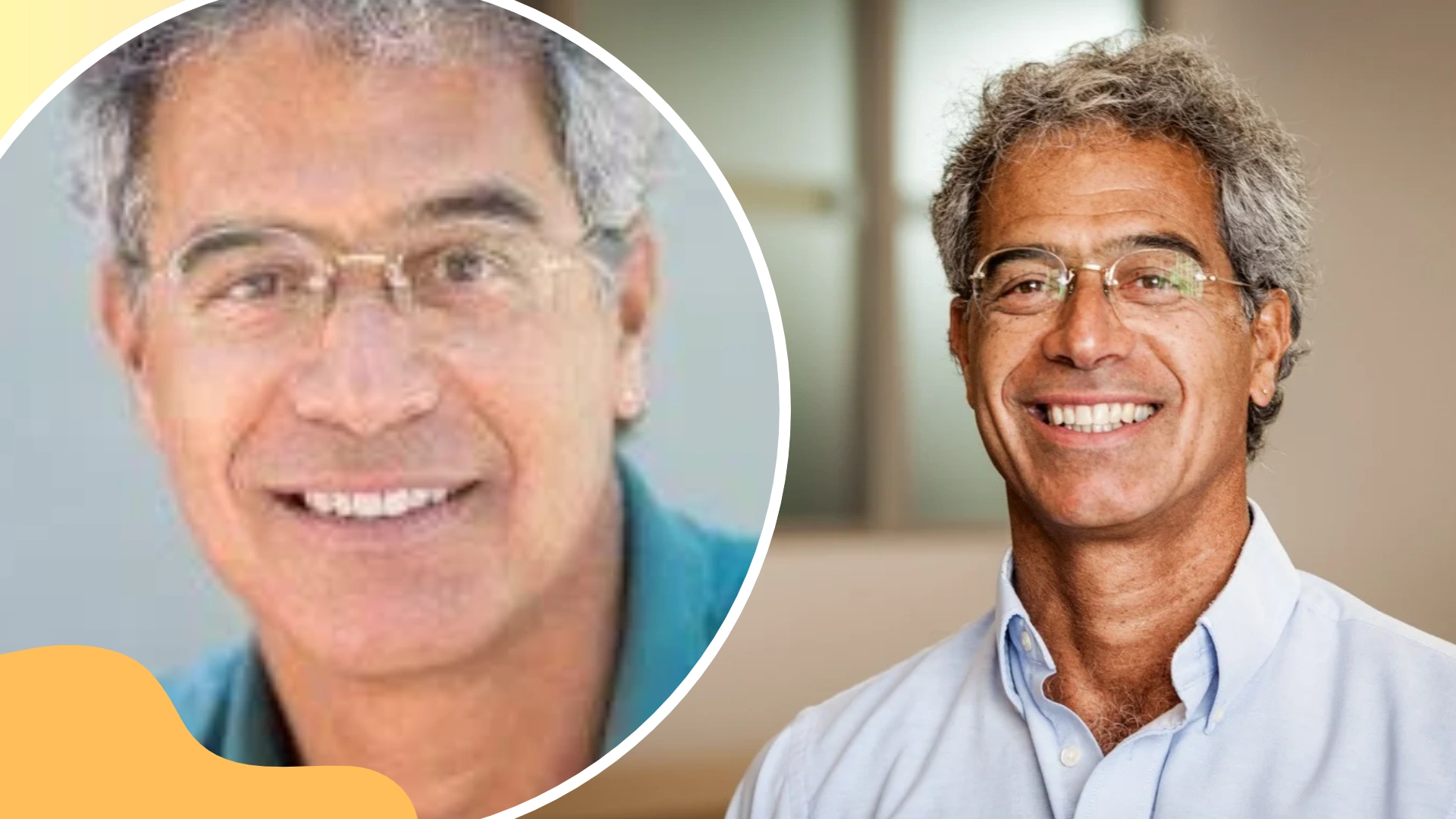
Mitchell Besser is not a household name in the way that celebrities or politicians often are, but within the world of global public health, his name carries significant weight. As a Harvard-trained obstetrician and gynecologist, Mitchell Besser built a career around one persistent question: how do you deliver medical care to people who are too frightened, too stigmatized, or too far from a clinic to receive it? His answer, developed on the ground in Cape Town, South Africa, became one of the most influential peer-to-peer health models of the early twenty-first century.
Who Is Mitchell Besser?
Mitchell Besser, often referred to professionally as Dr. Mitch Besser, is an American physician whose training in obstetrics and gynecology led him toward a specialization in maternal and reproductive health. He graduated from Harvard Medical School, a credential that shaped his early clinical career in the United States before his path took a dramatic turn toward international public health. In 1999, Besser relocated to Cape Town, South Africa, to join the University of Cape Town’s Department of Obstetrics and Gynecology. His role there involved helping develop clinical services aimed at preventing mother-to-child transmission of HIV, a field that was, at the time, in a state of medical urgency across sub-Saharan Africa.
What sets Mitchell Besser apart from many of his physician peers is not simply his clinical expertise but his willingness to challenge the assumption that better medicine alone solves public health crises. He observed something that data sheets and treatment protocols could not fully capture: women diagnosed with HIV during pregnancy were often too afraid, too ashamed, or too isolated to return for the follow-up care that could prevent them from passing the virus to their newborns. Medical science had produced the tools to nearly eliminate mother-to-child transmission of HIV, yet those tools were failing to reach the women who needed them most. That gap between what medicine could offer and what patients could actually receive became the defining problem of Besser’s career.
The Founding of mothers2mothers
In 2001, working out of Groote Schuur Hospital in Cape Town, Mitchell Besser founded mothers2mothers, an organization that would eventually become known simply as m2m. The idea was deceptively simple. Rather than relying solely on overstretched doctors and nurses to counsel and support HIV-positive pregnant women, Besser proposed employing women who were themselves living with HIV and had already been through the prevention-of-mother-to-child-transmission process. These mentor mothers, as they came to be called, could offer something that a clinician in a white coat often could not: lived experience, cultural fluency, and the credibility that comes from having walked the same path.
The model addressed a problem that had frustrated public health workers for years. Medical treatment for preventing mother-to-child HIV transmission existed and was often effective, but adherence and follow-through were inconsistent because of the social, emotional, and psychological barriers surrounding an HIV diagnosis. By training and employing women living with HIV to provide peer education and emotional support, mothers2mothers reduced the burden on doctors and nurses while dramatically increasing the odds that women would stay engaged with their own care and that of their infants.
Besser did not build mothers2mothers alone. Gene Falk and Robin Smalley served as co-founders, and together the three shaped an organization that grew from a single site in Cape Town into a continent-spanning initiative. Frank Beadle de Palomo later took over as president and chief executive officer, allowing Besser to shift from operational leadership into an advisory and strategic role, including service on both the South African and United States boards of the organization.
How mothers2mothers Grew Under Besser’s Vision
The scale of what mothers2mothers eventually achieved is difficult to overstate. What began as a single-site program in 2001 expanded to hundreds of program sites across multiple African countries, employing well over a thousand women living with HIV as peer educators and mentors. At its height, the organization’s reach touched a significant share of pregnant women living with HIV across the countries where it operated, and various accounts of its impact describe it reaching millions of mothers over the decades since its founding.
The organization’s home base in Cape Town remained central to its identity, but its programs extended into countries across sub-Saharan Africa, a region that bore a disproportionate share of the global burden of mother-to-child HIV transmission during the years mothers2mothers was scaling up. Besser’s initial insight, that peer support delivered by women with shared experience could succeed where clinical messaging alone often failed, proved durable as the organization matured. Over time, the mission broadened beyond HIV prevention alone to encompass a more comprehensive, family-centered approach to maternal, newborn, and child health, along with expanded attention to adolescent girls and young women.
Mitchell Besser’s contribution to this growth was recognized well beyond the borders of South Africa. He became associated with the Skoll Foundation as a Skoll Awardee, an honor reserved for social entrepreneurs whose organizations demonstrate exceptional, scalable impact. That recognition placed him alongside a small community of innovators working at the intersection of public health, community empowerment, and sustainable program design.
From Mothers to Elders: The Launch of AgeWell
Perhaps the most telling detail about Mitchell Besser’s career is what he chose to do after mothers2mothers had matured into a large, internationally respected institution. Rather than resting on that accomplishment, Besser turned his attention to an entirely different, though conceptually related, population: older adults. In 2014, he launched AgeWell, later operating as AgeWell Global, applying the same peer-to-peer employment model that had defined mothers2mothers, but redirected toward the social and physical well-being of aging populations.
The logic connecting the two ventures is consistent with everything that came before. Just as mothers2mothers trained HIV-positive women to support other women navigating a frightening diagnosis, AgeWell trains and employs older adults to check in on, support, and improve the well-being of their peers. The model was piloted in South Africa in 2014 and drew attention from organizations including the World Health Organization before expanding into the United States. Besser has described the underlying philosophy as one that treats older individuals not merely as recipients of care but as capable contributors to their communities, a reframing that mirrors the empowerment-based approach he pioneered with mentor mothers years earlier.
This pivot reveals something important about how Mitchell Besser thinks about public health more broadly. His work is not narrowly about HIV, and it is not narrowly about maternal health. It is about a repeatable idea: that people who have lived through a particular hardship are often the most effective, most trusted, and most cost-efficient messengers for helping others through the same hardship. Whether the population is pregnant women newly diagnosed with HIV or elderly individuals facing isolation and declining health, Besser’s career suggests that community-rooted, peer-delivered support can outperform top-down clinical models alone.
Recognition and Public Profile
Mitchell Besser’s work has attracted attention from a range of institutions and public figures over the years. mothers2mothers received a visit from Meghan Markle, the Duchess of Sussex, during a trip to South Africa, a moment that brought additional public attention to the organization’s mission. Besser has also been featured as a guest on podcasts and at academic seminars discussing his path from clinical obstetrics to founding two influential peer-support organizations, including at institutions such as the University of Southern California’s Keck School of Medicine.
His recognition as a Skoll Awardee places him within a broader ecosystem of global health innovators whose work has been validated by some of the most rigorous vetting processes in the social entrepreneurship space. Beyond formal awards, Besser’s biography and career arc are frequently cited in discussions of what effective, scalable global health interventions look like when they are designed around dignity and community ownership rather than dependency.
Why Mitchell Besser’s Model Still Matters
The relevance of Mitchell Besser’s work extends well past the specific programs he founded. His career offers a case study in a broader shift within global health thinking, away from purely clinical, top-down delivery of services and toward models that treat affected communities as partners and employees rather than passive recipients. This shift has influenced how many organizations, not just mothers2mothers or AgeWell, think about workforce design in low-resource settings.
There is also a practical, economic dimension to Besser’s model that deserves attention. Employing mentor mothers or peer elders is not just a matter of compassion or ideology; it is a labor strategy that expands the effective capacity of a healthcare system without requiring the same investment as training additional doctors and nurses. In settings where clinical staff are chronically overstretched, as was and remains the case across much of sub-Saharan Africa, this kind of task-shifting can be the difference between a prevention program that exists on paper and one that reaches the people who need it.
Besser’s transition from HIV-focused maternal health to aging-focused peer support also speaks to a demographic reality that is reshaping public health priorities worldwide. Populations are aging rapidly, not only in wealthy countries but increasingly in middle-income and developing regions as well. The peer-support infrastructure that AgeWell is building anticipates a need that will only grow more urgent in the coming decades, positioning Besser’s second act as arguably as forward-looking as his first.
The Broader Lessons From Mitchell Besser’s Career
For readers encountering Mitchell Besser’s name for the first time, likely through curiosity about mothers2mothers, AgeWell, or a passing mention connected to a public figure like Meghan Markle, it is worth understanding the throughline that connects his work. He is not primarily a celebrity-adjacent figure or a public personality; he is a physician-entrepreneur whose contributions are measured in the number of mothers who avoided transmitting HIV to their children and, increasingly, in the number of older adults whose isolation has been eased by a peer they can trust.
His story is also a reminder that some of the most consequential innovations in medicine are not new drugs or new surgical techniques but new ways of organizing the people who deliver care. Mitchell Besser did not invent the antiretroviral therapies that make mother-to-child HIV transmission preventable. What he built instead was the human infrastructure that made sure those therapies actually reached the women who needed them, delivered by messengers those women could trust.
As AgeWell continues to expand and as the model Besser pioneered decades ago in a single hospital in Cape Town continues to be studied and replicated, his career stands as an example of how one physician’s willingness to look past the limits of a clinic wall can ripple outward into a model with global reach. From a maternity ward in South Africa to conversations about eldercare in the United States, Mitchell Besser’s work continues to influence how the world thinks about who is best positioned to deliver care, and why sometimes the most effective health worker is not a doctor at all, but someone who has already lived through exactly what a patient is facing.
Conclusion
Mitchell Besser’s career traces an unusual but coherent arc, from Harvard-trained obstetrician to founder of one of the most widely recognized peer-support health organizations in the world, and then to a second venture applying the same principles to an entirely different population. mothers2mothers, the organization he founded in 2001, transformed how mother-to-child HIV transmission prevention was delivered across sub-Saharan Africa by placing women living with HIV at the center of the solution rather than treating them only as patients. AgeWell, his subsequent venture, extends that same conviction to older adults. Together, these two chapters of Mitchell Besser’s work illustrate a consistent belief that has shaped decades of public health innovation: that the people best equipped to help someone through a hardship are often those who have already faced it themselves.
Frequently Asked Questions
Who is Mitchell Besser?
Mitchell Besser is a Harvard-trained obstetrician and gynecologist who founded mothers2mothers, a peer-support organization for HIV-positive mothers, and later launched AgeWell, a similar model focused on older adults.
What did Mitchell Besser found?
He founded mothers2mothers in 2001 at Groote Schuur Hospital in Cape Town, South Africa, and later founded AgeWell in 2014 to apply the same peer-support approach to aging populations.
Why did Mitchell Besser start mothers2mothers?
He recognized that HIV-positive pregnant women often avoided follow-up care out of fear and stigma, so he created a program employing women living with HIV to mentor and support other mothers through the process.
How did Meghan Markle become connected to Mitchell Besser’s work?
The Duchess of Sussex visited mothers2mothers during a trip to South Africa, drawing additional public attention to the organization Besser founded.
What is AgeWell?
AgeWell is a peer-to-peer support model, founded by Besser, that employs older adults to improve the social well-being and physical health of their peers, first piloted in South Africa before expanding to the United States.
Leave a Reply