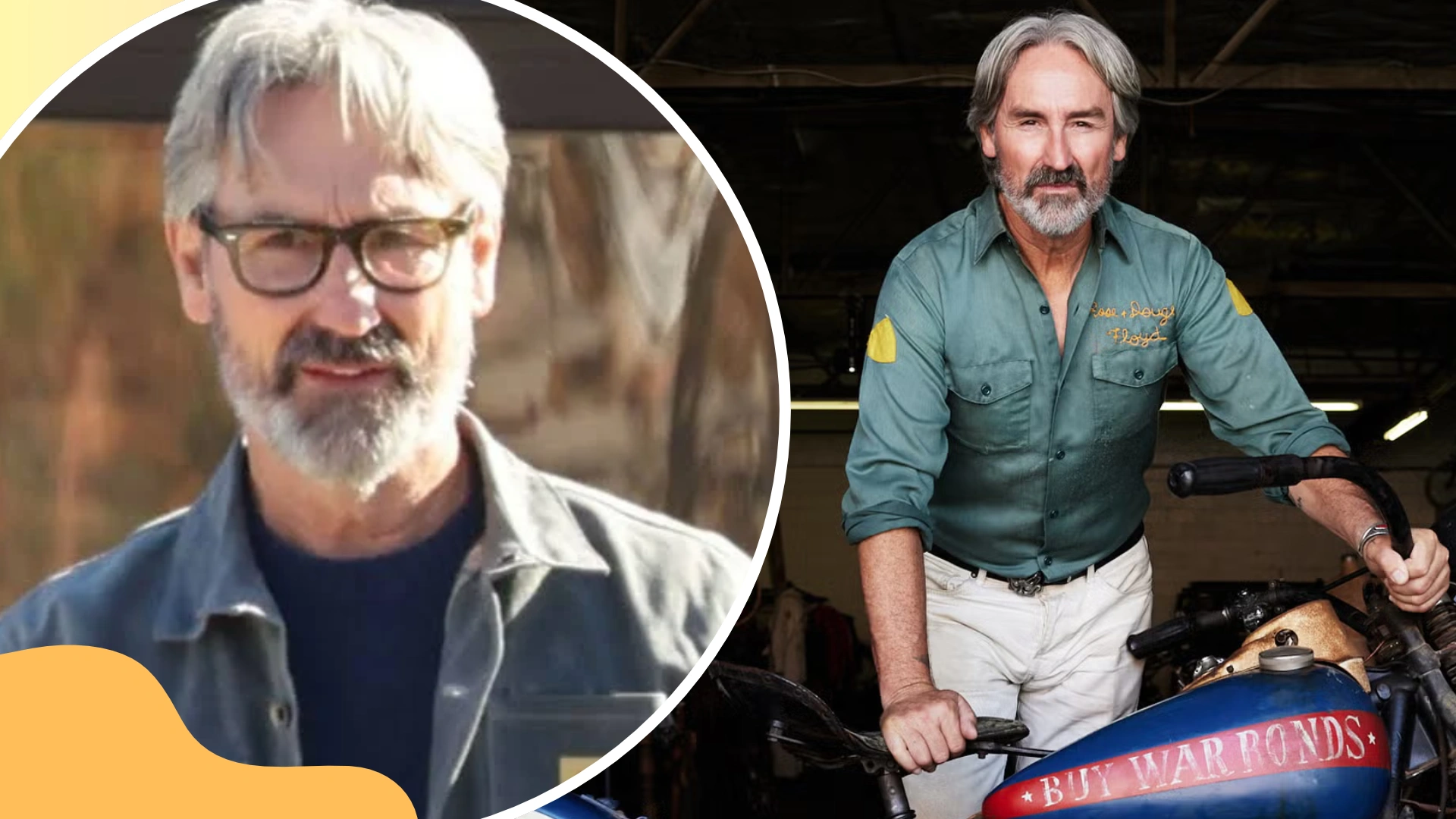
Mike Wolfe passion project is best understood not as a single branded initiative, but as the lifelong thread running through everything the American Pickers star has built. It began in childhood, when Wolfe started picking through discarded items and reselling old bicycles long before television ever found him. That instinct grew into Antique Archaeology, his shops in Le Claire, Iowa, and Nashville, Tennessee, and eventually into the History Channel series that made him a household name. Beyond the cameras, Wolfe has consistently pointed to preservation as his real motivation, from restoring old buildings to partnering with state historical organizations to writing books that pass his curiosity for picking on to a new generation of collectors.
The Childhood Roots of Mike Wolfe’s Passion Project
Wolfe’s fascination with old things wasn’t manufactured for television. According to his own account and profiles published by outlets covering his career, he was rummaging through junk piles by the age of four, and by his early teenage years he had already built a small trade buying and reselling old bicycles. That early hustle wasn’t about flipping items for quick cash so much as it was about the thrill of discovery, the sense that every rusted frame or forgotten toy had a story attached to it, and that story was worth more than the object itself.
Growing up in a small river town shaped that sensibility. Communities like the one Wolfe came from still had barns, garages, and basements packed with generations of accumulated stuff: tools nobody used anymore, advertising signs from businesses that had long since closed, motorcycles that hadn’t run in decades. Rather than seeing clutter, Wolfe saw a kind of unofficial archive of how people had lived, worked, and built things. That perspective would eventually become the backbone of his entire career, but it started as nothing more than a personal fascination, the truest definition of a passion project, pursued with no audience and no plan for where it might lead.
From Hobby to Antique Archaeology: The Passion Project Takes a Physical Form
By the time Wolfe reached adulthood, what had been an obsessive hobby turned into an actual business. He opened Antique Archaeology, a shop rooted in Le Claire, Iowa, a small town along the Mississippi River. The store became a home base for his growing collection of found objects and a place where his approach to buying and selling could take shape: paying fair prices, building relationships with sellers, and treating every transaction as an exchange of history rather than just merchandise.
Antique Archaeology wasn’t an overnight sensation. For years it operated the way most niche antique shops do, serving collectors and curious locals rather than national audiences. But it gave Wolfe something critical, a proving ground for the idea that old, discarded items had real commercial and cultural value if someone took the time to track them down, understand them, and present them properly. That idea eventually caught the attention of television producers, and it became the premise for the show that would make Wolfe a household name.
American Pickers and the Platform It Created
When American Pickers premiered on the History Channel in 2010, it took Wolfe’s personal pursuit and turned it into mass entertainment. Paired originally with longtime picking partner Frank Fritz, and later joined by Danielle Colby running operations back at the shop, Wolfe crisscrossed the country by the tens of thousands of miles each year, knocking on doors, working through overgrown properties, and negotiating with owners who had been sitting on collections for decades.
What set the show apart from a typical treasure-hunting format was Wolfe’s insistence on context. He wasn’t just interested in what an item might be worth at auction; he wanted to know who owned it, how they’d gotten it, and what it meant to them. That approach turned American Pickers into something closer to a rolling documentary about small-town America and the objects people quietly hold onto. It also gave Wolfe a massive platform to talk about preservation in a way a regional antique shop never could, turning his personal passion project into something millions of viewers could follow week to week.
The show’s popularity transformed Antique Archaeology from a local landmark into a genuine tourist destination, first in Le Claire and later at a second location in Nashville, Tennessee. Fans traveled from across the country and internationally to walk through the same aisles they’d seen on television, and the ripple effects reached well beyond Wolfe’s own business. Local officials in Le Claire have credited the show and the shop with drawing sustained visitor traffic to the town, turning a quiet river community into a stop on the map for heritage tourism.
Beyond the Show: Preservation as Mike Wolfe’s Real Passion Project
It’s tempting to think of Wolfe’s career as simply the antiques guy from TV, but that undersells what he’s consistently said motivates him. In interviews over the years, Wolfe has been candid that the show itself was never the endpoint, it was a vehicle. His actual interest lies in preservation: saving buildings, objects, and crafts that are at risk of being lost to neglect, demolition, or simple indifference.
That mission has shown up in different forms throughout his career. He’s partnered with state historical organizations on projects designed to get artifacts and stories in front of the public, including work with Iowa’s historical museum to bring pieces of the state’s collection to communities that might never otherwise see them. He’s also used his platform to spotlight American manufacturing history, vintage motorcycles, and the craftsmanship behind everyday objects that modern consumers rarely think twice about.
This is where the idea of a passion project fits most accurately. Rather than a single named initiative, it’s better understood as a continuous thread running through everything Wolfe does: a commitment to treating history as something tangible and local, not just something confined to museums and textbooks. Old signage, forgotten machinery, and neglected buildings all become, in his telling, physical evidence of how ordinary people lived, and worth saving on those terms alone.
Writing, Teaching, and Passing It On
Wolfe has also extended his interest in preservation into publishing. He’s written books aimed at both adult collectors and younger audiences, including guides that walk readers through the basics of picking and evaluating old items. One title in particular was written specifically for children, an attempt to pass the same curiosity that shaped his own childhood on to a new generation, framing picking not as a niche hobby but as a low-stakes way to engage with history, entrepreneurship, and craftsmanship all at once.
That instinct to teach rather than simply collect is a recurring theme in how Wolfe talks about his work. He’s repeatedly framed picking as an accessible pursuit, something that doesn’t require wealth or formal expertise, just curiosity and a willingness to ask questions about objects other people have written off. Encouraging that mindset in kids and casual collectors has arguably done as much to keep small pieces of American history in circulation as the high-profile finds featured on the show ever did.
The Business Side of a Personal Mission
It would be inaccurate to describe any of this as purely altruistic. Wolfe built a genuine business empire around his interests, and Antique Archaeology has grown into a retail operation selling branded merchandise alongside curated antiques. But even the commercial side of his work tends to circle back to the same preservation-minded pitch: buying a piece of Antique Archaeology branded gear, or purchasing a restored vintage item from the shop, is framed as participating in the same story-saving mission rather than simply buying a product.
That blending of commerce and cause is part of what has made Wolfe’s approach durable over more than a decade of television. Audiences don’t just tune in to see valuable finds; they tune in because Wolfe frames every pick as a small act of rescue. Whether that framing is entirely separable from good marketing is a fair question, but it doesn’t change the fact that the underlying interest in preservation predates the show by decades and has outlasted several shifts in the entertainment landscape around it.
Restoring Spaces, Not Just Objects: The Passion Project Grows Up
In more recent years, Wolfe’s preservation instincts have extended beyond portable antiques and into physical spaces. He has spoken about the importance of restoring old buildings rather than tearing them down, treating structures the same way he treats a rusted motorcycle or a forgotten hand tool, as something worth the effort of bringing back rather than discarding, a natural extension of the same passion project that started with rusted bicycles and forgotten signs. That approach lines up with a broader trend in small-town America, where historic buildings are increasingly viewed as assets for revitalization rather than liabilities to be cleared.
Le Claire itself has benefited from this philosophy. Local coverage of the town has repeatedly pointed to Antique Archaeology and Wolfe’s continued presence there as a driver of what’s often called heritage tourism, visitors coming specifically because a place has real, preserved history rather than a manufactured attraction. Wolfe has been explicit that he views this kind of community impact as one of the more meaningful outcomes of his career, arguably more meaningful to him than the show’s ratings or his own visibility.
A Changing Cast, a Consistent Philosophy
Part of what makes Wolfe’s long-running commitment to preservation notable is that it survived significant changes to the show itself. Frank Fritz, his original picking partner and a fixture of the series for its first decade, eventually departed, and the show’s format shifted as a result. Danielle Colby, who had long managed operations at Antique Archaeology and appeared on camera handling the business side of things, became an increasingly central figure in the show’s later seasons. Through all of it, Wolfe remained the constant, and so did his underlying approach: build a relationship with the seller first, understand the object’s history second, and only then talk about price.
That consistency matters because it distinguishes Wolfe’s version of picking from the more transactional, appraisal-driven format used by other antiques and collectibles shows. Where some programs lean heavily on the reveal of an item’s dollar value, American Pickers under Wolfe’s direction has generally kept its focus on the narrative behind a find, who built it, who owned it, why it ended up forgotten in a barn for forty years. Wolfe has said in interviews that this emphasis on story over price tag was never an accident. It reflects the same instinct that drove him as a kid: curiosity about the object’s past mattered more than what it could be flipped for.
Why the Idea of a Passion Project Fits, Even Without a Formal Name
It’s worth being direct about one thing: there isn’t a single, official program called the Mike Wolfe Passion Project backed by verifiable reporting. Much of what circulates online under that phrase is generic, repackaged content rather than coverage of an actual named initiative. But the phrase still captures something real and well-documented about Wolfe’s career, which is why it resonates with so many searches in the first place.
Across interviews, his published books, his ongoing partnerships with state historical organizations, and the way he’s structured his businesses in Le Claire and Nashville, a consistent picture emerges. Wolfe treats picking, restoring, and storytelling as inseparable parts of a single, lifelong pursuit rather than as separate career moves. That pursuit predates his television fame, and by his own account, it’s the part of his work he expects to keep doing long after the cameras are gone. In that sense, calling it his passion project isn’t inaccurate, it’s simply describing an ethos rather than a formal brand.
What Comes Next
Wolfe has acknowledged in interviews that American Pickers, as a television format, won’t run forever, and he’s spoken candidly about eventually stepping back from filming. What he’s been consistent about, though, is that stepping away from the show doesn’t mean stepping away from picking. He’s described it as something closer to a lifelong compulsion than a job, one he expects to keep doing in some form long after the cameras stop rolling, simply because the underlying curiosity that started it all as a kid has never gone away.
That’s ultimately the clearest way to understand what people mean when they search for Mike Wolfe’s passion project. It isn’t a single building, a foundation, or a branded initiative with a formal mission statement. It’s the accumulation of decades spent treating discarded objects and neglected places as worth saving, turned first into a business, then into a television phenomenon, and now into something closer to a legacy project focused on making sure small pieces of American history don’t quietly disappear.
Conclusion
What makes Wolfe’s story resonate with such a broad audience isn’t just the treasure-hunting format of the show that made him famous. It’s the underlying argument he’s made, consistently, for over a decade: that history isn’t only found in institutions, and it isn’t only valuable when it’s expensive. Sometimes it’s sitting in a barn on a back road, waiting for someone curious enough to open the door and ask what’s inside.
That argument is why Wolfe’s work continues to attract new audiences well beyond the antique-collecting community, and why his name keeps coming up in conversations about historic preservation, small-town revitalization, and American craftsmanship. Whether he’s negotiating for a rusted sign in someone’s shed, restoring an old storefront in Le Claire, or writing a children’s book about the thrill of picking, the throughline stays the same. It’s the same instinct that sent a young Mike Wolfe digging through trash piles decades ago, an unshakable belief that the objects other people overlook are usually the ones worth paying attention to.
Frequently Asked Questions
What is Mike Wolfe’s passion project?
It isn’t one official, named initiative, it’s the lifelong pursuit of finding, saving, and telling the stories behind forgotten objects and buildings, which runs through his shops, his books, and his ongoing preservation work.
How did Mike Wolfe’s passion project start?
It began in his childhood, when he started picking through discarded items and reselling old bicycles, long before Antique Archaeology or American Pickers existed.
Why does Mike Wolfe focus so much on preservation?
He’s said in interviews that saving the stories behind objects and buildings matters more to him than their resale value, and that this interest predates his television career.
Where can people see Mike Wolfe’s passion project in action?
Antique Archaeology’s locations in Le Claire, Iowa, and Nashville, Tennessee, along with his continued restoration and heritage-tourism work in Le Claire, are the clearest examples.
Who besides Mike Wolfe has been part of this work?
Frank Fritz was his original picking partner for most of the show’s run, and Danielle Colby has long managed Antique Archaeology’s day-to-day operations
Leave a Reply