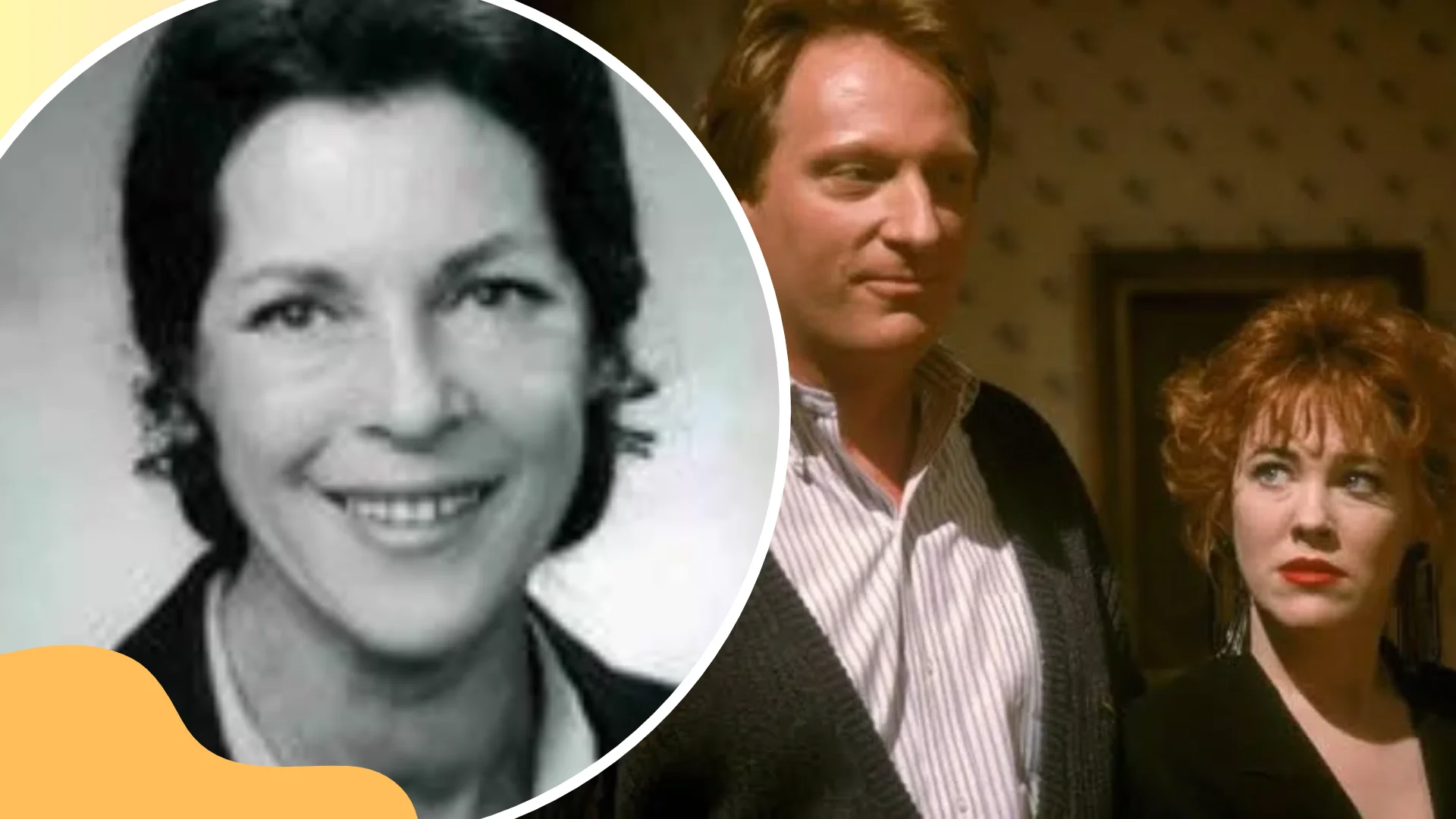
Lloy Coutts was a Canadian voice coach, acting teacher, and theatre professional whose career was connected to the performing arts in Canada. Also known by her full name, Patricia Lloy Coutts, she worked behind the scenes to help performers develop their voices, refine their acting techniques, and prepare for demanding theatrical productions. Her professional background included associations with the Stratford Festival and credits connected to stage and screen productions.
Although Lloy Coutts did not achieve the same level of public recognition as many actors who appeared in major productions, her work represented an important part of theatrical performance. Voice coaches and acting teachers help performers communicate clearly, interpret scripts, develop character voices, and maintain vocal control during demanding performances. Their contributions can influence the quality of a production without placing them in the spotlight.
Born in Edmonton, Alberta, Canada, in April 1941, Lloy Coutts spent much of her professional life connected to the performing arts. She was also the former spouse of actor Jeffrey Jones and the mother of Julian Coutts, who pursued his own career in entertainment as an actor and producer. Her life and career offer an opportunity to understand the professionals who support actors and theatrical productions beyond the stage.
Who Was Lloy Coutts?
Lloy Coutts, whose full name was Patricia Lloy Coutts, was a Canadian voice coach, acting teacher, and theatre director. She is associated with theatrical training and voice coaching, particularly through her connection with the Stratford Festival, one of Canada’s prominent theatre institutions.
Her professional identity was shaped by the practical demands of performance. Actors need more than the ability to memorise lines. They must communicate emotions, project their voices, maintain clear pronunciation, and respond naturally to other performers. Voice coaches and acting teachers help develop these abilities through instruction, repetition, and performance exercises.
Coutts’s reported career extended across several decades, from approximately 1963 until 2008. This period covered significant changes in Canadian theatre, television, and film. Her work also included associations with productions such as H.M.S. Pinafore (1981) and the television drama Street Legal (1987).
Publicly available information about her personal life and professional activities remains limited compared with biographies of well-known screen actors. Consequently, some details of her career are easier to establish than others. Nevertheless, her background illustrates the role of theatre educators and voice specialists in the broader performing arts community.
Lloy Coutts Biography: Early Life and Background
Patricia Lloy Coutts was born in April 1941 in Edmonton, Alberta, Canada. Some genealogical sources identify April 1, 1941, as her exact birth date, although the precise date should be treated cautiously unless supported by an authoritative biographical record.
Edmonton has a long history of cultural activity, including theatre, music, and community performance. Growing up in Canada during the 1940s and 1950s meant experiencing a period when the country’s cultural institutions were developing alongside its expanding television and entertainment industries.
However, detailed accounts of Coutts’s childhood, schooling, and early artistic interests are not widely documented in the biographical sources provided. There is insufficient publicly established information to describe her early training, family circumstances, or the specific experiences that led her towards voice coaching and theatre education.
Her later professional associations suggest that she developed skills relevant to acting instruction and vocal performance. Such careers typically require a strong understanding of spoken language, character interpretation, vocal expression, and the relationship between physical performance and communication.
Coutts’s early years remain a relatively private part of her story. Rather than assuming details about her education or childhood, it is more accurate to focus on the professional work for which she is remembered.
Lloy Coutts’s Career in Canadian Theatre
Lloy Coutts is reported to have worked in the performing arts for approximately 45 years, beginning around 1963 and continuing until 2008. Her professional roles included voice coach, acting teacher, and theatre director.
These occupations involve different responsibilities, although they often overlap during the preparation and staging of a production.
A voice coach works with performers on vocal clarity, breath control, articulation, projection, rhythm, and the delivery of dialogue. These skills are particularly important in theatre, where actors must communicate with audiences across a large auditorium without losing emotional expression or intelligibility.
An acting teacher concentrates on performance techniques, including character development, script interpretation, movement, timing, and emotional delivery. Theatre directors, meanwhile, help shape the overall production by guiding performances and coordinating the creative elements of a play.
Coutts’s reported work across these areas suggests a professional background focused on the development of performers and theatrical presentation. Her career also reflects the importance of specialist training in productions that require precise language, expressive dialogue, and consistent stage performance.
Although comprehensive records of her individual projects are not readily available, her association with established Canadian entertainment productions provides context for understanding her professional life.
Lloy Coutts and the Stratford Festival
One of the most notable associations in Lloy Coutts’s biography is her reported voice-coaching work with the Stratford Festival.
Founded in Stratford, Ontario, the Stratford Festival is internationally recognised for its theatrical productions, including works by William Shakespeare and other major playwrights. The festival has played a significant role in Canadian theatre by bringing together actors, directors, designers, musicians, and technical specialists.
Voice coaching is particularly important in classical theatre. Shakespearean dialogue, for example, often includes complex sentence structures, poetic rhythms, unfamiliar vocabulary, and rapid exchanges between characters. Actors must make these words understandable while preserving the emotional meaning and rhythm of the text.
A voice coach can help performers manage breath, articulate consonants, shape vowels, and sustain vocal energy throughout a performance. Coaching can also help actors distinguish between characters through changes in tone, pace, resonance, and vocal placement.
These techniques are valuable beyond classical drama. Musical theatre, contemporary plays, and productions involving stylised dialogue also demand control over speech and vocal expression.
Coutts’s reported connection with the Stratford Festival therefore represents an important aspect of her professional identity. It places her within a theatrical environment where vocal preparation and performance technique are essential to the production process.
However, detailed public records identifying every production she coached or the performers she trained are limited. Her association with the festival should not be taken as evidence of involvement in every major production staged during her career.
Lloy Coutts and H.M.S. Pinafore (1981)
Another production associated with Lloy Coutts is H.M.S. Pinafore, the comic opera by Gilbert and Sullivan.
First performed in 1878, H.M.S. Pinafore became one of the best-known works by the celebrated British theatrical partnership of librettist W. S. Gilbert and composer Arthur Sullivan. Its humour centres on naval life, social class, romantic complications, and the contrast between public authority and private feelings.
The operetta places considerable demands on performers because its dialogue, lyrics, and musical passages rely on timing and clear delivery. Actors must communicate the humour of the text while maintaining musical precision and character consistency.
For a production of this kind, vocal preparation can be particularly important. Performers need to coordinate speech and singing, maintain clear diction, and communicate the meaning of lyrics to an audience. Comic exchanges also depend on rhythm, pacing, and the delivery of individual lines.
Coutts is associated with H.M.S. Pinafore (1981) in the biographical information supplied for this article. The production provides a useful example of the type of theatrical environment in which vocal and acting expertise can contribute to the overall performance.
Specific details about her exact responsibilities on the production are not fully established in the available information. It would therefore be inaccurate to attribute particular staging decisions or individual performances to her without additional documentation.
Nevertheless, the association adds another dimension to her reported professional history and connects her name with a well-established work in musical theatre.
Lloy Coutts and Street Legal (1987)
Lloy Coutts is also linked to Street Legal, a Canadian television legal drama that premiered in 1987.
The series focused on lawyers, their professional responsibilities, and the personal and ethical challenges associated with legal practice. Its setting provided opportunities for dramatic dialogue, complex character relationships, and stories involving legal disputes.
Television acting requires a different approach from stage performance in several respects. Actors working for the camera often need to communicate emotion through subtle expressions and controlled vocal delivery. Dialogue must sound natural, and performances are shaped by camera placement, editing, and the demands of individual scenes.
Voice training can support these requirements by helping actors maintain clarity, control vocal tension, and adjust their delivery to suit a particular character or situation.
Coutts’s association with Street Legal forms part of her reported career record. However, the precise nature of her contribution should be confirmed through production credits before assigning her a specific role in the series.
Her connection with a television drama also reflects the broader professional environment in which Canadian performers and theatre specialists worked across different forms of entertainment.
What Does a Voice Coach Do?
Understanding Lloy Coutts’s profession requires an appreciation of the work performed by voice coaches.
Voice coaching is a specialised discipline that combines vocal technique, speech clarity, performance interpretation, and communication. The objective is not simply to make an actor speak louder. It is to help performers use their voices effectively while preserving meaning, emotional expression, and vocal health.
Vocal Projection and Breath Control
Stage performers often need to reach audiences sitting at a distance. Proper breath control and vocal projection help them deliver dialogue clearly without unnecessary strain.
Coaches may use breathing exercises, resonance work, and vocal warm-ups to help actors develop greater control over their sound.
Articulation and Pronunciation
Clear articulation allows audiences to understand dialogue, particularly when a script contains unfamiliar words, poetic language, or rapid exchanges.
Voice coaches work with consonants, vowels, pacing, and pronunciation. These techniques are especially useful in classical theatre and productions with demanding dialogue.
Character and Emotional Expression
A character’s voice can communicate age, personality, social background, confidence, vulnerability, and emotional state.
Coaches help performers experiment with vocal rhythm, pitch, tone, and emphasis. The aim is to create a voice that supports the character rather than distracting from the performance.
Vocal Stamina
Theatre performers may need to speak or sing for extended periods, sometimes across several consecutive performances.
Good technique can help reduce unnecessary vocal strain. Warm-ups, recovery practices, and awareness of vocal limits can form part of a performer’s preparation.
These responsibilities demonstrate why voice coaches are important members of theatre companies. Their work supports the actors whose performances audiences ultimately see and hear.
Lloy Coutts’s Family: Jeffrey Jones and Julian Coutts
Lloy Coutts’s personal life is another reason her name appears in biographical searches. She was reportedly married to actor Jeffrey Jones, and the couple had a son, Julian Coutts.
Jeffrey Jones is an American actor known for roles in films and television, including Ferris Bueller’s Day Off and Beetlejuice. His acting career brought him public recognition, while Coutts maintained a professional identity associated primarily with theatre training and performance.
Their former marriage connects Coutts’s biography with the entertainment industry on both sides of the Canada–United States border. However, public information about the details of their relationship, the date of their marriage, and the circumstances of their separation is limited in the sources referenced here.
It is important not to assume that a person’s professional accomplishments or private experiences can be fully understood through their relationship with a more widely known actor. Coutts’s work as a voice coach and acting teacher remains a distinct part of her biography.
Who Is Julian Coutts?
Julian Coutts is identified in the supplied biographical information as the son of Lloy Coutts and Jeffrey Jones. He has pursued a career in entertainment as an actor and producer.
Acting and producing involve different responsibilities. Actors interpret characters and perform scripted material, while producers help organise projects, coordinate resources, and support the practical process of bringing productions to completion.
Julian’s professional background places him within a family connected to the performing arts. Nevertheless, any similarities between his career and his mother’s work should be understood as professional context rather than proof that one directly determined the other’s choices.
Information about Coutts’s wider family, siblings, or other relatives is not sufficiently documented in the sources used for this biography.
Lloy Coutts’s Parents and Personal Background
The biographical information available for Lloy Coutts identifies her mother as Doris Patricia Jones.
Beyond this name, detailed information about her parents and childhood family life is limited. There is not enough verified material to provide a comprehensive account of her upbringing, her parents’ occupations, or her family’s influence on her professional development.
Her Canadian background is an established part of the supplied biography, with Edmonton, Alberta, recorded as her birthplace. Her career was also associated with Canada’s performing arts community.
Although family background can provide valuable context for a biography, it is important to separate documented facts from speculation. In Coutts’s case, her professional work and known family connections are more clearly recorded than many details of her private life.
Lloy Coutts’s Age, Date of Death, and Final Years
According to the supplied biographical sources, Lloy Coutts died on June 23, 2008, in Toronto, Canada. The reported cause of death was a degenerative disease.
She was 67 years old at the time of her death, based on the reported April 1941 birth date. Because some sources give only the month and year of birth, the precise age calculation depends on whether the April 1 date is accurate.
A degenerative disease generally refers to a condition involving the progressive deterioration of cells, tissues, or organ function. The term describes a broad category of illnesses rather than one specific diagnosis.
The available information does not establish the exact disease that affected Coutts. It would therefore be inappropriate to identify a particular medical condition or describe her symptoms, treatment, or final months without reliable documentation.
Toronto was an important centre for Canadian theatre, television, and film, making it relevant to the professional environment in which many performers and creative specialists worked.
Coutts’s death in 2008 marked the end of a career that reportedly extended across several decades. Detailed accounts of her final years and private circumstances remain limited.
Lloy Coutts’s Net Worth, Height, and Other Personal Details
Questions about Lloy Coutts’s net worth, height, and physical characteristics sometimes appear in online biography searches. However, the available sources do not establish verified figures for these details.
Net Worth
Lloy Coutts’s net worth has not been publicly disclosed in the supplied biographical information.
As a voice coach, acting teacher, and theatre professional, her income may have depended on teaching engagements, production work, and other professional activities. However, without financial records or credible reporting, it is not possible to calculate her earnings or total estate accurately.
Figures published without supporting evidence should not be treated as reliable estimates.
Height and Weight
Her height and weight are also not publicly established in the sources referenced here. No verified measurements are available for inclusion in a factual biography.
These details are not necessary to understand her professional contribution, particularly because her career was based on theatrical training and performance rather than public appearances as a celebrity.
Nationality
Lloy Coutts is identified as Canadian. Her reported birthplace was Edmonton, Alberta, and her professional history included associations with Canadian theatre and television.
These biographical details provide a clearer picture of her background than unverified estimates of personal wealth or physical measurements.
Lloy Coutts’s Professional Legacy
Lloy Coutts’s legacy is best understood through the work of voice coaches, acting teachers, and theatre professionals who support performers behind the scenes.
An actor’s performance may receive public attention, but the preparation required to reach that stage can involve extensive instruction and practice. Voice coaches help performers develop the technical skills needed to deliver dialogue, sustain vocal energy, and communicate character.
Acting teachers contribute by helping performers understand scripts, make informed performance choices, and develop a disciplined approach to their craft. Theatre directors coordinate artistic elements and guide the overall production.
These responsibilities can be particularly significant in classical theatre, where language, rhythm, and vocal expression are central to the audience’s experience.
Coutts’s reported association with the Stratford Festival and productions such as H.M.S. Pinafore and Street Legal connects her name with different areas of Canadian performing arts.
The full extent of her influence is difficult to measure because detailed records of her students, productions, and professional achievements are not widely available. Her biography nevertheless highlights an important principle: entertainment depends on the work of specialists whose contributions may not always be visible to the public.
Her career also illustrates the difference between celebrity and professional significance. Not every influential figure in theatre becomes widely known, and the absence of extensive publicity does not mean that a person’s work lacked value.
Conclusion
Lloy Coutts was a Canadian performing arts professional whose reported career included voice coaching, acting instruction, and theatre direction. Born in Edmonton in April 1941, she worked in an industry where vocal technique and performance training play an essential role in bringing dramatic works to audiences.
Her association with the Stratford Festival, H.M.S. Pinafore, and Street Legal provides a starting point for understanding her professional background. Her family connections to Jeffrey Jones and Julian Coutts also link her biography with the wider entertainment industry.
Although much of her personal life and detailed professional history remains outside the public record, the available information presents a picture of a career devoted to performance and theatrical practice. Lloy Coutts’s story serves as a reminder that the performing arts depend not only on actors and public figures but also on the teachers, coaches, and creative professionals who help make their work possible.
Frequently Asked Questions
1. Who was Lloy Coutts?
Lloy Coutts, whose full name was Patricia Lloy Coutts, was a Canadian voice coach, acting teacher, and theatre director. She is associated with voice coaching at the Stratford Festival and with productions including H.M.S. Pinafore (1981) and Street Legal (1987).
2. When and where was Lloy Coutts born?
Lloy Coutts was born in April 1941 in Edmonton, Alberta, Canada. Some genealogical sources list April 1, 1941, as her birth date, but the exact day should be verified against an authoritative record.
3. When did Lloy Coutts die?
Lloy Coutts reportedly died on June 23, 2008, in Toronto, Canada. The supplied biographical information gives her age at death as 67 and describes the cause as a degenerative disease, without identifying the specific condition.
4. Was Lloy Coutts married to Jeffrey Jones?
Yes. Lloy Coutts is reported to have been married to American actor Jeffrey Jones. They had a son, Julian Coutts, who is identified as an actor and producer. Detailed information about their former relationship is limited in the sources referenced here.
5. What was Lloy Coutts’s net worth?
Lloy Coutts’s net worth has not been publicly established in the available information. There are no sufficiently verified financial records or earnings figures to provide an accurate estimate of her wealth.
Leave a Reply