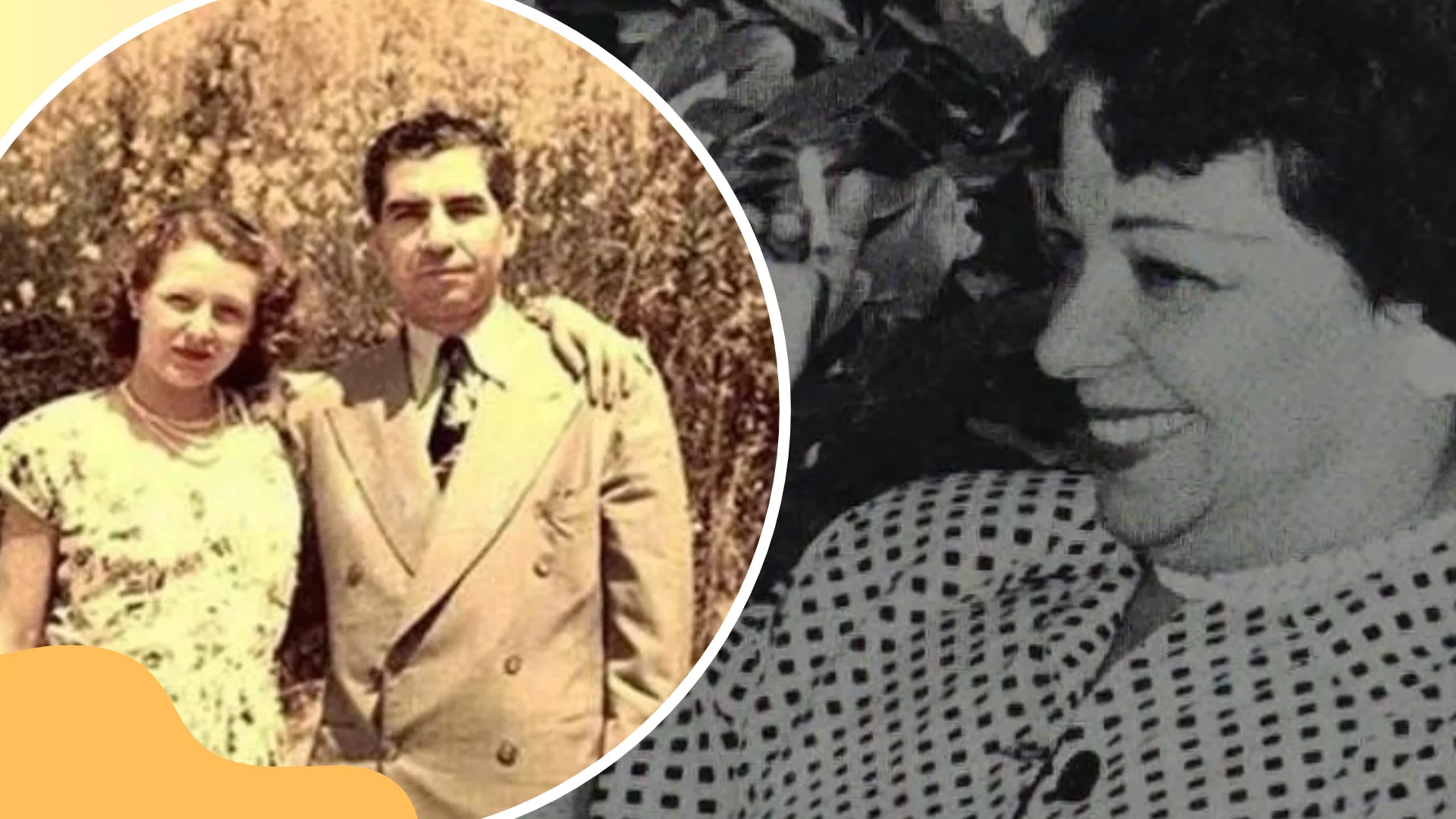
Lauretta Giegerman is a name frequently associated with the history of American organised crime, particularly because of her marriage to the notorious New York crime figure Frank Costello. Although her husband became one of the most recognisable names in American underworld history, Lauretta maintained a considerably different public profile. She largely stayed away from media attention, avoided public involvement in her husband’s criminal associations, and lived a private life despite her connection to one of the most influential figures in organised crime during the twentieth century.
Her full name is recorded as Loretta Bobbie Geigerman Costello, although she is commonly searched for under the name Lauretta Giegerman. Historical and genealogical records provide some information about her birth, parents, marriage, and family background. However, many details about her personal experiences, professional activities, and later years remain difficult to establish.
Born on October 28, 1894, in Manhattan, New York, Lauretta came from a family with reported German-Jewish roots. She married Frank Costello, born Francesco Castiglia, in September 1914. Their marriage connected her life to a man who would eventually become one of the most prominent figures in American organised crime.
Unlike many individuals associated with famous criminal families, Lauretta did not develop a public identity through interviews, books, or media appearances. Her story is primarily understood through family records, historical accounts, and information about her husband’s life.
Who Was Lauretta Giegerman?
Lauretta Giegerman, whose documented name appears as Loretta Bobbie Geigerman Costello, was an American woman best known as the wife of Frank Costello. Her association with Costello placed her within the social and historical background of organised crime in New York during the twentieth century.
While her husband attracted considerable attention from law enforcement agencies, journalists, and historians, Lauretta maintained a much lower profile. She was not widely known for political activities, business leadership, or involvement in criminal organisations. Instead, her public recognition developed mainly because of her relationship with Costello.
Some accounts describe her earlier life as connected to vaudeville and cabaret entertainment, suggesting that she worked as a showgirl before settling into married life. However, detailed documentation of this reported occupation is limited.
Her biography also contains several differences in spelling and dates across online publications. The name Lauretta Giegerman is widely used in searches, while genealogical information identifies her as Loretta B. Geigerman. These variations are important when examining historical records because they can make it difficult to distinguish between documented information and later descriptions.
Despite the limited information available, Lauretta remains an interesting historical figure because her life offers a perspective on the personal relationships surrounding influential organised crime figures.
Early Life and Family Background
Lauretta Giegerman was born on October 28, 1894, in Manhattan, New York County, United States. Her birth information is associated with genealogical records that identify her as Loretta B. Geigerman.
She was born during a period when New York City was experiencing significant population growth, industrial development, and immigration. Manhattan was home to families from different European backgrounds, with neighbourhoods shaped by cultural traditions, religious communities, and changing economic conditions.
Lauretta’s parents were Jacob H. Geigerman and Cecelia Josephs Geigerman, whose name also appears as Celia in some references. Their family background has been described in secondary accounts as German-Jewish.
Although information about her parents is available through genealogical sources, detailed accounts of their occupations, financial circumstances, and family life are not widely documented.
Growing up in Manhattan during the late nineteenth and early twentieth centuries would have placed Lauretta within a rapidly changing American city. New York was developing into an important centre for commerce, entertainment, manufacturing, and international trade.
However, there is insufficient historical evidence to establish exactly where she attended school, what her childhood interests were, or how her family influenced her later decisions.
Her early life is therefore best understood through the limited information preserved in family records rather than assumptions about her upbringing.
Lauretta Giegerman’s Birth and Nationality
Lauretta was born in the United States on October 28, 1894, making her American by birth.
Her Manhattan birthplace is particularly relevant because New York would remain closely connected to her personal history. The city was also the location where she later married Frank Costello and where the couple established their married life.
Her reported German-Jewish family background reflects the diverse cultural environment of New York during this period. However, detailed information about the family’s immigration history and individual cultural practices has not been firmly established in the available accounts.
The different spellings of her first and last names also deserve attention. Loretta is the name appearing in genealogical information, while Lauretta Giegerman has become a commonly used search term. Her surname is also sometimes written as Geigerman.
These differences do not necessarily indicate separate individuals. They demonstrate why historical research should consider alternative spellings when examining older family documents.
Marriage to Frank Costello
One of the most significant events in Lauretta Giegerman’s life was her marriage to Frank Costello.
Frank Costello was born Francesco Castiglia and later became a major figure in American organised crime. He was associated with influential criminal networks in New York and became particularly prominent during the Prohibition era.
According to FamilySearch genealogical information, Lauretta and Frank married on September 23, 1914, in Manhattan, New York. She was approximately 19 years old at the time, while Costello was in his early twenties.
Some secondary publications provide different marriage dates, including September 22, while other accounts mention 1918. The September 23, 1914 date is the one associated with the cited genealogical record.
Their marriage took place several years before Costello became widely recognised as a powerful organised crime figure.
At the time, their relationship was part of the personal lives of two young New Yorkers. Frank’s later criminal activities and influence would eventually make their marriage a subject of public curiosity.
Lauretta’s association with Costello continued throughout his rise in the American underworld. Nevertheless, there is little dependable information describing the private details of their relationship, their daily routines, or how they managed the pressures associated with his public reputation.
Who Was Frank Costello?
Frank Costello, whose birth name was Francesco Castiglia, was an Italian-American organised crime figure who became one of the most influential underworld personalities in the United States.
Born in Italy in 1891, Costello immigrated to the United States with his family during childhood. He eventually became involved in criminal activities in New York and developed connections with influential figures in organised crime.
During Prohibition, when the production and sale of alcoholic beverages were restricted in the United States, organised criminal groups expanded their activities. Costello became associated with these networks and developed a reputation for his connections, political influence, and business relationships.
He was often described as different from the stereotypical image of a violent gangster. His reputation was closely connected to his ability to build relationships, maintain influence, and operate through networks of associates.
Costello eventually became associated with the Luciano crime family, which later became known as the Genovese crime family. His position within organised crime attracted considerable attention from federal authorities and the media.
His marriage to Lauretta Giegerman remained an important part of his personal biography, although she did not share his public reputation or documented criminal activities.
Did Lauretta Giegerman Have Children?
Available biographical accounts generally report that Lauretta Giegerman and Frank Costello did not have children.
There are no widely established records identifying biological children from their marriage. This detail is frequently mentioned in online biographies discussing Lauretta’s personal life.
Their marriage lasted for several decades, but information about their family arrangements remains limited.
The absence of publicly documented children is also one reason why relatively little information exists about a wider family life involving descendants and later generations.
It is important to distinguish between the absence of documented children and a definitive statement about every aspect of their private family history. Publicly available sources do not provide a detailed family archive covering all personal circumstances.
Lauretta Giegerman’s Reported Career
Before becoming widely associated with Frank Costello, Lauretta has been described in some secondary accounts as a former vaudeville or cabaret showgirl.
Vaudeville was an important form of live entertainment in the United States during the late nineteenth and early twentieth centuries. Performances often included comedy, music, dance, theatrical acts, and other forms of stage entertainment.
Cabaret venues also became important entertainment destinations in major American cities, including New York.
If the accounts describing Lauretta’s involvement in entertainment are accurate, her reported early occupation would have placed her within an industry that was developing rapidly during her youth.
However, detailed employment records, performance programmes, theatre advertisements, and reliable contemporary accounts confirming her professional career are not readily available.
There is also limited information about whether she continued working after her marriage.
Later descriptions generally portray her as someone who lived privately rather than maintaining a public entertainment career.
Consequently, her reported occupation should be treated as a biographical detail appearing in secondary sources rather than a fully established part of her professional history.
Life During Frank Costello’s Rise to Power
Frank Costello’s influence increased considerably during the 1920s, 1930s, and 1940s. His activities and connections made him a significant figure in the history of organised crime in the United States.
For Lauretta, this period meant being married to someone whose name increasingly attracted public attention.
Costello’s criminal associations were frequently discussed in newspapers, court proceedings, and investigations. His reputation was connected to organised crime, gambling operations, political relationships, and disputes within criminal networks.
Despite this attention, Lauretta remained largely outside the public spotlight.
There is little dependable information showing that she participated in her husband’s business activities or exercised influence within criminal organisations. Her association with Costello should not automatically be interpreted as evidence of involvement in his criminal operations.
The couple’s private life was also shaped by the attention surrounding Costello’s position. Individuals connected to prominent organised crime figures could experience public scrutiny even when they were not directly involved in criminal activities.
Lauretta’s limited public presence makes it difficult to reconstruct her personal experiences during these decades. Nevertheless, her long marriage to Costello placed her within an important period of American social and criminal history.
Where Did Lauretta Giegerman Live?
Lauretta Giegerman’s life was closely connected to New York, particularly Manhattan.
Accounts of the couple’s residences mention an apartment on Central Park West in Manhattan. Central Park West was, and remains, one of the city’s well-known residential areas, associated with established apartment buildings and prominent residential properties.
The couple also reportedly maintained a summer home in Sands Point, New York.
Sands Point is located on the North Shore of Long Island, in Nassau County. The area became known for its residential estates, waterfront properties, and comparatively private surroundings.
Having residences in Manhattan and Sands Point reflected a lifestyle that included access to the city while also providing an opportunity to spend time away from its busy environment.
However, detailed records of Lauretta’s personal activities at these properties are limited.
The residences are relevant to her biography because they provide some understanding of the locations associated with her married life. They also illustrate how Costello maintained a residential presence outside the immediate surroundings of New York’s criminal underworld.
The 1957 Assassination Attempt on Frank Costello
One of the most notable events connected to Lauretta Giegerman occurred in May 1957, when Frank Costello survived an assassination attempt.
The incident became an important moment in the history of New York organised crime.
Costello was attacked inside the lobby of the building where he lived. The gunman was Vincent Gigante, who later became a powerful figure in organised crime.
The attack left Costello injured, although he survived. The incident attracted considerable media attention because of his position within the criminal underworld and the circumstances surrounding the shooting.
According to accounts discussing Lauretta’s life, she visited Roosevelt Hospital after the assassination attempt to see her injured husband.
This reported hospital visit is one of the few specific public events that connect Lauretta directly to a major incident in Costello’s criminal history.
Her appearance at the hospital reflected the personal consequences of the attack for the couple.
Although the incident was widely discussed in connection with criminal rivalries, Lauretta’s role was primarily that of Costello’s wife during a serious personal crisis.
The assassination attempt also contributed to changes in Costello’s position within organised crime. He gradually withdrew from some of his previous activities and became less active in the criminal organisation.
Lauretta Giegerman’s Private Lifestyle
Unlike her husband, Lauretta did not become a widely recognised public personality.
She is not associated with a substantial collection of interviews, autobiographical writings, or public appearances. Most information about her comes from accounts focusing on Frank Costello and the historical circumstances surrounding their marriage.
Her reported preference for a private lifestyle is a recurring theme in descriptions of her biography.
This limited public presence also explains why there are unanswered questions about her interests, friendships, daily activities, and personal views.
It would be inaccurate to assume that she was involved in every aspect of her husband’s criminal activities simply because they were married.
Her biography deserves to be considered separately from Costello’s criminal history. While their lives were connected through marriage, the available evidence does not establish that Lauretta held a position within organised crime.
The distinction is important when examining historical figures whose identities are frequently defined through their relationships with famous or controversial individuals.
Frank Costello’s Later Years and Death
Following the 1957 assassination attempt, Frank Costello gradually reduced his involvement in organised crime.
Although he continued to attract attention because of his previous influence, his position within the criminal underworld changed.
Costello spent his later years away from the level of activity that had characterised his earlier career.
He died on February 18, 1973, in New York City, reportedly from a heart attack. He was 82 years old.
His death marked the end of a significant chapter in the history of American organised crime.
For Lauretta, the death of her husband meant the end of a marriage that had lasted for nearly six decades, based on the 1914 marriage date.
However, reliable information about her circumstances following his death is limited.
Several online biographies suggest that she survived him, but no consistently documented death date establishes exactly when she died.
When Did Lauretta Giegerman Die?
The death date of Lauretta Giegerman remains uncertain in publicly available biographical accounts.
Unlike Frank Costello, whose death in February 1973 is well documented, Lauretta’s final years have not been established through equally clear historical records.
Some secondary sources suggest that she survived her husband. If her reported birth date of October 28, 1894, is correct and she was alive after February 1973, she would have been at least 78 years old when Costello died.
However, this does not establish her exact age at death.
There is insufficient dependable evidence to provide a specific date, location, or cause of death.
The lack of a confirmed death record means that claims giving an exact year should be approached carefully unless supported by an identifiable historical or genealogical document.
This uncertainty is an important part of Lauretta’s biography. While her marriage connected her to a widely documented historical figure, her own later life remained largely outside public records and media coverage.
Why Is Lauretta Giegerman Still Searched Online?
Interest in Lauretta Giegerman is closely connected to the continued public fascination with Frank Costello and the history of organised crime in America.
Costello’s reputation has remained relevant through historical books, documentaries, television programmes, films, and discussions about influential criminal organisations.
People researching his personal life often become interested in his wife and family background.
Lauretta’s story attracts attention for several reasons.
First, she was married to Frank Costello for several decades, making her an important part of his personal history.
Second, her biography contains relatively little publicly documented information. This creates questions about her early career, family life, residences, and later years.
Third, variations in her name, including Loretta Geigerman, Lauretta Giegerman, and Loretta Bobbie Geigerman Costello, can make historical research more complicated.
Finally, her reported decision to maintain a private life contrasts with the extensive public attention received by her husband.
These factors explain why the keyword Lauretta Giegerman continues to appear in searches related to Frank Costello’s biography.
Historical Significance of Lauretta Giegerman
Lauretta Giegerman is not generally remembered for political influence, criminal activities, or a documented professional career of public significance.
Her historical relevance comes primarily from her relationship with Frank Costello and the period in which they lived.
Her life overlapped with major developments in American history, including Prohibition, the expansion of organised crime, changing political relationships, and the growth of modern law enforcement.
She also represents a less frequently discussed perspective in historical accounts of organised crime: the private lives of family members who were connected to prominent criminal figures but did not necessarily participate in their activities.
Because detailed personal records are limited, it is difficult to make broad claims about her personality or private experiences.
Nevertheless, the available information provides a basic outline of her life, from her birth in Manhattan to her marriage in 1914 and her connection to Costello throughout his rise and later years.
Her story demonstrates how a person’s historical recognition can sometimes come through a relationship with a much more publicly documented individual.
Conclusion
Lauretta Giegerman, documented in genealogical records as Loretta Bobbie Geigerman Costello, remains an interesting but relatively undocumented figure in the history surrounding Frank Costello.
Born on October 28, 1894, in Manhattan, New York, she was the daughter of Jacob H. Geigerman and Cecelia Josephs Geigerman. She married Frank Costello on September 23, 1914, according to the cited FamilySearch record, and remained connected to him throughout his influential years in American organised crime.
Her reported background as a former vaudeville or cabaret showgirl, her residences in Manhattan and Sands Point, and her visit to Roosevelt Hospital following the 1957 assassination attempt provide additional details about her life.
However, many aspects of her personal history remain uncertain. Information about her later years and exact death date has not been reliably established.
Although Frank Costello became a widely recognised historical figure, Lauretta maintained a comparatively private existence. Her biography offers a glimpse into the personal history surrounding one of America’s most discussed organised crime personalities without confusing her identity with her husband’s criminal activities.
Frequently Asked Questions
Who was Lauretta Giegerman?
Lauretta Giegerman, also recorded as Loretta Bobbie Geigerman Costello, was an American woman best known as the wife of organised crime figure Frank Costello.
When was Lauretta Giegerman born?
She was born on October 28, 1894, in Manhattan, New York County, United States, according to genealogical records.
Who were Lauretta Giegerman’s parents?
Her parents were Jacob H. Geigerman and Cecelia Josephs Geigerman, whose name is also recorded as Celia in some references.
When did Lauretta Giegerman marry Frank Costello?
According to FamilySearch, Lauretta married Frank Costello on September 23, 1914, in Manhattan, New York. Some secondary sources provide different dates.
Did Lauretta Giegerman have children?
Available biographical accounts generally report that Lauretta and Frank Costello had no children.
Leave a Reply