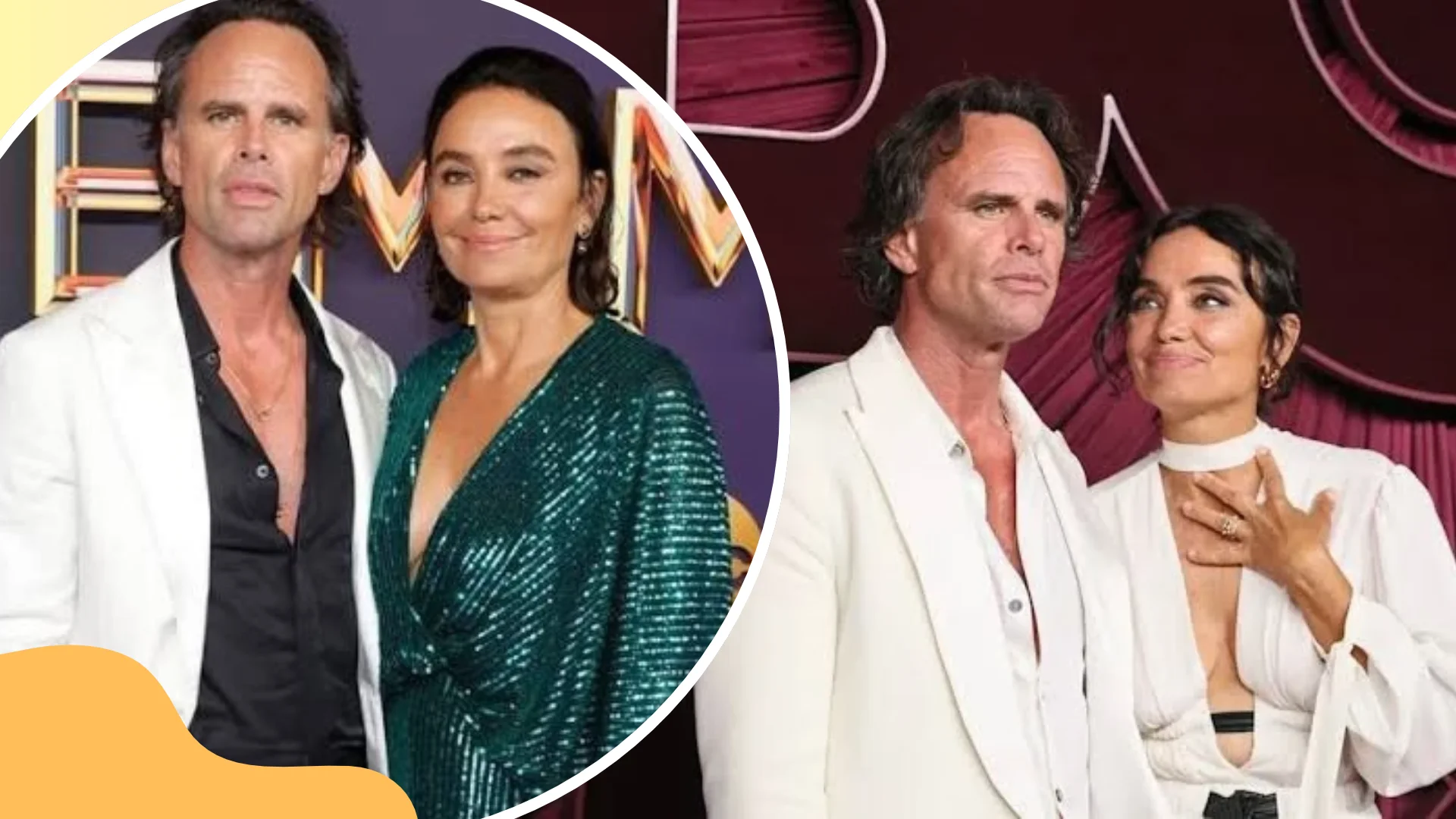
Leanne Goggins was a Canadian businesswoman and the first wife of actor Walton Goggins, yet almost nothing about her life is documented reliably online. This post separates the reported facts from the invented biographies that fill the web, many of which wrongly describe her as an actress, a fashion entrepreneur, or even an Australian politician. It covers her early life, her dog-walking business and the neighbors who loved her, her marriage in 2001 and divorce in 2004, and her death later that year, handled with care and restraint.
Who Was Leanne Goggins?
The Leanne Goggins most people are curious about was the first wife of actor Walton Goggins, known for his work on the series Justified. She was a Canadian businesswoman, née Kaun, who was not publicly known until she married the actor in 2001. Some outlets also list her as Leanne Knight Goggins or Leanne Kaun Goggins, and describe her as having come to public attention because of her relationship with the actor.
That is close to the whole of the reliable public record, and it is worth pausing on. Leanne Goggins was not an actress, a performer, or a public figure in her own right. She was a private person whose name entered public view through her marriage and then, tragically, through her death. Almost everything else you read about her online is either thinly sourced, recycled from other low-quality pages, or invented.
That matters because reading up on a name is how many people try to understand someone’s life. When the available facts about Leanne Goggins are this few, the responsible approach is to say so, rather than fill the space with plausible-sounding filler.
Leanne Goggins’s Early Life, and What We Don’t Know
Biographical sites that cover Leanne Goggins tend to repeat the same handful of details. One lists her as born in 1967 in Canada and notes that almost no information is available about her childhood or schooling, because there was little media coverage of her before she met Walton. Another echoes the point, noting that very little is known about her family of birth, not even the first names of her parents.
A few personal details appear repeatedly. Some sources say she was born with jaundice and loved animals from a young age. Others say she attended a pet training class while in college, which would fit the work she later did. These details are consistent across pages, but many of those pages appear to copy one another, so they should be treated as reported rather than confirmed.
There is no shame in a gap like this. Most of us have lives that leave few public traces: no interviews, no profiles, no archived speeches. When someone dies young and was never in the public eye, the record is thin. A good writer lets it stay thin.
Leanne Goggins: A Life Built Around Animals and Neighbors
If one thread of Leanne Goggins’s life comes through clearly, it is her connection to animals and to the people around her. Reports describe her as running a dog-walking business and say that many people in her area mourned her because she was close to numerous residents through that work. Another account notes that her clients, the people whose dogs she cared for, were among those heartbroken when news of her death came.
It’s a small detail, but it says something. A dog walker sees people daily: at doors, in lobbies, on sidewalks. She learns routines, greets familiar faces, and becomes part of the fabric of a neighborhood in a way that doesn’t show up on a résumé. The fact that people remembered her fondly is arguably a better measure of a life than any list of accolades.
It also stands in sharp contrast to the glossy, invented biographies that dominate the pages written about Leanne Goggins, which describe awards, fashion lines, and breakthrough performances. The real Leanne appears to have had a quieter, more local kind of impact, and it deserves to be described as it was.
Leanne Goggins and Walton Goggins: Their Relationship
Leanne Goggins’s public identity is tied to her marriage. Reports say she met Walton in 2000 and that the two began dating soon afterward. They married in 2001.
Beyond those dates, what circulates is largely commentary. One article says Leanne was unhappy with his work schedule, which is the kind of detail that is plausible for any couple where one partner works in film and television, but is also impossible to verify from outside the marriage. Acting careers involve long absences, unpredictable hours, and constant travel. Strains from that are common, and they are not a story about either person’s character.
It’s worth being careful here. Relationships end for many reasons, and the people involved are usually the only ones who know them. Speculation about who was at fault, or what went wrong, adds nothing to our understanding and can cause real hurt to those still living. The marriage ended in divorce in 2004, and that is as far as responsible reporting can go.
Walton Goggins went on to build a family and has remained a visible, well-regarded actor. Nothing about his later life needs to be retold here. The point is simply that the public attached Leanne Goggins’s name to his, and the coverage reflects that connection more than anything she did herself.
The Death of Leanne Goggins in 2004 and How It Was Reported
Leanne Goggins died in November 2004, a few months after her divorce, in Los Angeles. Her death was widely believed to be a suicide. She was reportedly 37 years old. Some accounts say she had been receiving treatment for chronic depression.
This post will not repeat the specific details of how she died, which appear in some of the pages written about her. That is a deliberate choice. Guidance from suicide-prevention and media organizations consistently advises against describing methods, because vivid, specific detail can influence vulnerable readers and adds nothing to understanding. A death can be acknowledged honestly without being reconstructed.
What stands out in coverage of Leanne Goggins’s death is how much of it frames her as a footnote to someone else’s story: Walton Goggins’ late wife, Walton Goggins’ first wife, and her tragic death. Her identity is almost always defined by her relationship to a famous person. A kinder and more accurate framing would recognize that she was a woman who lived in a community, cared for animals, struggled with depression, and was loved by people who missed her.
It is also worth saying plainly: depression is a medical condition, not a character flaw, and suicide is rarely the result of a single cause. Anyone who tries to explain a death like this with a tidy narrative, such as it was the divorce or it was the career, is overreaching. The honest answer is that the full picture was known only to those closest to her.
Why Leanne Goggins Is Surrounded by Misinformation
Now to the odd part of this story. Browse what is written about Leanne Goggins, and you will find pages claiming she is a rising star making waves in entertainment, with a breakthrough performance in a production called Eclipsed. Another says she has a fashion line called the Leanne Goggins Collection. One more claims she is an Australian politician who has served in the House of Representatives since 2019, representing the Division of Fremantle for the Australian Labor Party.
None of this matches the documented biography above. These pages appear to be auto-generated or templated content, built to attract readers to a name that people are curious about. The giveaway is the vagueness: phrases about being a beacon of inspiration and a force to be reckoned with, with no dates, places, employers, or verifiable details. Often the same page includes a headline about the real Leanne’s death right alongside the invented career, because the page was assembled from automated templates.
How does this happen? Websites chase popular names. When a name like Leanne Goggins draws steady curiosity, content farms generate articles around it, sometimes using AI tools that have no real information and so produce generic praise. The text is then stuffed with the name repeated again and again, which is why it can sound oddly repetitive. Because many of these pages sit on legitimate-looking domains, they can outshine careful sources.
The result is that a private woman who died in 2004 now has an internet shadow-life in which she is a politician, a fashion entrepreneur, and an actress. That is not just inaccurate. It is a quiet form of disrespect, replacing a real person with an invented brand.
After the Death of Leanne Goggins: Talking Responsibly About Suicide
Because the story of Leanne Goggins is tied to a suicide, it is worth stating a few principles that apply to anyone writing or sharing content like this.
The first is to avoid methods and graphic detail. Specific descriptions don’t help readers and can harm people who are at risk. A respectful account can say that someone died without describing how. The second is to avoid single-cause explanations. Saying someone died because of a breakup, a job, or a diagnosis oversimplifies and can make suicide seem like an understandable response to ordinary hardship, when the reality is almost always more complicated.
It is also wise not to glamorize or romanticize. Phrases like tragic ending attached to a dramatic story can make a death sound meaningful in a way that isn’t true to the pain involved. And it matters to respect the family and friends. Grief doesn’t expire, and people who loved Leanne Goggins may stumble across these pages years later. What they find should treat her with care.
Finally, a good post points toward help. If a reader is struggling, the most useful thing it can do is remind them that support exists and that reaching out is a sign of strength, not weakness. If you are reading this and thinking about harming yourself, please talk to someone today: a friend, a family member, a doctor, or a local crisis line. You deserve support, and many people who have felt the way you feel now have found that things can change.
How to Read About Leanne Goggins, or Anyone Like Her, Responsibly
If you’re curious about Leanne Goggins, or any person whose online presence is mostly noise, a few habits help.
Start by checking for specifics. Real biographies have names, dates, places, and sources, and a page that offers only adjectives deserves suspicion. Look for repetition, too. If several pages share identical sentences, they are probably copying each other, not independently confirming anything. Give more weight to contemporary news reports, official records, and established outlets than to content farms.
Watch for name collisions as well. Many people share names, and a politician, an artist, and a private citizen can all be called Leanne Goggins, with low-quality pages blending them. Be wary of net worth and height and weight pages, which are common in content farms and often contain fabricated or unverifiable numbers, especially for non-public figures.
Last, ask whether you need the detail at all. Sometimes the most respectful choice is to stop reading. Not every life needs to be fully documented online.
What Leanne Goggins’s Story Teaches Us
There are a few lessons in this story, none of them comfortable.
First, fame by association is a strange and sometimes cruel thing. Leanne Goggins was known to the public mainly because of whom she married, and that framing has followed her ever since. Her own interests, work, and relationships have faded into the background of a story told about someone else.
Second, the internet is not a reliable memorial. It rewards attention, not truth. A person can be remembered accurately by the people who knew her and misrepresented by thousands of pages that never met her.
Third, mental health deserves to be talked about with seriousness and compassion, before a crisis, not only after. Depression is common, treatable, and often invisible from the outside. Checking in on friends, especially after major life changes like a divorce or a move, is a small act that can matter.
Finally, there is something worth honoring in what we do know: a woman who cared for animals, who was valued by the people whose dogs she looked after, and who was mourned by her community. That is not a footnote. It is a life.
Conclusion
Leanne Goggins is a name that has attracted far more content than facts. The real woman behind it was reportedly a Canadian dog walker and entrepreneur who married actor Walton Goggins in 2001, divorced in 2004, and died later that year at 37, in circumstances widely reported as suicide, after reportedly receiving treatment for depression. Beyond that, the public record is thin, and much of what fills the gap online is fiction.
The best tribute that a blog post about Leanne Goggins can offer is accuracy and restraint: to say what is known, to refuse to invent the rest, and to treat a private person’s death with dignity. If this article leaves you with one thing, let it be that behind many names that circulate online there is a real person, and real people are owed more than empty hype.
And if anything here has stirred difficult feelings, please reach out to someone you trust or a local mental health service. You do not have to carry hard things alone.
Frequently Asked Questions
Who was Leanne Goggins?
Leanne Goggins, born Leanne Kaun, was a Canadian businesswoman and the first wife of actor Walton Goggins. She was a private person who became publicly known mainly through that marriage.
Was Leanne Goggins an actress, a fashion designer, or a politician?
No. Pages that describe Leanne Goggins as a rising star, a fashion entrepreneur, or an Australian politician appear to be auto-generated and do not match the documented biography. The woman connected to Walton Goggins worked in the pet-care field, not in entertainment or government.
When did Leanne Goggins marry Walton Goggins?
Reports say the two met in 2000 and married in 2001. The marriage ended in divorce in 2004.
When did Leanne Goggins die, and how old was she?
Leanne Goggins died in November 2004 in Los Angeles. She was reportedly 37 years old. Her death was widely reported as a suicide, and she was said to have received treatment for depression.
What did Leanne Goggins do for a living?
Reports describe Leanne Goggins as running a dog-walking business and say that many of the people she served in her neighborhood mourned her when she died.
Leave a Reply