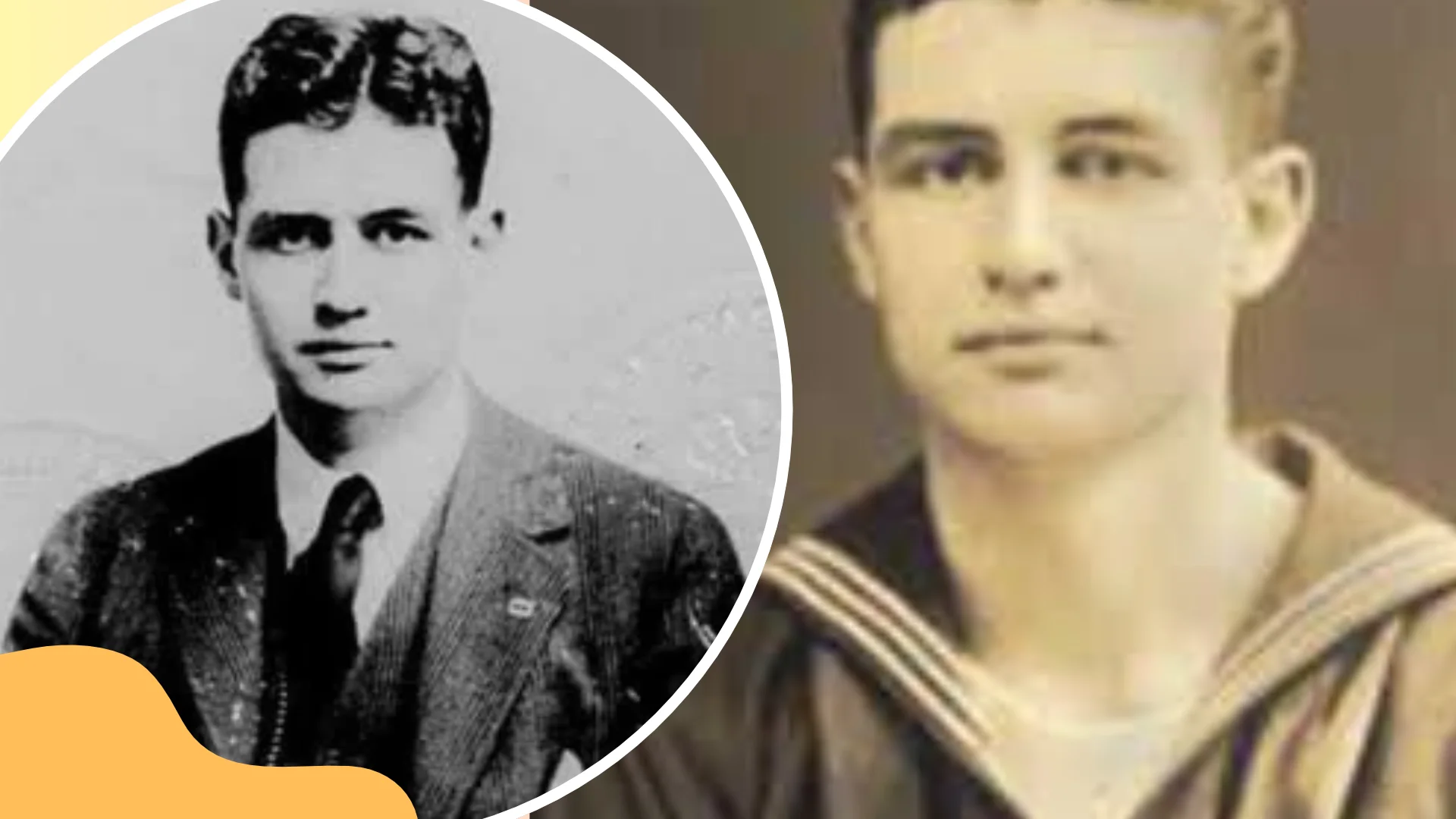
Most people who recognize the name Ludlow Ogden Smith know him for one reason: he was the first husband of Katharine Hepburn, one of the most celebrated actresses in the history of American film. Yet the man his friends called Luddy was far more than a footnote in a Hollywood biography. He was a Philadelphia businessman with deep roots in the city’s social world, a steady presence during the years when a young Hepburn was trying to break into the theater, and, by nearly every account, a loyal friend long after the marriage ended.
The story of Ludlow Ogden Smith is a story about timing, ambition, and an unusual kind of devotion. It involves a society wedding in the late 1920s, a famous demand that he change his name, a divorce that took place in two different decades, and a friendship that outlasted the marriage itself. This post walks through what is known about his life, where the historical record is clear, and where the details differ from one source to another.
Who Was Ludlow Ogden Smith?
Ludlow Ogden Smith was born in Philadelphia, Pennsylvania, and according to a widely cited memorial record, he was born on February 6, 1899, and died on July 7, 1979. He came from the kind of Philadelphia family that moved comfortably through the city’s established social circles, and he is most often described in biographical sketches as a socially connected businessman. That description appears again and again in accounts of Katharine Hepburn’s early life, which is where most of the surviving detail about him comes from.
Later in life, he was reportedly the president of a company that carried the name Ogden Ludlow Inc., a nod to the reversed name he adopted after his marriage to Hepburn ended. He was not a performer, a director, or a studio figure. He lived a mostly private life in and around the Philadelphia area, which helps explain why information about Ludlow Ogden Smith is thinner than what exists for the famous woman he married.
Early Life and Philadelphia Roots
Philadelphia in the early twentieth century had a tightly woven upper class, and the Main Line suburbs west of the city were its social heart. Families in this world attended the same churches, sent their children to the same schools, and appeared together in the Social Register, a directory that served as a kind of public ledger of respectability. Ludlow Ogden Smith belonged to that world by birth.
His middle and last names suggest the family connections that shaped him. Names like Ludlow and Ogden carry the weight of old Mid-Atlantic and New York lineages, the sort of names that appear in genealogies of colonial and early American families. Some online profiles list his parents by name, but because those details come from lightly sourced websites rather than primary documents, they are best treated with caution. What can be said with confidence is that his upbringing was comfortable, his connections were strong, and his path seemed headed toward a conventional career in business and a conventional life in Pennsylvania society.
That conventional path is exactly what made his marriage to a rising actress such an interesting turn.
Meeting Katharine Hepburn Near Bryn Mawr
Katharine Hepburn grew up in Hartford, Connecticut, the daughter of a prominent urologist and a famous suffragist, and she attended Bryn Mawr College outside Philadelphia. It was during her time there that she met Ludlow Ogden Smith. Several biographical accounts agree on this point: the couple’s paths crossed while she was a student, and the relationship moved quickly.
Hepburn graduated in 1928 and almost immediately began pursuing a career on the stage. At the same moment, she and Smith became engaged after what many accounts describe as a short courtship. He was a few years older than she was, financially secure, and well established. She was ambitious, restless, and determined to become an actress whether or not anyone approved.
For a young woman from a strong-willed New England family, Smith offered something valuable: stability. He did not stand in the way of her ambitions. Instead, as later accounts make clear, he became a quiet supporter of them.
The 1928 Wedding and a Marriage of Companions
Ludlow Ogden Smith and Katharine Hepburn married in 1928. Sources generally agree on the year, though the precise date varies depending on which biography or reference work is consulted, with some placing the ceremony earlier in the autumn and others in December. The wedding took place when Hepburn was twenty-one years old, and Smith was about twenty-nine.
From the start, the marriage had an unusual shape. Biographers have often characterized it as a partnership built more on companionship and mutual support than on grand romantic passion. Hepburn was not a conventional bride. She was focused on acting, deeply independent, and not particularly interested in settling into the domestic routines that society expected of a married woman in 1928.
Smith, for his part, seems to have accepted this. Accounts describe him as patient, generous, and willing to let his wife pursue work that kept her away from home and, eventually, far across the country. That arrangement was not typical for the era, and it says something about the kind of man he was.
Why Katharine Hepburn Wanted a New Name for Her Husband
The most famous story attached to Ludlow Ogden Smith has nothing to do with business or society. It is about his name. According to multiple biographical sources, Hepburn insisted that he change his surname so that she would not become Kate Smith. The name was too plain for her taste, and it also happened to belong to a well-known singer of the day, which Hepburn reportedly wanted to avoid.
The solution was strikingly unconventional: he would rearrange his name and become Ogden Ludlow, or in some versions, S. Ogden Ludlow. In other words, a man agreed to alter his own name so that his wife’s name would sound better. It is the kind of detail that has kept the story of Ludlow Ogden Smith in circulation for decades, because it captures Hepburn’s willful personality in a single anecdote.
Accounts differ on when exactly the change happened. Some describe it as a condition set before the wedding, while others place it later, after Hepburn’s early stage success. Either way, the outcome was the same. He took on the reversed name, and by several accounts he kept using it long after the marriage ended.
Supporting a Young Actress on the Rise
Hepburn’s early career was far from a straight line. She worked in stock companies, took on small roles, and endured the kind of setbacks that discourage many young performers. During those years, Ludlow Ogden Smith offered something that mattered enormously: financial and emotional backing.
Hepburn herself acknowledged this support for the rest of her life. Reference works on her career note that she often expressed gratitude toward him for the help he gave in the early days. A museum-style tribute to the couple has even described him as her devoted husband whose support and security helped launch her career. That framing may be generous, but it matches what many biographers say about the period.
The Warrior’s Husband, Hollywood, and a Growing Distance
The turning point in Hepburn’s career came in 1932, when she was cast as Antiope, the Amazon princess, in the Broadway production of The Warrior’s Husband. Her entrance, in which she leaped down a flight of steps carrying a stag across her shoulders, reportedly caught the attention of an RKO scout. A screen test followed, and soon she was cast opposite John Barrymore in A Bill of Divorce.
Hollywood changed everything. Hepburn moved west, her career accelerated, and the distance between her life and her husband’s life grew wider. Smith remained rooted in Pennsylvania and the world of business, while Hepburn was pulled into the studio system, with its long shoots, public attention, and demanding schedules.
Biographers note that the marriage became more of a long-distance arrangement during this period. There was no single dramatic rupture. Instead, the two simply lived increasingly separate lives, one in the glare of fame and the other in relative privacy. When the marriage ended, it did so without the kind of public bitterness that often accompanied Hollywood breakups.
The Divorce: Mexico in 1934 and a Second Decree in 1942
Hepburn and Ludlow Ogden Smith were divorced in 1934, and most sources give 1934 as the year the marriage formally ended. The divorce was obtained in Mexico, a common choice for couples in that era because Mexican courts offered a faster and simpler process than many American states did.
The story did not quite end there. According to several biographical accounts, Smith worried that the Mexican divorce might not be fully valid under American law. To remove any doubt, he reportedly obtained a second divorce in the United States in 1942, and he remarried a few days afterward. This detail is a reminder of how complicated cross-border divorces could be in the mid-twentieth century, and why a careful man might want a second decree on file.
A few reference works give slightly different dates for the end of the marriage, with some pointing to 1933 and others to 1934. The 1934 date appears most consistently, and it is the one used by major reference sources, so it is the safest choice when summarizing his life.
Ludlow Ogden Smith After Hepburn: Remarriage and Later Life
After the divorce, Smith largely returned to private life. One account holds that he was removed from the Philadelphia Social Register following the divorce, and that he adopted the reversed version of his name partly to regain some anonymity. That claim comes from a single genealogical-style source, so it should be read as a reported detail rather than a fact. It is plausible, though, given how closely tied his social standing was to the institutions of old Philadelphia.
He remarried in 1942, and one profile names his second wife as Elisabeth Katharine Albers Ludlow. Beyond that, little is documented about his later years. He appears to have continued in business and to have lived quietly, using the name Ogden Ludlow. He died in 1979 and is buried in Wayne, Pennsylvania, according to the memorial record that lists his dates.
The lack of detail is not unusual. Most people connected to famous figures leave only faint traces in the public record, and Smith deliberately seems to have preferred it that way. Still, the details that do survive point to a man who handled the end of a very public marriage with discretion.
A Lifelong Friendship With Katharine Hepburn
Perhaps the most striking feature of the story is what happened after the divorce. Instead of drifting apart or turning bitter, Hepburn and Smith remained close friends for the rest of his life. Reference works describe him as a lifelong friend to both Katharine and the Hepburn family.
That outcome says a great deal about both of them. Hepburn was famously blunt and sometimes difficult, and she herself admitted that she had not always treated him well during the marriage. Smith, meanwhile, was apparently secure enough to remain in her life without resentment. One tribute to the couple even notes that she returned to him in her later years, in the sense of leaning on the friendship as time passed.
For readers interested in Hepburn’s life, this friendship is one of the more humanizing details. Her reputation was built on independence and self-sufficiency, yet she kept faith with the man who helped her at the start. It suggests that the marriage, whatever its limits, left behind real affection and respect.
Did Ludlow Ogden Smith Have Children?
A common question about Ludlow Ogden Smith is whether he and Katharine Hepburn had children. They did not. Some accounts say the couple discussed starting a family early on, but Hepburn’s career took off before those plans developed. Her success on Broadway, followed by Hollywood, changed the direction of her life and pushed parenthood out of reach.
Hepburn never had children at all, and that fact has often been a topic in biographies of her. For Smith, the situation was different, since he went on to marry again, but the public record contains little about his later family life. Anyone trying to trace his descendants or immediate relatives will find that the available material is limited, and some of what circulates online is not well sourced.
How Hepburn Remembered Him
Hepburn wrote and spoke about her early life in later decades, including in her 1991 autobiography, Me: Stories of My Life. In the accounts that followed, she consistently credited Smith with providing the security she needed in her early twenties. She did not paint herself as a flawless partner, and she acknowledged that she had been demanding and often thoughtless.
That candor matters. Plenty of public figures rewrite their early relationships to flatter themselves. Hepburn, by contrast, tended to describe the marriage as a mistake in some ways but also as a source of gratitude. She appreciated what he had given her, and she seemed to understand that she had not been able to give the same in return.
Her later romantic partnership with Spencer Tracy, which began in the early 1940s and lasted until he died in 1967, would become the great love story of her public legend. But it is worth remembering that the first chapter of her adult life belonged to Ludlow Ogden Smith, and that she never forgot it.
Why Ludlow Ogden Smith Still Draws Interest
There are several reasons readers continue to look up Ludlow Ogden Smith. The first is simple curiosity about Katharine Hepburn. Every major biography of her devotes space to her marriage, and each one leaves a reader wanting to know more about the man at the other end of it.
The second reason is the name story. A husband who reverses his own name at his wife’s request is an irresistible detail, and it has been repeated in everything from encyclopedia entries to film retrospectives. The third reason is the contrast between the two lives. One became an icon whose career lasted more than six decades, and the other chose privacy, which makes the gaps in his story part of the appeal.
Conclusion
Ludlow Ogden Smith lived from 1899 to 1979, built a life as a Philadelphia businessman, and left his mark on history by marrying Katharine Hepburn at the very start of her career. He supported her when she needed it most, agreed to an unusual change to his own name, and stayed her friend long after their marriage ended in divorce.
The record on his life is incomplete, and some of the details that circulate online should be treated carefully. But the core facts are consistent across reliable sources: he was a socially connected Philadelphia man, he married Hepburn in 1928, they divorced in 1934, and he remained part of her circle for the rest of his life.
In the end, the story of Ludlow Ogden Smith is a story about quiet generosity. He may never have stood in front of a camera, but he played a real part in one of the great careers in American entertainment, and that is reason enough for his name to be remembered.
Frequently Asked Questions
Who was Ludlow Ogden Smith?
Ludlow Ogden Smith (1899–1979) was a Philadelphia businessman best known as the first husband of actress Katharine Hepburn. He was nicknamed Luddy and remained her friend for the rest of his life.
How did Ludlow Ogden Smith meet Katharine Hepburn?
The two met while Hepburn was a student at Bryn Mawr College near Philadelphia. They became engaged after a short courtship and married in 1928.
Why did Ludlow Ogden Smith change his name?
Hepburn reportedly did not want to become Kate Smith, so he reversed his name to Ogden Ludlow, sometimes given as S. Ogden Ludlow. Accounts differ on whether the change came before or after the wedding.
What year did Ludlow Ogden Smith and Katharine Hepburn divorce?
Most sources give 1934, when the divorce was obtained in Mexico. He reportedly secured a second divorce in the United States in 1942.
How many children did Ludlow Ogden Smith have with Katharine Hepburn?
They had no children together. Hepburn’s career took off soon after the marriage, and she never had children.
Leave a Reply