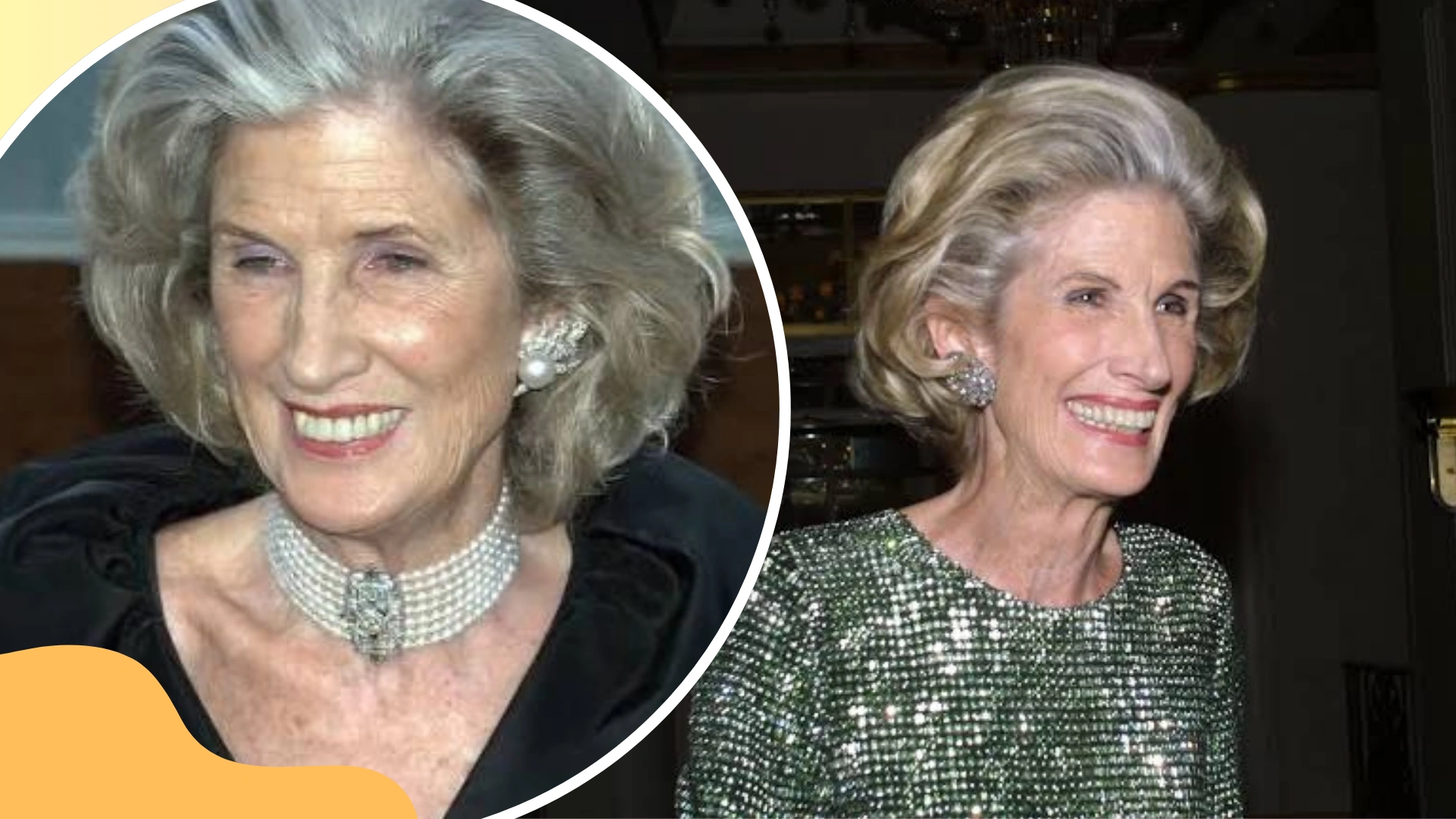
For nearly fifty years, Nancy Kissinger stood at the center of American diplomatic and social life, first as a foreign policy specialist in her own right and later as the wife of Secretary of State Henry Kissinger. Though she never held elected office or a formal diplomatic title, Nancy Kissinger’s fingerprints were on decades of American statecraft, New York philanthropy, and high society. Her death on August 20, 2026, at age 92, brought renewed attention to a woman who was, by every account, far more than a supporting figure in her husband’s storied career. This post traces the arc of Nancy Kissinger’s life, from her upbringing in Westchester County to her final years in South Kent, Connecticut, and explains why her name continues to draw interest from readers curious about one of the twentieth century’s most consequential political marriages.
Nancy Kissinger’s Early Life and Education
Nancy Kissinger was born Nancy Sharon Maginnes on April 13, 1934, in Manhattan. She was raised in White Plains, New York, the third child of Albert Bristol Maginnes, a prosperous lawyer and former football player, and his wife Agnes. Her upbringing placed her firmly within the East Coast establishment: an Episcopalian household, a football-playing father with a legal career, and an education that ran through some of the most prestigious institutions available to young women of her generation.
She attended the Masters School, a private school in Dobbs Ferry, New York, before enrolling at Mount Holyoke College in Massachusetts, one of the historic Seven Sisters colleges. Nancy Kissinger graduated from Mount Holyoke in 1955 with a bachelor’s degree in history. Years later, while working for New York Governor Nelson Rockefeller, she took a sabbatical to study at the Sorbonne in Paris, deepening her already substantial grounding in history, politics, and international affairs. That combination of formal education and hands-on political experience would shape the rest of her professional life.
Nancy Kissinger’s Foreign Policy Career Before Marriage
What often gets lost in accounts that reduce Nancy Kissinger to “the wife of Henry Kissinger” is that she built a serious foreign policy career of her own well before the two ever married. In 1969, she began working at the Rockefeller Brothers Fund, and by the mid-1960s she was already embedded in Nelson Rockefeller’s political orbit, serving on the staff of his Commission on Critical Choices for America. It was through this Rockefeller connection that Nancy Kissinger first crossed paths with Henry Kissinger, who was then working as a foreign policy consultant to the governor.
By 1974, Nancy Kissinger held a position at the Critical Choices for America Committee, where she worked as a foreign policy specialist in her own right. Colleagues and journalists who covered her over the decades consistently described her as sharp, well-read, and genuinely fluent in the substance of international affairs, not merely a socially adept spouse standing beside a famous man. This background is central to understanding why, once she and Henry Kissinger married, she was able to accompany him on high-level diplomatic missions and participate meaningfully in conversations about foreign policy rather than simply attending as a plus-one.
Nancy Kissinger’s Marriage to Henry Kissinger
Nancy Kissinger and Henry Kissinger married on March 30, 1974, in a civil ceremony in Arlington, Virginia. The wedding came a full decade after Henry Kissinger’s divorce from his first wife, Ann Fleischer, and it took place while he was serving as U.S. Secretary of State under President Richard Nixon. Nancy had also helped organize Henry’s fiftieth birthday celebration at Manhattan’s Colony Club the year before their wedding, a sign of how intertwined their lives had already become before they formalized the relationship.
The marriage placed Nancy Kissinger at the intersection of American power and international diplomacy at one of the most turbulent moments in modern U.S. foreign policy. Only two months after their honeymoon, she accompanied her husband into an intense stretch of Middle East diplomacy. Although she never carried an official diplomatic title, Nancy Kissinger traveled extensively alongside Henry Kissinger on missions to Russia, the Middle East, and other regions, and reporting from the period, including coverage from The New York Times, noted that she was well-versed enough in international affairs to be a genuine participant in these high-stakes trips rather than a passive observer.
Friends of the couple described a relationship built on intellectual partnership as much as personal affection. One longtime friend, Ken Cooper, recalled that the couple would finish each other’s sentences and were visibly affectionate and mutually respectful throughout their marriage. Michael Bloomberg, the former New York City mayor and a close friend of the Kissingers, later described Nancy as a powerhouse of ideas whose insights shaped both government work and philanthropic efforts throughout her life, and he called her Henry’s most trusted advisor.
That characterization aligns with how those closest to the couple described the practical dynamics of the marriage over the decades. Henry Kissinger’s public writings and interviews frequently referenced his wife’s judgment, and colleagues who worked with him after his time in government often noted that Nancy Kissinger remained an active sounding board for his thinking on world events long after he left formal office. Rather than retreating into a purely domestic or social role once the demands of the State Department were behind them, Nancy Kissinger appears to have continued functioning as an informal advisor, drawing on the same expertise that had defined her own pre-marriage career.
It is also worth noting the broader historical context surrounding their union. Henry Kissinger had joined the Nixon administration years earlier and was already one of the most recognizable, and polarizing, figures in American government by the time he and Nancy Maginnes wed in 1974. Marrying a sitting Secretary of State placed Nancy Kissinger under a level of public scrutiny that few private citizens experience, and by most accounts she navigated that scrutiny with the same composure and discretion that colleagues had long associated with her professional work under Nelson Rockefeller.
Nancy Kissinger’s Life in New York and Kent, Connecticut
After Henry Kissinger left the State Department, the couple returned to New York City, where they became fixtures of the city’s social, philanthropic, and media elite. Over the following decades, Nancy and Henry Kissinger mixed regularly with figures such as financier Henry Kravis, Blackstone co-founder Steve Schwarzman, philanthropist Brooke Astor, publisher Katharine Graham, and broadcaster Barbara Walters. Nancy Kissinger was a constant presence at galas, fashion shows, and intimate dinners hosted at the couple’s homes in Manhattan and in Kent, Connecticut.
In the early 1980s, the Kissingers purchased the Henderson Blueberry Farm on Henderson Road in Kent, which became a retreat from the more public demands of life in Manhattan. Despite their standing among the era’s most recognizable power brokers, the couple was also known to engage warmly with their neighbors in the small Connecticut town, a detail that friends and residents pointed to after her death as evidence that Nancy Kissinger’s public image, however glamorous, was not the whole picture.
Physically, Nancy Kissinger cut a striking figure. Standing nearly six feet tall, with what one profiler once called a brainy, Bill Blass-clad blonde presence, she was frequently likened to former First Lady Jacqueline Kennedy for the elegance she brought to international travel and public appearances. Her height, poise, and patrician manner offered a visual contrast to her husband, who stood five feet eight inches tall and had fled Nazi Germany as a teenager, a biographical detail that added a layer of resonance to their decades-long partnership.
Nancy Kissinger’s Philanthropy and Influence on the New York Social Scene
Nancy Kissinger’s identity extended well beyond her marriage into a substantial philanthropic career of her own. She became a fixture of the New York charity circuit, known for an ability to open doors that few others could. Fellow philanthropist Judy Peabody, recalling a successful hospital fundraiser she chaired in 1989, once remarked that Nancy Kissinger could reach any chief executive by telephone and that no one ever kept her waiting.
That kind of access, paired with genuine substantive knowledge of policy and world affairs, made Nancy Kissinger a sought-after presence on boards, at benefit dinners, and within the broader ecosystem of institutions that rely on well-connected patrons. Her philanthropic work ran parallel to her role as a diplomatic partner, and many who worked alongside her in charitable circles described her contributions as central rather than ceremonial. She was, by the account of those who worked with her most closely, someone who used both her intellect and her connections in service of the causes she supported.
This was a period in New York history when a relatively small circle of well-placed women effectively determined which hospitals, museums, and cultural institutions received major funding, and Nancy Kissinger occupied a prominent place within that circle. Unlike patrons whose involvement began and ended with writing a check, she was known for staying engaged with the institutions she supported, chairing committees, attending planning meetings, and lending her name and her network to fundraising efforts that might otherwise have struggled to reach their goals. Her presence at a gala or benefit dinner was itself considered a draw, capable of attracting other high-profile donors who wanted to be associated with the causes she championed.
The overlap between Nancy Kissinger’s philanthropic instincts and her foreign policy background also showed up in the kinds of institutions and initiatives she gravitated toward. Having spent years working directly on questions of international affairs before her marriage, she brought a policy-literate perspective to conversations that, in other hands, might have stayed purely social. Friends and collaborators frequently noted that she could move seamlessly between discussing a hospital’s capital campaign and analyzing the latest developments in Cold War diplomacy, a range that few of her philanthropic peers could match.
Nancy Kissinger and the 1982 Newark Airport Incident
Not every chapter of Nancy Kissinger’s public life was defined by galas and diplomacy. In 1982, she made national headlines after an altercation at Newark Airport. The Kissingers were en route to Boston, where Henry Kissinger was scheduled to undergo open-heart bypass surgery, when a woman affiliated with a group connected to political figure Lyndon LaRouche approached the couple and directed hostile, insulting questions at Henry. Nancy Kissinger physically intervened, and the woman later accused her of choking her and infringing on her free-speech rights.
Nancy Kissinger was charged with simple assault but was ultimately acquitted. The presiding judge characterized her actions as a spontaneous and understandably human reaction to an offensive provocation at an extraordinarily stressful moment, given that her husband was about to undergo major heart surgery. The episode became one of the more widely referenced anecdotes about Nancy Kissinger in the years that followed, often cited as evidence of the fierce protectiveness she brought to her marriage, alongside the intellectual partnership for which she was better known.
Nancy Kissinger’s Later Years and Death
Henry Kissinger died in November 2023 at the age of 100, bringing to a close a marriage that had lasted nearly fifty years. Nancy Kissinger continued to live at the couple’s longtime home in South Kent, Connecticut, in the years that followed. She died there on August 20, 2026, at the age of 92. Robert Johnson, the manager of the property, confirmed her death to the Associated Press; the specific cause was not disclosed publicly. Her family announced that she would be buried beside her husband at Arlington National Cemetery at a later date, a fitting resting place given his decades of service as a senior American diplomat.
Tributes following her death emphasized both her personal warmth and her substantive contributions to the causes and partnerships she cared about. Michael Bloomberg’s public tribute captured a sentiment echoed by many others who knew the couple, describing Nancy as the ultimate diplomat, someone as wise as she was discreet, and someone whose partnership with Henry Kissinger he and his wife Diana had been fortunate to witness up close over the decades.
Why People Still Look Into Nancy Kissinger’s Story
Interest in Nancy Kissinger tends to spike around two distinct threads. The first is genuine curiosity about the private lives of major twentieth-century diplomatic figures, and Henry Kissinger remains one of the most written-about American statesmen of the postwar era. Readers who study his role in shaping U.S. policy toward China, the Soviet Union, and the Middle East often want to understand the personal relationships that shaped the man behind those decisions, and Nancy Kissinger’s decades-long presence at his side makes her a natural focal point.
The second thread is Nancy Kissinger’s own biography as a foreign policy specialist, philanthropist, and fixture of elite New York social life independent of her marriage. Her career trajectory, from a Rockefeller Brothers Fund staffer to a recognized voice on foreign affairs to one of the city’s most effective charitable fundraisers, offers a case study in the kind of influence that operates outside formal titles and elected office. For readers interested in the history of American philanthropy, the inner workings of foreign policy circles, or the social history of New York’s postwar elite, Nancy Kissinger’s life offers a genuinely rich subject.
Her death in 2026 also renewed attention to the broader Kissinger legacy at a moment when historians and journalists continue to reassess Henry Kissinger’s foreign policy record nearly three years after his own passing. Because Nancy Kissinger was present for so much of that history, firsthand and by proximity, accounts of her life frequently double as a window into a defining era of American diplomacy.
Nancy Kissinger’s Life Beyond a Famous Marriage
What emerges from the available record is a portrait of a woman whose public identity was shaped by, but never entirely defined by, her marriage to one of the most influential American diplomats of the twentieth century. Nancy Kissinger arrived in Henry Kissinger’s orbit already equipped with a genuine foreign policy background, built her own reputation within New York philanthropic circles, and was, by the consistent testimony of friends and colleagues, an active intellectual partner rather than a passive presence at his side.
From her early years in White Plains and her education at Mount Holyoke, through her work on Nelson Rockefeller’s staff, her nearly fifty-year marriage to Henry Kissinger, and her later decades as a fixture of New York philanthropy, Nancy Kissinger’s life traces the arc of a particular kind of twentieth-century American influence, one built on intellect, access, and sustained proximity to power.
Conclusion
Nancy Kissinger’s life resists a simple summary. She was, at once, a Mount Holyoke-educated foreign policy specialist, a trusted advisor to one of the most consequential American diplomats of the modern era, an effective and deeply engaged philanthropist, and a fixture of New York’s social and cultural elite for more than half a century. Her passing in August 2026 closed the final chapter on one of modern American history’s most enduring diplomatic partnerships, and her legacy, both as Henry Kissinger’s wife and as a formidable figure in her own right, is likely to remain a subject of interest for historians and casual readers alike for years to come.
Frequently Asked Questions
Who was Nancy Kissinger?
Nancy Kissinger, born Nancy Sharon Maginnes, was an American foreign policy specialist and philanthropist best known as the wife of former Secretary of State Henry Kissinger.
When did Nancy Kissinger marry Henry Kissinger?
Nancy Kissinger married Henry Kissinger on March 30, 1974, in a civil ceremony in Arlington, Virginia.
What did Nancy Kissinger do before her marriage?
Before marrying Henry Kissinger, Nancy Kissinger worked as a foreign policy aide to New York Governor Nelson Rockefeller and later as a specialist with the Critical Choices for America Committee.
How did Nancy Kissinger and Henry Kissinger meet?
The two met in the mid-1960s while both were working for New York Governor Nelson Rockefeller, with Henry serving as a foreign policy consultant and Nancy on his policy staff.
When did Nancy Kissinger die?
Nancy Kissinger died on August 20, 2026, at her longtime home in South Kent, Connecticut, at the age of 92.
Leave a Reply