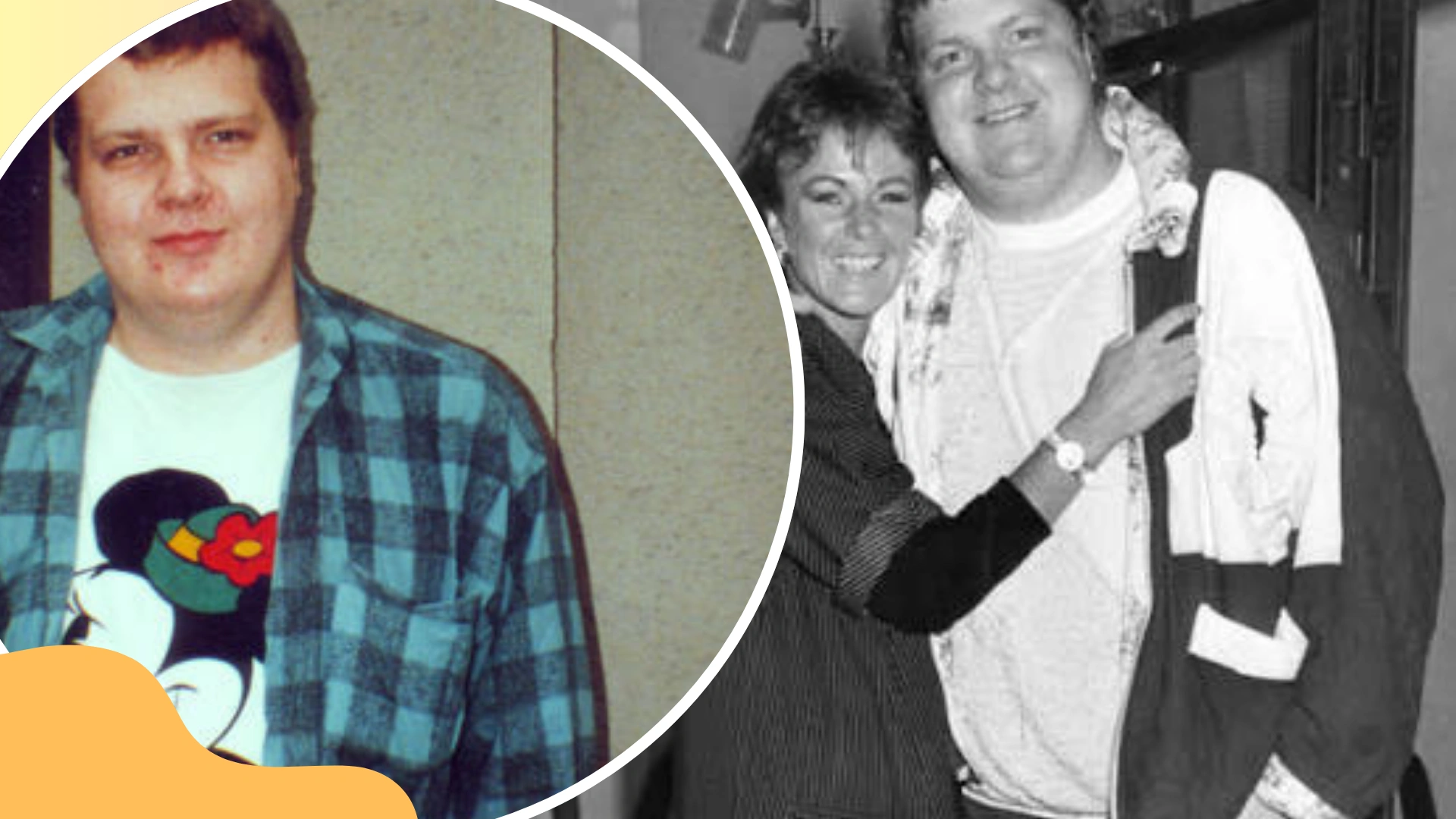
Long before Anni-Frid Lyngstad became Frida, the raven-haired alto of ABBA whose voice anchored some of the best-selling pop records in history, she was a young woman building an ordinary life in provincial Sweden. Part of that life was her first marriage, to a musician and salesman named Ragnar Fredriksson. Their relationship predates ABBA entirely, unfolded almost completely outside the public eye, and ended years before Frida’s fame arrived. Yet because of who she became, Ragnar Fredriksson has remained a recurring footnote in ABBA history, mentioned in biographies, genealogy databases, and fan forums, even though he himself never sought or received the spotlight.
This piece pulls together what is actually known about Ragnar Fredriksson: his background, his brief marriage to Frida, the children they raised together, and the quieter life he lived after their divorce. Where the historical record is thin, or sources disagree, that will be noted rather than smoothed over, because much of what circulates about Ragnar Fredriksson online is secondhand, drawn from genealogy sites and fan recaps rather than rigorous reporting.
Who Was Ragnar Fredriksson?
Ragnar Fredriksson was born on December 10, 1941, in Jönköping, Sweden, the son of a salesman named Erik Ragnar Fredriksson and his wife, Elsa Edit Viola Pettersson. His parents married in early 1942, shortly after his birth. The family moved around Sweden during his childhood, spending a few years in the small town of Eksjö in the mid-1940s before settling in Eskilstuna by 1950, a mid-sized industrial city about eighty miles west of Stockholm. Eskilstuna is where Ragnar Fredriksson would spend most of his adult life, and it is also where his connection to Anni-Frid Lyngstad began.
Musically inclined from a young age, Ragnar Fredriksson played trombone and led his own group while still in secondary school, performing under the name Ragnar Fredriksson’s Orkester. Dance bands were a fixture of Swedish social life in the 1950s and 1960s, playing at community halls, festivals, and private functions across the country, and a young bandleader with his own outfit would have been a familiar, if modest, local presence. Later in his musical career, Fredriksson became a member of Bengt Sandlund’s Storband, a more established big band that toured the Swedish dance circuit. It was through this world of touring musicians, orchestras, and small-town dance halls that Ragnar Fredriksson’s path crossed with that of a teenage singer named Anni-Frid Lyngstad, who was likewise beginning to build a name for herself on the same circuit.
Outside of music, Ragnar Fredriksson worked as a salesman, a profession he returned to in the years following his divorce and continued for the rest of his working life. He does not appear to have pursued music professionally after his time with Sandlunds Storband, and there is no indication that he sought further recognition once his marriage to Frida ended.
The Swedish dance-band scene Ragnar Fredriksson came up in during the 1950s deserves some context, since it explains how two teenagers from provincial Sweden could plausibly cross paths at all. Dance orchestras of that era traveled a circuit of folkparks, community centers, and regional festivals, often performing several nights a week across a cluster of nearby towns. Musicians moved between bands frequently, filling in for one another, forming new lineups, and building reputations through word of mouth rather than recordings. A trombonist who led his own outfit as a teenager, as Ragnar Fredriksson did, would have been well known within that regional circuit even without achieving anything close to national recognition. It was an environment built for chance encounters between young performers, and it is the most plausible explanation for how Fredriksson, a musician from Jönköping and later Eskilstuna, ended up meeting a young singer named Anni-Frid Lyngstad, who was performing in similar venues around the same period.
Meeting Anni-Frid Lyngstad
Accounts of exactly when Ragnar Fredriksson and Anni-Frid Lyngstad met vary depending on the source, and this is one of the areas where the public record is genuinely inconsistent. Some recaps place their meeting in April 1961, describing a courtship of roughly two years before marriage. Other sources give the marriage date itself as 1964, which would put their meeting later or their courtship shorter. Adding to the confusion, the couple’s first child, Hans Ragnar Fredriksson, was born on January 26, 1963, meaning if the 1964 marriage date is accurate, their son was born before they formally married, which was not unusual in Sweden at the time but does complicate the narrative found on some fan sites that assume marriage preceded the birth. Because these dates conflict across the sources currently available, none of them should be treated as definitively confirmed; readers interested in the precise chronology should treat any single date with some caution until a primary source, such as a Swedish parish or civil registry record, is consulted directly.
What is more consistently reported is the setting: both were young performers navigating the same regional music scene in and around Eskilstuna in the early 1960s, well before Frida’s career took the turn that would eventually lead her to Stockholm’s cabaret and talent-show circuit, and later to the group that became ABBA. At the time she met Ragnar Fredriksson, Anni-Frid Lyngstad was an unknown, working-class singer with talent and ambition but none of the fame that would define the next two decades of her life. Their relationship, whatever its exact timeline, took shape entirely before ABBA existed even as an idea.
Marriage, Children, and Family Life in Eskilstuna
Ragnar Fredriksson and Anni-Frid Lyngstad were married in the early-to-mid 1960s and settled into family life in Eskilstuna. The couple had two children together. Their son, Hans Ragnar Fredriksson, was born January 26, 1963, in Eskilstuna. He would later go on to have his own music career, working as a singer, songwriter, and producer, including a stint with the Swedish group FX and later collaborations with his mother on demo recordings in the 1980s through a project called Rendez-Vous. Hans has, at various points, spoken publicly about growing up as the son of Frida, giving him a distinct public profile that is separate from, and considerably better documented than, that of his father.
The couple’s second child, a daughter named Ann Lise-Lotte Fredriksson, was born in 1967. Her life had its own trajectory, entirely apart from her parents’ brief marriage: she later studied in the United States, where she met Charles Gerrit Casper, whom she married in August 1988 at Sudbyholm Castle near her hometown of Eskilstuna. Tragically, Ann Lise-Lotte died on January 13, 1998, just before her thirty-first birthday, as a result of injuries sustained in a car accident. Her death is occasionally referenced in broader accounts of Frida’s life, since it represents one of the most painful chapters in the singer’s personal history, occurring decades after Frida’s marriage to Ragnar Fredriksson had ended.
During the marriage, the family’s day-to-day life in Eskilstuna was, by all available accounts, unremarkable in the way that most people’s lives are unremarkable: a young couple raising two small children in a mid-sized Swedish city, with Ragnar Fredriksson working as a musician and later returning to sales. None of the surviving records suggest a public or notable domestic life during this period; the marriage’s later interest to biographers and fans stems entirely from what Anni-Frid Lyngstad went on to become, not from anything that was publicly notable about the marriage itself at the time.
It’s worth pausing on just how different this early chapter looks compared with the version of Frida the world would come to know. In the early-to-mid 1960s, Anni-Frid Lyngstad was still years away from joining the Swedish talent-show circuit that would eventually lead her toward Björn Ulvaeus, Benny Andersson, and Agnetha Fältskog. She was, at that point, a young mother in Eskilstuna married to a working musician, not yet the internationally recognized dark-haired one of ABBA. Ragnar Fredriksson’s household is, in that sense, a snapshot of Frida’s life before any of the choices that led to global fame had been made, which is a large part of why genealogists and fans continue to find the period worth documenting even though almost nothing about it was recorded contemporaneously.
The Divorce and Its Aftermath
The marriage between Ragnar Fredriksson and Anni-Frid Lyngstad ended in 1970. Swedish census records from that year list the couple as divorced as of March 24, 1970, after roughly six to seven years of marriage. Following the split, Ragnar Fredriksson remained in Eskilstuna with the couple’s two children, Hans Ragnar and Ann Lise-Lotte, and continued working as a salesman.
This detail, that the children remained with their father in Eskilstuna after the divorce, is notable mainly because it runs somewhat counter to a common assumption that the children of the era’s newly famous performers were raised primarily by the famous parent. In this case, as Anni-Frid Lyngstad’s own career accelerated through the early 1970s, culminating in the formation of ABBA in 1972 and the group’s global breakthrough with Waterloo in 1974, her children from her first marriage were being raised in Eskilstuna under Ragnar Fredriksson’s care, at some remove from the increasingly international, high-profile life their mother was building. Hans Ragnar Fredriksson has spoken in later interviews about the complexities of that period, including the emotional impact of his parents’ divorce, though the available quotes attributed to him online are inconsistently sourced and should be read as secondhand paraphrase rather than verified direct statements.
There is no substantial public record describing Ragnar Fredriksson’s life in any detail after this point. He appears not to have remarried in any way that generated public documentation, nor did he pursue further visibility connected to his former wife’s fame. Whatever relationship he maintained with Frida or with their children as they grew older is not well documented in publicly available sources, and claims about the nature of that relationship should be treated as speculative unless attributed to a named, verifiable interview.
Life After Fame Found the Family
As ABBA’s fame grew through the mid-to-late 1970s, Anni-Frid Lyngstad’s personal history naturally attracted increasing curiosity, and Ragnar Fredriksson’s name began appearing in the margins of her biography, in liner notes, fan encyclopedias, and later, internet databases dedicated to cataloguing every detail of the group’s members’ lives. He did not, as far as available records show, participate in this attention. There are no widely circulated interviews with Ragnar Fredriksson discussing his marriage to Frida, no public statements about her success, and no indication that he sought to capitalize on the connection in any commercial or media sense. This stands in some contrast to the more publicly documented life of his son Hans, who has periodically discussed his mother and his childhood in interviews tied to his own music career.
Genealogical records indicate that Ragnar Fredriksson lived out the remainder of his life largely in Sweden, continuing his work in sales after stepping away from music professionally. He died in 2011, at around 70 years old. Beyond the basic facts of birth, marriage, children, divorce, and death, very little else about his private life, personality, or day-to-day pursuits has entered the public record. This is, in itself, a somewhat unusual case in celebrity-adjacent biography: rather than a former spouse who leaned into or resisted public attention, Ragnar Fredriksson largely existed alongside it, visible only through the documentation others generated about his more famous ex-wife and son.
Why Ragnar Fredriksson Still Comes Up in ABBA Conversations
Interest in Ragnar Fredriksson persists today almost entirely because of his connection to Anni-Frid Lyngstad and, by extension, to ABBA’s story. ABBA remains one of the most enduringly popular acts in pop music history, and Frida’s personal biography, including her difficult childhood, her early career on the Swedish dance-band circuit, her first marriage, and the loss of her daughter in 1998, continues to be examined by fans, biographers, and documentary makers revisiting the group’s legacy, particularly amid renewed attention driven by projects like ABBA Voyage.
Within that broader interest, Ragnar Fredriksson occupies a small but recurring place: the first husband, the father of her two children, and a figure whose life ran parallel to, then diverged sharply from, the trajectory that made his former wife a global icon. His son Hans Ragnar Fredriksson’s own modest music career, and his occasional public reflections on his parents and his sister’s death, have also kept the Fredriksson name circulating in ABBA-adjacent corners of the internet, even though the underlying documentation about Ragnar Fredriksson himself remains sparse and, in places, contradictory.
It’s also worth noting that because detailed, primary-sourced biographical material on Ragnar Fredriksson is limited, much of what appears in casual online write-ups leans on genealogy sites, fan compilations, and secondhand family recaps rather than journalism or biography in the traditional sense. Readers looking for a rigorously verified account of his life, particularly around exact dates, may find gaps or inconsistencies between sources, a reflection of how little independent attention he received during his own lifetime, rather than any deliberate obscuring of the facts.
Conclusion
Ragnar Fredriksson’s life intersects with one of pop music’s most famous stories almost by chance of timing: he married a talented young singer from Eskilstuna years before she became Frida of ABBA, had two children with her, and then lived the rest of his life largely outside the public eye; their family name would eventually carry. The marriage itself, which lasted roughly six to seven years and ended in 1970, took place entirely before ABBA’s formation, meaning Ragnar Fredriksson’s place in the story is defined by what came after their divorce rather than anything from the relationship itself. What remains of his public record- a musician’s early career, a salesman’s later one, two children whose lives took very different paths, and a quiet death in 2011- sketches a modest, largely private life connected to global fame only through family ties. For fans of ABBA and Frida’s music, his story is less about who he was as an individual and more about the small, human-scale beginning that preceded one of pop music’s most extraordinary careers.
Frequently Asked Questions
Who was Ragnar Fredriksson?
Ragnar Fredriksson was a Swedish trombonist and later salesman from Eskilstuna, best known as the first husband of Anni-Frid Lyngstad, the ABBA singer known as Frida. He married her years before ABBA formed and was the father of her two children.
What was Ragnar Fredriksson’s relationship to ABBA?
Ragnar Fredriksson had no direct involvement with ABBA. His connection is entirely through his marriage to Anni-Frid Lyngstad, which ended in 1970, roughly two years before ABBA was formed in 1972.
How many children did Ragnar Fredriksson have with Anni-Frid Lyngstad?
Ragnar Fredriksson and Anni-Frid Lyngstad had two children together: a son named Hans Ragnar Fredriksson, born in 1963, and a daughter named Ann Lise-Lotte Fredriksson, born in 1967.
Why did Ragnar Fredriksson and Anni-Frid Lyngstad divorce?
Public sources do not document a specific reason for the divorce, which was finalized in March 1970. No verified interviews or statements from either party explaining the split appear to be publicly available.
Where did Ragnar Fredriksson live after his divorce?
Ragnar Fredriksson remained in Eskilstuna, Sweden, after his divorce from Anni-Frid Lyngstad, raising their two children there while working as a salesman until he died in 2011.
Leave a Reply