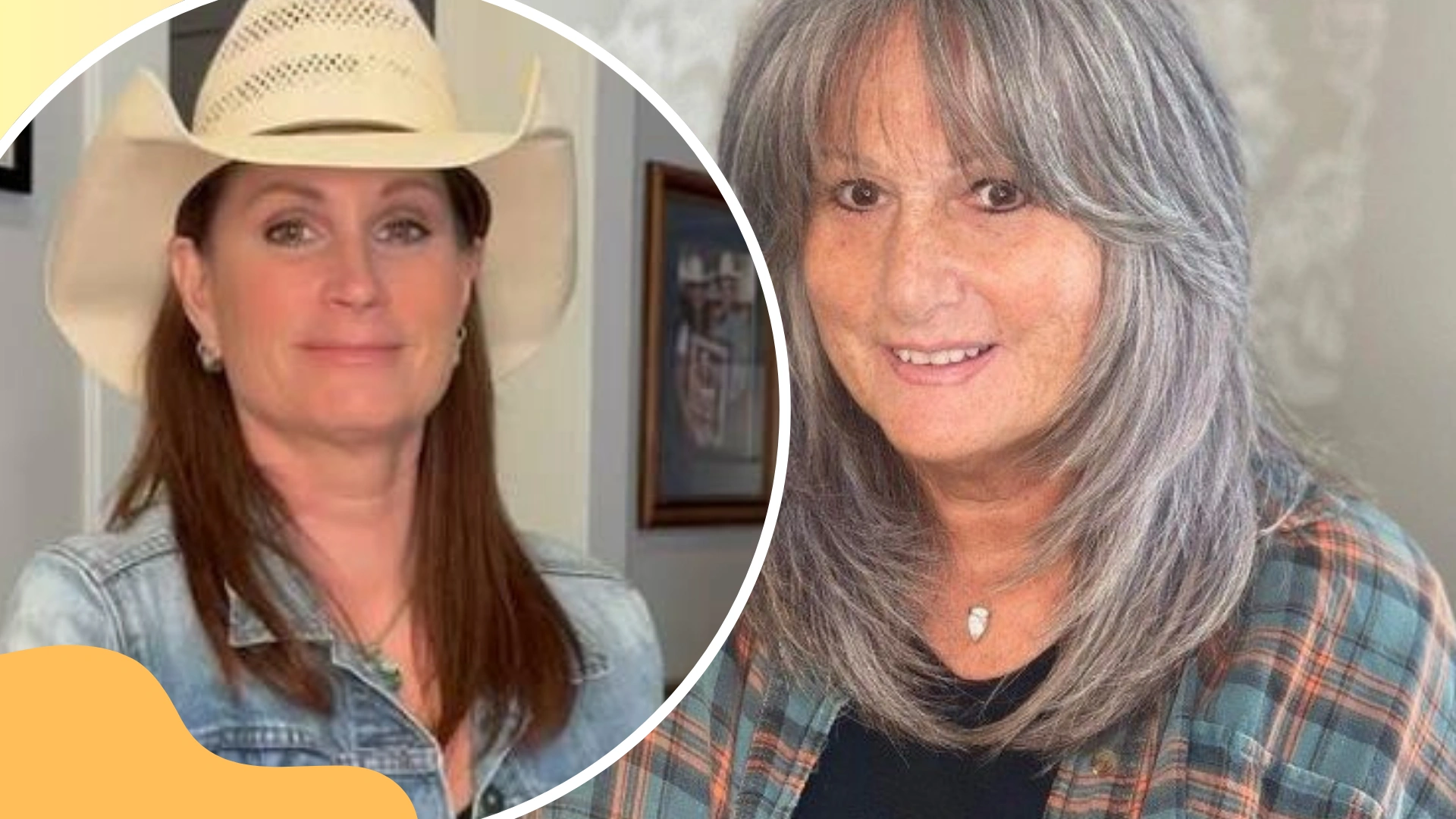
Susan Acevedo occupies a small but memorable chapter in rock history, remembered today as the first wife of singer-songwriter Neil Young. Long before he became one of the defining voices of American rock music, Young was a regular at a modest breakfast spot in Topanga Canyon, California, where Susan Acevedo worked as owner, hostess, and cook. Their short marriage, which began in December 1968 and ended within about two years, unfolded during one of the most transformative periods of his career, and Susan Acevedo herself played a quiet but meaningful role in shaping the artistic circles that surrounded him. What follows is an account of who Susan Acevedo was, how she came into Neil Young’s life, and what is known about the years that followed their divorce.
Early Life and Background
Very little verifiable information exists about Susan Acevedo’s life before she met Neil Young. Her exact birthplace, her family history, and details of her upbringing have never been publicly documented, and this scarcity of biographical material has remained a defining feature of her story ever since. What is known largely comes from secondhand accounts, including Young’s own recollections in his memoirs and interviews with people who were part of the Topanga Canyon scene at the time.
Young himself has offered a brief physical and personal sketch of Susan Acevedo, describing her heritage as Sicilian and noting that she was several years older than him. That age gap meant she arrived in the relationship with more life experience, having already raised a young daughter and run a small business on her own. Because so little about her formative years has ever surfaced in public records, most of what can be said about Susan Acevedo’s early life should be treated as informed reconstruction rather than confirmed fact.
Running Canyon Kitchen in Topanga
By the late 1960s, Susan Acevedo was operating a small breakfast establishment called Canyon Kitchen, located in the modest shopping area of Topanga Canyon, just outside Los Angeles. She handled nearly every role at the restaurant herself, working as owner, hostess, and server for a clientele that increasingly included the musicians, artists, and free spirits who had begun settling in the canyon during that era.
Topanga and the neighboring Laurel Canyon were becoming informal headquarters for a new wave of Southern California rock culture, and Canyon Kitchen functioned as one of the meeting points for that community. Neil Young, who had recently left Buffalo Springfield and used his solo advance to buy a redwood property nearby, became a regular customer. He has described stopping in for breakfast nearly every morning, drawn as much by the food as by the chance to see Susan Acevedo, whom he later called the beautiful hostess and owner of the place.
Running a restaurant single-handedly while also raising a daughter placed real demands on Susan Acevedo, and by most accounts, she managed both responsibilities with considerable resilience. Her daughter, Tia, came from an earlier relationship, and Susan Acevedo was already navigating single motherhood well before Neil Young became part of her life.
Meeting Neil Young
The relationship between Susan Acevedo and Neil Young developed gradually out of that daily breakfast routine. Young has recounted how his visits to Canyon Kitchen became something he looked forward to specifically because of her presence, and over time, the two grew close enough that a romance developed. Friends and acquaintances from that period have described Susan Acevedo as spirited and independent, someone who did not fit neatly into the laid-back, mellow stereotype often associated with the canyon’s hippie culture. She was remembered by at least one person close to Young’s circle as more of a city presence, someone who drove fast and carried herself with confidence.
At the same time, others who knew her recalled a more domestic side, describing moments of her at home handling ordinary household tasks with unexpected care and attention. That contrast, between an assertive public persona and a more traditional private life, seems to have been part of what made Susan Acevedo memorable to the people who crossed paths with her during those years.
The December 1968 Wedding
Neil Young and Susan Acevedo married on December 1, 1968, in a small ceremony held at his redwood property overlooking Topanga Canyon. The wedding was intimate, attended mainly by close friends and family rather than a large gathering, which fit the low-key character of their life together in the canyon at the time. One attendee later recalled an odd moment during the event when the house seemed to shake, an anecdote that has become one of the few vivid details preserved from the day itself.
Their marriage placed Susan Acevedo squarely within the orbit of a musician whose career was about to accelerate dramatically, even though neither of them could have fully anticipated just how quickly that change would arrive.
Introducing Neil Young to the Art World
One of the more significant aspects of Susan Acevedo’s time with Neil Young was the influence she had on his exposure to visual art and the broader creative community surrounding Topanga Canyon. Before their relationship, Young’s world centered almost entirely on music. Susan Acevedo brought him into contact with visual artists and figures from the Beat and assemblage art movements, including George Herms and Wallace Berman, both of whom she knew personally through her own social circles.
Young has credited her directly with expanding his understanding of what creativity could mean beyond songwriting and performance, crediting Susan Acevedo with introducing him to the concept of art itself as a broader idea. Through those same circles, Susan Acevedo’s connections eventually led Young to actor Dean Stockwell, who had become closely involved in the Topanga art scene and had written a screenplay that would later inspire the songs on Young’s 1970 album After the Gold Rush. Although the film project associated with that screenplay was ultimately shelved, the songs Young wrote for it became the foundation of one of his most celebrated records, a creative chain that traced back in part to Susan Acevedo’s friendships.
The Hair-Sewn Patches on After the Gold Rush
Among the more distinctive details connected to Susan Acevedo is her handiwork on the jeans Neil Young wears on the back cover of After the Gold Rush. According to Young’s own account, Susan Acevedo sewed decorative patches onto the denim using strands of her own hair as thread, a detail that has since become one of the more curious footnotes associated with the album’s visual identity. She also made him a patchwork vest with a blue velvet back, crafted using the same unusual technique.
Young has spoken warmly about these handmade items in later years, describing them as expressions of the care and artistry Susan Acevedo brought to their relationship. He has said he held onto pieces she made long after their marriage ended, treating them as reminders of a period he remembered fondly despite its brevity.
Beyond visual art, Susan Acevedo is also credited with shaping some of Young’s musical tastes during this period, reportedly introducing him early to artists including David Bowie and later Devo, both of whom would go on to influence broader currents in popular music.
Why the Marriage Ended
The same period that brought Susan Acevedo into contact with artists who would shape Young’s creative direction also set the stage for the end of their marriage. In the months following their wedding, Young’s career accelerated rapidly. He joined forces with Crosby, Stills, and Nash during the summer of 1969, and the resulting lineup quickly began playing much larger venues than he had drawn as a solo act. His second solo album, released that same year, further cemented his reputation, and by 1970, he was recording what would become After the Gold Rush while also touring extensively with Crazy Horse and performing solo acoustic dates across North America.
That pace of touring and recording left little room for a settled domestic life. Susan Acevedo remained largely on her own in Topanga while Young was on the road or occupied in the studio for long stretches at a time. The distance placed increasing strain on the relationship, and by most accounts, that separation, more than any single dramatic event, was what ultimately unraveled the marriage. Susan Acevedo filed for divorce in 1970, bringing their union to a close after roughly two years.
Despite the split, Young has spoken about Susan Acevedo with evident fondness in later interviews and in his memoir, describing her as a strong and memorable presence in his life whom he valued deeply even after their paths diverged.
Susan Acevedo’s Life After the Divorce
Following the end of her marriage to Neil Young, Susan Acevedo largely withdrew from public visibility. She has not given interviews about the relationship, has not made media appearances tied to her connection with Young, and has left no substantial public record documenting her life in the decades since. What can be said with any confidence is limited: she continued raising her daughter, Tia, and by several accounts made a deliberate choice to keep her family life away from public attention, even as Young’s fame continued to grow.
Some accounts suggest Susan Acevedo may have remarried at some point after the divorce, though this detail has never been confirmed through any verifiable source and should be treated as speculative. Similarly, claims about her current whereabouts, her age, or whether she is still living circulate in various secondary write-ups, but none of these details are independently confirmed. Given that she was reportedly around six to eight years older than Young, who was born in 1945, estimates of her current age place her in her early-to-mid eighties, but this figure rests on approximate, secondhand information rather than any documented source.
Susan Acevedo and the Legacy of Topanga Canyon
To understand why Susan Acevedo remains a recurring name in discussions of Neil Young’s early career, it helps to consider what Topanga Canyon represented at that particular moment in American music history. The canyon offered an alternative to the more commercial, industry-driven atmosphere of the Sunset Strip, and it attracted a loose community of musicians, painters, sculptors, and writers who valued creative freedom over conventional success. Susan Acevedo, through Canyon Kitchen, sat at the center of that informal network, feeding and befriending many of the people who would go on to shape the sound and aesthetic of an entire era of West Coast rock.
Her role was never that of a performer or a public figure in her own right, but rather that of a connector, someone whose relationships with artists and whose own creative instincts helped shape the environment around her. That kind of behind-the-scenes influence rarely receives the same recognition as a songwriting credit or a chart position, yet it can still leave a lasting mark on an artist’s development. In Neil Young’s case, the years he spent around Susan Acevedo coincided almost exactly with the period in which he moved from being a promising solo act to becoming one of the defining voices of his generation, and the timing of that shift is difficult to separate from the community she helped introduce him to.
It is worth noting, too, that Susan Acevedo’s story reflects a broader pattern common to many people who passed through the Topanga and Laurel Canyon scenes of that decade. A number of the artists, muses, and collaborators who shaped the era’s music never sought public recognition themselves, and many of their contributions are known today only because a more famous partner or friend happened to mention them decades later in a memoir or interview. Susan Acevedo fits that pattern closely. Nearly everything that is publicly known about her traces back to Neil Young’s own recollections, which means her story is necessarily told through his perspective rather than her own words.
A Deliberate Life Out of the Spotlight
What distinguishes Susan Acevedo from many other figures connected to famous musicians is the consistency of her choice to stay private. Even during a period when tabloid and music-press attention toward Young’s personal life was considerable, Susan Acevedo did not use her connection to him as a platform. That pattern has persisted for more than five decades, making her one of the more genuinely private figures associated with the Topanga Canyon music scene of the late 1960s.
This absence of documentation is not unusual for the era. Many people who moved through the canyon’s bohemian community in the 1960s and 1970s left behind similarly thin public records, since the culture itself often valued anonymity and informal community over public recognition. Susan Acevedo’s case is notable mainly because of her marriage to someone who went on to achieve lasting fame, which has kept her name in circulation even as she herself remained out of view.
Conclusion
Susan Acevedo’s place in rock history rests less on anything she sought for herself and more on the brief but meaningful role she played in Neil Young’s early creative development. As the owner of Canyon Kitchen, she connected with a young musician on the cusp of major success, and through her own relationships with visual artists and other creative figures, she helped widen his understanding of art at a formative moment. The handmade patches on the back cover of After the Gold Rush, sewn with her own hair, remain a small but lasting artifact of that connection.
Their marriage did not survive the demands of his rapidly expanding career, and Susan Acevedo chose, after their 1970 divorce, to step away from public life almost entirely. Much about her subsequent decades remains unknown, and any claims about her current circumstances should be read with that uncertainty in mind. What endures is the picture of a woman who valued her privacy and her family over any attachment to the fame that surrounded her former husband, leaving behind a story that is defined as much by what remains unrecorded as by what is known.
FAQs
How did Susan Acevedo first meet Neil Young?
Susan Acevedo met Neil Young at Canyon Kitchen, the Topanga Canyon breakfast spot she owned and ran, where he became a regular customer after moving to the area in 1968.
What role did Susan Acevedo play in the making of After the Gold Rush?
Susan Acevedo introduced Neil Young to actor Dean Stockwell and artists including George Herms and Wallace Berman, connections that helped shape the songs and cover imagery of his 1970 album.
How long were Susan Acevedo and Neil Young married?
Susan Acevedo and Neil Young were married from December 1968 until her divorce filing in 1970, a union that lasted approximately two years.
Why did Susan Acevedo and Neil Young divorce?
Susan Acevedo filed for divorce largely because of the strain caused by Neil Young’s rapidly expanding touring and recording schedule, which left her alone in Topanga for extended stretches.
What has Susan Acevedo done since her divorce from Neil Young?
Susan Acevedo has stayed almost entirely out of public view since the 1970s, avoiding interviews and media appearances while focusing on raising her daughter, Tia, away from public attention.
Leave a Reply